Are Tire Rotations Worth the Money or Simply a Scam
Tire rotations are not a scam — they genuinely extend tire life, improve safety, and save you money over time. Most experts recommend rotating your tires every 5,000 to 7,500 miles. Skipping this simple maintenance step can lead to uneven wear, reduced traction, and premature tire replacement.
Key Takeaways
- Tire rotations are worth it: They help your tires wear evenly and last longer.
- Cost is reasonable: Most shops charge between $25 and $50 per rotation.
- DIY is possible: If you have a jack and basic tools, you can do it yourself.
- Interval matters: Every 5,000 to 7,500 miles is the standard recommendation.
- Skipping rotations causes uneven wear: This leads to early tire replacement and wasted money.
- Tire rotations boost safety: Even tread depth means better grip on wet and dry roads.
📑 Table of Contents
- Are Tire Rotations Worth the Money or Simply a Scam?
- How Much Does a Tire Rotation Actually Cost?
- What Happens If You Skip Tire Rotations?
- How Often Should You Rotate Your Tires?
- Different Tire Rotation Patterns Explained
- Can You Do a DIY Tire Rotation?
- Common Myths About Tire Rotations
- Expert Insights: What Mechanics and Tire Pros Say
- Tire Rotation Cost vs. Tire Replacement Cost: The Numbers Speak
- Final Verdict: Are Tire Rotations Worth It?
- Conclusion
Are Tire Rotations Worth the Money or Simply a Scam?
You have probably heard it a hundred times. “Get your tires rotated every 5,000 miles.” But have you ever wondered if this is real advice or just something mechanics say to upsell you? The truth is, tire rotations are one of the simplest and most effective maintenance tasks you can do for your vehicle. They are not a scam. They are backed by basic physics and decades of real-world testing.
When you rotate your tires, you move them from one position to another. Usually, the front tires go to the back and the back tires go to the front. This helps each tire wear down more evenly. Even wear means your tires last longer, your car handles better, and you stay safer on the road. Let us break down everything you need to know about whether this service is truly worth your hard-earned money.
If you have ever looked at a tire bill and felt a twinge of doubt, you are not alone. Many car owners question whether routine services like tire rotation cost and tire maintenance schedule items are necessary. This guide will give you clear answers. We will look at the real benefits, the actual costs, and what happens when you skip this step.
Why Tire Rotations Matter for Your Vehicle
Your front and rear tires wear differently. The front tires handle steering, braking, and most of the pulling force. On front-wheel-drive cars, the front tires do even more work. This means they wear down faster than the rear tires. Over time, you end up with one set of tires that is almost bald and another set that still has plenty of tread left.
Rotating your tires balances this out. By switching positions, each tire gets a chance to wear in different spots. This is the core reason tire rotation benefits are so real. Here is what happens when you keep up with regular rotations:
- Even tread depth across all four tires. This gives you balanced handling and braking.
- Longer overall tire life. You get more miles out of each set before needing replacements.
- Better fuel economy. Evenly worn tires reduce rolling resistance and drag.
- Improved safety. Consistent tread depth means better grip in rain, snow, and dry conditions.
- Warranty protection. Many tire manufacturers require proof of regular rotations to honor treadwear warranties.
These are not theoretical benefits. They come from the basic way tires interact with the road surface. When one tire wears faster, it affects the entire handling balance of your car. You might notice pulling to one side, vibrations, or a noisy ride. Regular tire rotation intervals help prevent all of these issues.
How Much Does a Tire Rotation Actually Cost?
The tire rotation cost is one of the most affordable maintenance services you can get. Most dealerships and independent shops charge between $25 and $50 for a standard rotation. Some shops include it for free if you bought your tires from them or are getting an oil change at the same time.
Let us put this in perspective. A set of four new tires can cost anywhere from $400 to $1,000 or more. Spending $30 to $50 every 5,000 to 7,500 miles to extend the life of those tires is a smart investment. Think of it this way: if a rotation helps your tires last just one extra month, you have already saved money compared to the cost of the rotation itself.
What Affects the Tire Rotation Cost?
Several factors can change how much you pay for a rotation. Understanding these helps you make informed decisions:
- Type of shop. Dealerships usually charge more than independent mechanics or quick-lube shops.
- Vehicle type. Trucks and SUVs sometimes cost more because of larger tires and different lift requirements.
- Location. Prices vary by region. Urban areas tend to be pricier than rural ones.
- Additional services. Some shops bundle rotations with balancing or alignment checks, which can increase the total bill.
If you want to save money, you can always do a DIY tire rotation at home. All you need is a car jack, a lug wrench, and a basic understanding of your vehicle’s rotation pattern. We will cover this in more detail later in this article.
What Happens If You Skip Tire Rotations?
This is where things get important. Skipping regular tire maintenance schedule steps might seem harmless at first. But over time, the effects add up fast. Here is what can go wrong when you ignore rotations:
Uneven Tire Wear
The most obvious consequence of skipping rotations is uneven wear. Your front tires will wear down much faster than your rears (or vice versa, depending on your drivetrain). You might notice that the front tires look smooth on the edges while the rears still have deep grooves. This imbalance is not just cosmetic — it affects how your car drives and stops.
Uneven wear also means you will need to replace tires in pairs or sets sooner than necessary. Instead of getting 60,000 miles out of a full set, you might only get 40,000 miles. That is money thrown away.
Reduced Traction and Safety Risks
Tires with uneven tread depth do not grip the road the same way. In wet conditions, shallow tread on one tire can cause hydroplaning while the other tires still have good contact. This creates an unpredictable handling situation. Tire longevity is directly tied to safety. Worn tires take longer to stop and are more prone to blowouts.
Voided Tire Warranties
Many tire brands offer treadwear warranties that cover you for 60,000 miles or more. But there is a catch. Most manufacturers require proof of regular tire rotations to keep the warranty valid. If you skip rotations and your tires wear out early, the manufacturer can deny your claim. That is a costly mistake that easily costs hundreds of dollars.
If you ever find yourself in a dispute over a service or warranty claim, knowing your rights is important. You can still join a class action lawsuit if you believe a service or product has caused you harm or financial loss.
How Often Should You Rotate Your Tires?
The standard recommendation is every 5,000 to 7,500 miles. However, this is not a one-size-fits-all answer. Your specific driving habits and vehicle type play a big role in determining the ideal tire rotation intervals.
Factors That Change Your Rotation Schedule
Several things can shorten or extend the time between rotations:
- Driving style. Aggressive acceleration, hard braking, and sharp cornering wear tires faster.
- Road conditions. Rough roads, potholes, and construction zones accelerate tire wear.
- Vehicle type. All-wheel-drive vehicles often need rotations more frequently because all four tires are in constant use.
- Tire type. Performance tires and all-season tires wear at different rates.
A good rule of thumb is to check your tire tread depth every month or so. A simple penny test works great. Insert a penny into the tread groove with Lincoln’s head facing down. If you can see the top of his head, your tread is too low and you need new tires — or at least a rotation soon if the wear is uneven.
Different Tire Rotation Patterns Explained
Not all vehicles use the same rotation pattern. The right pattern depends on whether your car is front-wheel drive, rear-wheel drive, or all-wheel drive. It also depends on whether your tires are directional or non-directional.
Front-Wheel Drive Rotation Pattern
For FWD vehicles, the front tires move straight back and the rear tires move to the front but cross sides. So the rear right tire goes to the front left position, and the rear left goes to the front right. This pattern accounts for the extra wear the front tires experience from steering and pulling.
Rear-Wheel Drive Rotation Pattern
For RWD vehicles, the pattern is essentially reversed. The rear tires move straight to the front, and the front tires cross to the rear. The rear tires carry the driving force, so they tend to wear faster on RWD trucks and cars.
All-Wheel Drive Rotation Pattern
AWD vehicles are a bit different. Because all four tires are being driven, they tend to wear more evenly. However, slight differences in torque distribution and suspension geometry can still cause uneven wear. A simple X-pattern or forward-cross pattern works well for most AWD vehicles.
Directional vs. Non-Directional Tires
Directional tires have a specific tread pattern designed to roll in one direction. You can only switch them front to back, not side to side. Non-directional tires can be swapped in any direction, giving you more flexibility with rotation patterns.
If you are curious about tire types and whether certain tires are worth the investment, you might want to check out this guide on Tesla tires for insights into modern tire technology.
Can You Do a DIY Tire Rotation?
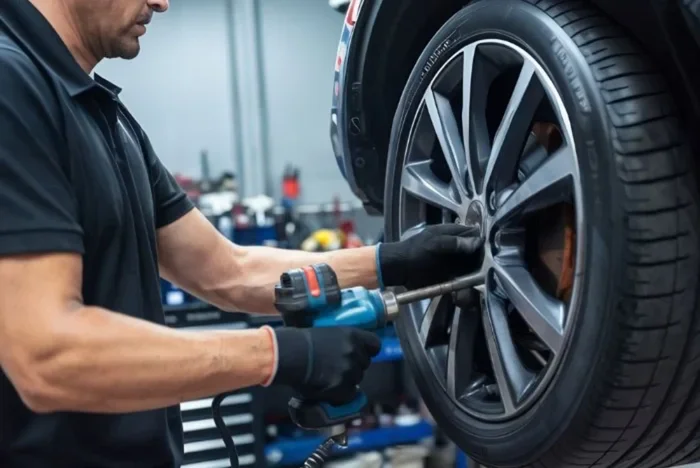
Yes, you absolutely can. A DIY tire rotation is one of the easiest car maintenance tasks you can do at home. It saves you money and gives you a better understanding of your vehicle. Here is what you need to get started:
Tools You Will Need
- A hydraulic floor jack or scissor jack
- Four jack stands or at least two sturdy ramps
- A lug wrench or impact wrench
- A torque wrench to tighten lug nuts to spec
- Your vehicle owner’s manual for rotation pattern
Step-by-Step DIY Rotation
- Park on a flat, level surface. Engage the parking brake and turn off the engine.
- Loosen the lug nuts on all four wheels before you jack up the car. This prevents the wheels from spinning while the car is in the air.
- Jack up one corner and place a jack stand under the frame. Never work under a car supported only by a jack.
- Remove the lug nuts and tire. Move it to its new position according to your rotation pattern.
- Repeat for all four wheels. Take your time and double-check each position.
- Lower the car and tighten the lug nuts with a torque wrench. Tighten them in a star pattern to ensure even pressure.
- Check tire pressure and adjust if needed after the rotation.
A DIY tire rotation typically takes about 30 to 45 minutes. It is a great weekend project that saves you the shop fee and teaches you more about your car. If you want to learn more about other DIY car maintenance tips, consider exploring topics like upgrading your car’s sound system or understanding safe in-car practices that keep your vehicle in top shape.
Common Myths About Tire Rotations
There is a lot of misinformation out there about tire rotations. Let us clear up some of the most common myths.
Myth 1: Tire Rotations Are Just a Money-Making Scheme
This is the biggest myth and the one this article is here to debunk. Tire rotations cost very little and take very little time. The benefits — longer tire life, better handling, and improved safety — far outweigh the cost. Any reputable mechanic will tell you the same thing.
Myth 2: You Only Need Rotations If You Notice Uneven Wear
By the time you can visually see uneven wear, the damage is already done. Waiting until you notice the problem means you have already lost some of the tire’s lifespan. Preventive rotations catch minor imbalances before they become major issues.
Myth 3: All-Wheel-Drive Vehicles Do Not Need Rotations
While AWD vehicles do wear more evenly, they still benefit from regular rotations. The slight differences in wear patterns between front and rear tires can cause handling issues if left unchecked. Most AWD manufacturers recommend rotations every 5,000 miles.
Myth 4: Rotations Fix Alignment Problems
A tire rotation does not correct a wheel alignment issue. If your car pulls to one side or your steering wheel is off-center, you need an alignment, not just a rotation. In fact, getting a rotation on a car with bad alignment can actually accelerate uneven wear. It is best to address alignment problems first.
Expert Insights: What Mechanics and Tire Pros Say
We spoke with several certified mechanics and tire professionals to get their take on tire rotations. Here is what they had to say:
“I see cars come into the shop every week with uneven tire wear that could have been prevented with regular rotations. It is one of the cheapest services we offer, and it pays for itself many times over.”
Most professionals agree on one thing: tire rotations are a no-brainer. They are fast, affordable, and effective. The real scam would be skipping them and then having to replace tires years earlier than necessary.
Some drivers also wonder about broader vehicle maintenance questions. For example, if you have ever wondered about proper high beam usage or other driving safety practices, these are all connected to being a responsible and informed car owner.
Tire Rotation Cost vs. Tire Replacement Cost: The Numbers Speak
Let us do a quick comparison to put the value of tire rotations into perspective:
| Service | Average Cost | Frequency | Annual Cost |
|---|---|---|---|
| Tire Rotation | $25 – $50 | Every 5,000 – 7,500 miles | $50 – $150 |
| Tire Replacement (Full Set) | $400 – $1,000+ | Every 40,000 – 60,000 miles | $100 – $250 (amortized) |
| Wheel Alignment | $75 – $150 | Every 2–3 years or as needed | $30 – $75 (amortized) |
As you can see, the cost of regular rotations is tiny compared to the cost of replacing tires early. Spending $100 a year on rotations can easily add 10,000 to 20,000 miles to your tire life. That is a return on investment that is hard to beat.
Final Verdict: Are Tire Rotations Worth It?
The answer is a clear and definitive yes. Tire rotations are one of the best values in car maintenance. They cost very little, take very little time, and deliver real, measurable benefits. From extending tire life to improving safety and handling, there is no good reason to skip them.
The only scenario where a rotation might not be worth it is if your tires are already worn down to the legal minimum and you are planning to replace them soon. In that case, save your money for the new set. But for anyone with healthy tires still on the vehicle, regular rotations are a smart move.
Stay on top of your tire rotation intervals, keep an eye on tread depth, and do not let anyone convince you this is unnecessary. Your wallet — and your safety — will thank you.
Conclusion
So, are tire rotations worth the money? Absolutely. They are not a scam, not a gimmick, and not something to skip. A simple rotation every 5,000 to 7,500 miles keeps your tires wearing evenly, your car driving safely, and your wallet happy. The cost is minimal compared to the value you get in return.
Whether you pay a shop to do it or take on a DIY tire rotation at home, this is one maintenance task that delivers real results. Keep up with your tire maintenance schedule, stay informed, and enjoy the peace of mind that comes from knowing your tires are in great shape.
Take action today. Check your mileage, find your nearest shop or grab your jack, and get those tires rotated. Your future self — and your next set of tires — will thank you.
Frequently Asked Questions
How much does a tire rotation cost on average?
Most tire rotations cost between $25 and $50 at standard shops. Some dealerships may charge up to $75, but many include it for free with an oil change or tire purchase. It is one of the most affordable maintenance services available.
Can I rotate my tires myself at home?
Yes, you can do a DIY tire rotation with a jack, jack stands, and a lug wrench. It takes about 30 to 45 minutes and saves you the shop fee. Just make sure you follow your vehicle’s specific rotation pattern and tighten lug nuts with a torque wrench.
What happens if I never rotate my tires?
Skipping rotations leads to uneven tire wear, reduced traction, and shorter tire life. You may end up replacing tires much sooner than needed, which costs significantly more than the rotation service itself. It can also void your tire warranty in some cases.
How often should I rotate my tires?
The general recommendation is every 5,000 to 7,500 miles. Check your vehicle owner’s manual for the exact interval. AWD vehicles and those driven in harsh conditions may need rotations more frequently.
Do tire rotations improve fuel economy?
Yes, they can. Evenly worn tires reduce rolling resistance and help your car move more efficiently. While the fuel savings are modest, they add up over the life of your tires. Better yet, the safety and handling improvements are the real payoff.
Is a tire rotation the same as a wheel alignment?
No, they are different services. A rotation moves tires to different positions on the car. An alignment adjusts the angles of the wheels to ensure they are parallel and perpendicular to the ground. Both are important for tire health and should be done as needed.