Does Two Axles Mean 4Wd?
No, having two axles does not automatically mean your vehicle is 4WD. Many drivers assume that a two-axle setup indicates all-wheel drive, but this is a common misconception. In reality, two axles simply refer to the number of wheel sets on your vehicle, and the drivetrain—whether it’s 2WD, 4WD, or AWD—depends on how power is delivered to the wheels, not how many axles are present.
Does Two Axles Mean 4WD?
If you have ever stood in a dealership or stared at your vehicle’s specs and wondered does two axles mean 4WD, you are not alone. This is one of the most common questions drivers ask when trying to understand their drivetrain. The short answer is no — two axles do not automatically mean your vehicle has four-wheel drive. But the full story is more interesting than that simple answer. Let us break it all down so you never have to guess again.
Understanding how axles and drivetrains work together matters more than most people realize. Whether you are buying a used truck, planning a road trip, or just trying to maintain your vehicle properly, knowing your drivetrain type affects everything from fuel economy to fuel savings on long drives. In this guide, we will walk through every angle of this topic in plain, simple language. You will walk away with real knowledge you can use.
Key Takeaways
- Two axles do not automatically mean 4WD. Axles are simply structural components.
- 4WD refers to the drivetrain, not axle count. It’s about power delivery to all wheels.
- Many 2WD vehicles have two axles. Front-wheel drive and rear-wheel drive both use two axles.
- Check the vehicle’s drivetrain label for clarity. Look for 2WD, 4WD, or AWD badges.
- Off-road capability depends on more than axles. Gearing, differentials, and suspension matter most.
- Always verify 4WD with a test drive. Ask the dealer about engagement methods.
📑 Table of Contents
What Does Two Axles Actually Mean?
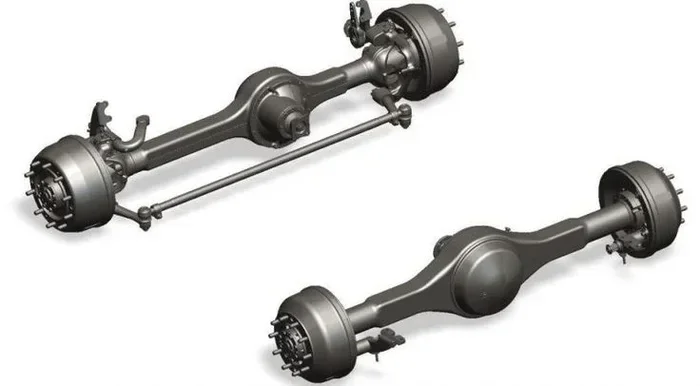
Every vehicle has at least two axles. That is just how cars and trucks are built. An axle is a central shaft that connects the wheels on each side of the vehicle. When we say a vehicle has two axles, we are talking about a front axle and a rear axle. This setup is standard on most passenger cars, SUVs, and light trucks you see on the road every day.
Here is what you need to understand about axles:
- The front axle handles steering and absorbs road impact.
- The rear axle transmits power from the engine to the wheels.
- Both axles work together with the suspension system to keep your ride smooth.
- The number of axles has nothing to do with how many wheels receive engine power.
Think of axles like the bones in your body. They provide structure and support. But bones alone do not tell you how a body moves. Similarly, two axles give your vehicle its shape and framework, but they do not tell you whether power goes to two wheels or four. This is where drivetrain type comes into play.
Front Axle vs. Rear Axle
Each axle has a specific job. The front axle on a front-wheel-drive car handles both steering and driving. The rear axle on a rear-wheel-drive car handles only power delivery. On a four-wheel-drive vehicle, both axles are driven axles, meaning they both receive power from the engine. This distinction is crucial when you are trying to figure out what kind of vehicle you have.
A full diagnostic test at Autozone can help confirm your drivetrain type if you are ever unsure. Mechanics can read your vehicle’s computer and tell you exactly which components are active during driving.
Understanding 4WD vs. 2WD: The Key Differences
Now let us talk about the real difference between four-wheel drive and two-wheel drive. Many people assume that if a vehicle has two axles, it must be 4WD. That is a common misconception. The drivetrain type depends on which wheels the engine sends power to, not how many axles exist.
Here are the main drivetrain types you will encounter:
- Front-Wheel Drive (FWD): Power goes to the front wheels only. Most modern sedans and crossovers use this setup.
- Rear-Wheel Drive (RWD): Power goes to the rear wheels only. Common in trucks, sports cars, and some SUVs.
- Four-Wheel Drive (4WD or 4×4): Power goes to all four wheels through a transfer case and drivetrain components.
- All-Wheel Drive (AWD): Similar to 4WD but typically operates automatically and full-time without driver input.
Notice something important? Every single one of these systems uses two axles. A front-wheel-drive car has a front axle and a rear axle. A four-wheel-drive truck also has a front axle and a rear axle. The number of axles stays the same across all drivetrain types. What changes is which wheels actually receive the power.
Why This Distinction Matters
Knowing whether your vehicle is 4WD or 2WD affects more than just off-road capability. It impacts your hybrid powertrain behavior at different speeds, your maintenance schedule, and even your tire replacement strategy. A 4WD vehicle needs different care than a 2WD vehicle, especially when it comes to the transfer case and differential fluids.
When you are shopping for a vehicle, always check the drivetrain specification. Do not assume two axles equals four-wheel drive. Look for labels like 4×4, 4WD, AWD, or FWD/RWD in the vehicle description. These tell the real story.
How Axles Work in Different Drivetrain Systems
Let us get under the hood (figuratively) and look at how axles actually function in different drivetrain setups. Understanding this helps you see why two axles do not automatically mean 4WD.
In a front-wheel-drive vehicle, the front axle is a driven axle. It contains axle shafts that connect to the wheels through constant-velocity joints, also known as CV joints. The rear axle is a non-driven axle. It simply supports the weight of the vehicle and allows the rear wheels to rotate freely without receiving any engine power.
In a rear-wheel-drive vehicle, the setup flips. The rear axle becomes the driven axle, sending power from the transmission directly to the rear wheels. The front axle handles only steering and suspension duties.
In a four-wheel-drive vehicle, both axles are driven axles. Here is how it works:
- The engine produces power and sends it through the transmission.
- A transfer case splits that power and sends it to both the front and rear axles.
- Axle shafts deliver power from the transfer case to each wheel.
- Differentials allow the wheels on each axle to spin at different speeds when turning.
This entire system relies on additional components that are not present in 2WD vehicles. The transfer case, front differential, and extra axle shafts are what make 4WD possible. Two axles alone cannot create four-wheel drive. It takes all of these extra parts working together.
Axle Ratio and Its Impact
Another factor that confuses people is axle ratio. The axle ratio describes the relationship between the drive shaft rotations and the axle shaft rotations. A higher axle ratio, like 4.10, gives you more torque for towing and hauling. A lower ratio, like 2.73, improves fuel efficiency for highway driving. Your axle ratio does not determine whether you have 4WD or 2WD. It is a separate specification entirely.
When you are checking your vehicle’s specs, look for both the drivetrain type and the axle ratio. These are two different numbers that serve two different purposes. Confusing them leads to wrong assumptions about your vehicle’s capabilities.
Does Having Two Axles Automatically Mean 4WD?
Let us address the big question directly. Does two axles mean 4WD? No, it does not. Two axles is simply the standard configuration for nearly all passenger vehicles on the road today. Whether your vehicle is front-wheel drive, rear-wheel drive, four-wheel drive, or all-wheel drive, it almost certainly has two axles — one in the front and one in the rear.
The confusion usually comes from trucks and SUVs. Many people see a truck with two axles and four visible wheels and assume it is 4WD. But plenty of two-axle trucks are two-wheel drive. The number of axles tells you about the vehicle’s structure. The drivetrain badge or spec sheet tells you about the power delivery.
Here is a quick comparison to clear things up:
| Vehicle Type | Number of Axles | Drivetrain | Wheels Receiving Power |
|---|---|---|---|
| Sedan | 2 | FWD | Front wheels only |
| Pickup Truck | 2 | RWD | Rear wheels only |
| SUV | 2 | 4WD | All four wheels |
| Compact Car | 2 | FWD | Front wheels only |
| Heavy-Duty Truck | 3 | 4WD | All wheels on driven axles |
Look at the table above. A sedan, a pickup truck, and an SUV can all have exactly two axles. But their drivetrain types are completely different. The axle count tells you about the vehicle’s frame and wheel setup. The drivetrain tells you about power delivery. These are two separate things.
Some vehicles with three or more axles are also available in 2WD configurations. Semi-trucks, for example, often have multiple axles but may only drive the rear axle. So the number of axles is never a reliable indicator of 4WD capability on its own.
How to Tell If Your Vehicle Is 4WD
If you are not sure whether your vehicle has four-wheel drive, there are several ways to find out. You do not need to be a mechanic to check these things. A few simple checks can give you the answer quickly.
Start by looking at your vehicle’s badging and documentation. Most 4WD vehicles have a 4×4, 4WD, or 4-by-4 badge on the tailgate or grille. Check the owner’s manual for the drivetrain section. The manufacturer always lists the drivetrain type clearly. You can also check the vehicle identification number, or VIN. The tenth character of the VIN encodes the model year, and the body type code can reveal drivetrain information when decoded.
Another method is to look under the vehicle. If you see a transfer case mounted beneath the transmission, you have a 4WD or AWD system. A transfer case is the component that splits engine power between the front and rear axles. Two-wheel-drive vehicles do not have a transfer case. This is one of the most reliable visual indicators.
You can also check for front axle disconnect systems on some part-time 4WD trucks. These vehicles disconnect the front axle when not in 4WD mode to save fuel. If your vehicle has this feature, it confirms you have a 4WD system even when it is not currently engaged.
Quick Tips for Identifying Your Drivetrain
- Check the driver’s side door jamb for a sticker listing vehicle specs.
- Look at the glove box door — many manufacturers print the drivetrain there.
- Search your VIN online using a free decoder tool.
- Listen for a front differential hum when turning in 4WD mode.
- Check under the vehicle for a transfer case and front drive shaft.
If you are still unsure after checking these things, a quick visit to a service center can clear it up. A Jiffy Lube technician or any qualified mechanic can confirm your drivetrain type in minutes. They see hundreds of vehicles and know exactly what to look for.
Why This Confusion Matters for Your Vehicle Maintenance
Understanding whether your vehicle is 4WD or 2WD is not just trivia. It directly affects how you maintain your vehicle. Different drivetrain types have different maintenance needs, and getting this wrong can lead to expensive repairs or unsafe driving conditions.
Four-wheel-drive vehicles require regular maintenance of the transfer case and front differential. These components contain fluid that needs to be changed on a schedule, just like engine oil. Skipping transfer case fluid changes can lead to premature wear and costly replacements. Two-wheel-drive vehicles do not have a transfer case, so this maintenance item simply does not exist.
Tire maintenance is another area where drivetrain type matters. 4WD vehicles need all four tires to be the same size, tread depth, and type. Mismatched tires on a 4WD system can damage the transfer case and differentials. 2WD vehicles are more forgiving, especially front-wheel-drive cars where you can mix tire brands on the rear axle in some cases.
Fuel economy is also affected by drivetrain type. If you are trying to save gas, understanding your drivetrain helps you set realistic expectations. 4WD vehicles generally get worse fuel economy than their 2WD counterparts because of the extra weight and mechanical drag. If you are curious about how different systems affect efficiency, check out our article on whether cruise control saves gas for tips on maximizing fuel economy regardless of your drivetrain.
Common Maintenance Mistakes by Drivetrain Type
- Forgetting to change transfer case fluid in 4WD vehicles.
- Using mismatched tires on a 4WD system.
- Ignoring front differential noise because it is easy to overlook.
- Assuming all-wheel-drive vehicles never need drivetrain service.
- Not engaging 4WD high or low ranges when needed for towing.
Avoiding these mistakes keeps your vehicle running strong for years. Regular maintenance tailored to your specific drivetrain type is always better than generic service schedules.
Key Takeaways
Let us wrap up the main points so you have a clear picture. Two axles is the standard setup for nearly every car, truck, and SUV on the road. It does not tell you whether the vehicle is 4WD, 2WD, FWD, or RWD. The drivetrain type depends on which wheels receive engine power, and that is determined by additional components like the transfer case, differential, and drive shafts.
Always check your vehicle’s documentation or badging to confirm the drivetrain type. Do not rely on the number of axles as an indicator. When in doubt, a professional diagnostic can give you a definitive answer. And remember that proper maintenance depends on knowing your exact drivetrain configuration.
Understanding your vehicle is one of the best things you can do as a car owner. It saves you money, keeps you safe, and helps you make smarter decisions at the dealership or repair shop. The next time someone asks you does two axles mean 4WD, you will know the complete answer.
Frequently Asked Questions
Does Two Axles Mean 4WD?
Not necessarily. Having two axles simply means your vehicle has two sets of wheels, but it can still be either two-wheel drive or four-wheel drive. The number of axles tells you nothing about which wheels actually receive power from the engine.
What Is the Difference Between a Two-Axle 2WD and a Two-Axle 4WD Vehicle?
A two-axle 2WD vehicle sends power to only one set of wheels, either the front or the rear. A two-axle 4WD vehicle uses a transfer case and driven wheels on both axles to deliver power to all four wheels for better traction.
Can a Vehicle With Two Axles Be Rear-Wheel Drive?
Yes, many two-axle vehicles are rear-wheel drive, especially classic pickup trucks and older SUVs. In a rear-wheel-drive setup, the rear axle handles all the engine power while the front axle simply supports and steers the vehicle.
How Do I Know if My Two-Axle Vehicle Is 4WD?
Check for a transfer case under the vehicle or look for a 4WD or 4×4 badge on the truck or SUV. You can also consult your owner’s manual, which will clearly state the drivetrain type regardless of your axle configuration.
Are All Pickup Trucks With Two Axles 4WD?
No, many two-axle pickup trucks come in two-wheel drive versions. Both 2WD and 4WD configurations are common, so you need to check the specific trim or package to know which drivetrain your truck has.
What Other Vehicles Have Two Axles but Are Not 4WD?
Sedans, coupes, minivans, and many crossovers use a two-axle setup with front-wheel drive or rear-wheel drive. Even some light-duty vans and commercial vehicles stick to a two-axle, two-wheel-drive layout for simplicity and fuel efficiency.