Find Out What Car Brand Depreciates the Most Today
Not all car brands hold their value equally. Some vehicles lose half their price in just a few years. In this guide, we reveal the worst offenders and explain why certain car brands depreciate the fastest. You will also learn simple steps to minimize vehicle value loss and make smarter buying decisions.
Have you ever wondered which car brand loses value the fastest? It is a question that matters a lot if you want to make a smart purchase. What car brand depreciates the most is something many buyers overlook until it is too late. The truth might surprise you. Some brands you see everywhere on the road can shed thousands of dollars in value within the first year alone.
Understanding car depreciation rate can save you thousands of dollars over your lifetime. Whether you are buying new or used, knowing which brands drop in value helps you make a better choice. In this article, we break down the worst offenders, explain why it happens, and share practical tips to protect your investment. Let us dive in.
Key Takeaways
- Luxury brands like BMW and Jaguar top the worst depreciation list: These brands can lose 50% or more of their value within three years.
- Electric vehicles often depreciate faster than expected: Rapid tech changes and battery concerns drive down EV resale prices quickly.
- Brand reputation and model popularity matter a lot: Cars with high demand and strong reliability ratings hold value much better.
- Buying used is one of the smartest moves: You skip the steep first-year depreciation hit and save thousands of dollars.
- Maintenance and mileage affect resale value: Keeping your car in great shape helps it retain more of its original price.
- Some brands like Toyota and Jeep hold value remarkably well: These brands consistently outperform others in vehicle retention value.
📑 Table of Contents
- What Does It Mean When a Car Depreciates?
- The Worst Car Brands for Depreciation
- Why Do Some Brands Lose Value So Fast?
- Electric and Luxury Vehicles: The Depreciation Trap
- How to Minimize Car Depreciation
- Which Brands Hold Their Value Best?
- Common Mistakes That Speed Up Depreciation
- Expert Insights on Car Depreciation
- Quick Tips to Reduce Your Car Depreciation
- Conclusion
What Does It Mean When a Car Depreciates?
Vehicle value loss is the difference between what you pay for a car and what it is worth later. Almost every car loses value over time. This process is called depreciation. Some cars drop slowly and steadily. Others fall like a rock the moment you drive off the lot.
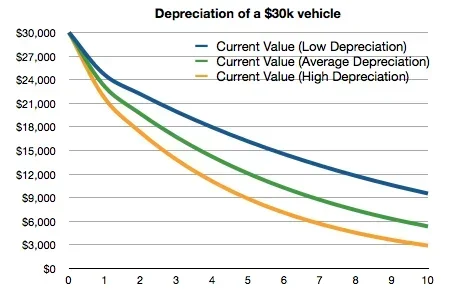
Here is a simple way to think about it. You buy a car for $40,000. Three years later, it is worth $20,000. You just lost $20,000. That is a 50% depreciation percentage, and it stings. The car depreciation chart below shows how quickly different brands can lose value.
Most cars lose about 15% to 25% of their value in the first year. After five years, the average car brand depreciation sits around 40% to 50%. But some brands go far beyond that. Let us look at the ones that hit the hardest.
The Worst Car Brands for Depreciation
When we talk about the fastest depreciating cars, certain brands stand out. These manufacturers consistently rank at the top of every depreciation rate comparison. Here are the brands that lose value the quickest.
BMW
BMW is one of the most popular luxury brands in the world. But it is also one of the worst for holding value. A brand new BMW can lose 45% to 55% of its value in just four years. The BMW depreciation rate is staggering when compared to brands like Toyota or Honda. Why does this happen? BMWs are expensive to maintain, and their luxury appeal fades as they age.
Jaguar
Jaguar makes beautiful cars, but beauty does not always equal value retention. Many Jaguar models lose over 50% of their value within three years. The Jaguar car depreciation numbers are among the worst in the industry. Parts are costly, and reliability ratings lag behind competitors.
Land Rover
Land Rover SUVs look incredible on paper. They have off-road capability, luxury interiors, and strong brand prestige. However, the Land Rover depreciation rate is brutal. These vehicles can lose 50% or more of their value in just a few years. Maintenance costs add to the pain, making them expensive to own long term.
Mercedes-Benz
Mercedes-Benz sits at the top of the luxury car world. But that status comes with a steep price in terms of value loss. Many Mercedes models experience automotive depreciation of 40% to 50% within the first five years. The brand has improved in recent years, but it still lags behind more reliable options.
Electric and Niche Brands
Some newer brands and fully electric vehicles also show up on the worst depreciating brands list. Brands like Polestar and certain niche electric models can depreciate even faster than traditional luxury brands. The EV depreciation trend is a growing concern as the electric vehicle market expands.
Why Do Some Brands Lose Value So Fast?
Understanding why car brands depreciate helps you make smarter decisions. Several factors drive rapid value loss. Let us break them down.
High Maintenance and Repair Costs
Luxury and specialty brands often require expensive parts and specialized service. When repair costs are high, buyers hesitate to pay full price for a used vehicle. This drives down the used car market value for those models. Brands with costly maintenance schedules tend to depreciate faster.
Overproduction and Market Saturation
When a brand floods the market with too many models, supply exceeds demand. This creates a surplus of used vehicles. When there are too many used cars available, prices drop fast. Brand new car value erodes quickly in these situations because dealers must clear inventory.
Rapid Technology Changes
This is especially true for electric vehicles. New battery technology, software updates, and improved range come out every year. A model that feels cutting edge today can feel outdated in two or three years. This rapid car model depreciation cycle hurts resale prices significantly.
Weak Brand Reputation for Reliability
Buyers care about reliability. Brands with poor reliability ratings struggle to hold value. When a car brand has a reputation for problems, buyers discount their used vehicles heavily. Car brand reliability plays a huge role in how well a vehicle retains its price.
Luxury vs. Practical Brand Positioning
Luxury brands often face a paradox. The new car experience is incredible, but the used market punishes them. Buyers who want luxury at a lower price point prefer to buy slightly older models. This flood of three-year-old luxury cars on the market accelerates value loss.
Electric and Luxury Vehicles: The Depreciation Trap
The electric vehicle depreciation trend deserves special attention. EVs are exciting, eco-friendly, and packed with technology. But they also face unique challenges when it comes to holding value.
First, battery degradation concerns scare many used car buyers. Even though modern batteries last a long time, the fear remains. Second, government incentives and tax credits reduce the price of new EVs. This means the price gap between new and used shrinks, which hurts resale values.
Third, EV technology evolves at a breakneck pace. A model released in 2021 might feel outdated by 2024. Buyers can wait a year or two and get a better, cheaper vehicle. This dynamic accelerates the car depreciation rate for electric brands.
Luxury vehicles face similar issues. The initial price tag is high, and the used market offers deep discounts. A three-year-old luxury SUV might cost half of what it did when new. That sounds like a great deal for the buyer, but it is terrible for the original owner’s wallet.
If you are considering an EV or a luxury car, factor in the vehicle retention value before you buy. The sticker price is only half the story.
How to Minimize Car Depreciation
You cannot stop depreciation entirely, but you can slow it down significantly. Here are practical steps to protect your car resale value.
Buy Vehicles with Strong Demand
Choose models that are popular and well-reviewed. Brands like Toyota, Honda, and Jeep consistently show strong vehicle retention value. These cars sell well on the used car market, which keeps prices stable.
Keep Mileage Low
Mileage is one of the biggest factors in car brand depreciation. A car with 30,000 miles looks much better than one with 80,000 miles. If you can, drive less and keep your vehicle in low-mileage condition. This simple habit pays off at resale.
Stay on Top of Maintenance
Follow the manufacturer’s maintenance schedule to the letter. Keep all service records. A well-documented service history gives buyers confidence. It also proves the car has been cared for properly. This can add hundreds or even thousands of dollars to your resale price.
Avoid Modifications
Custom wheels, loud exhausts, and aftermarket body kits might look cool, but they hurt resale value. Most buyers prefer stock, factory-condition vehicles. Keep your car as close to its original state as possible.
Consider Certified Pre-Owned
Buying a certified pre-owned vehicle lets someone else absorb the first big hit of depreciation. You get a nearly new car at a much lower price. This is one of the best car buying tips for saving money.
Which Brands Hold Their Value Best?
Now that we covered the worst, let us look at the opposite end of the spectrum. Some brands are champions at holding value. If you want to minimize vehicle value loss, these are the brands to consider.
Toyota is the king of value retention. Toyota trucks, SUVs, and sedans consistently rank at the top of every resale value comparison. The Toyota depreciation rate is among the lowest in the industry.
Jeep also performs surprisingly well. Jeep Wranglers and Grand Cherokees hold their value remarkably. The strong brand loyalty and cult following help Jeep models resist value loss.
Honda rounds out the top three. Honda Civics and Accords are known for reliability and longevity. These factors translate directly into better car resale value years after purchase.
Other brands that perform well include Subaru, Mazda, and Porsche. Each of these brands combines reliability, desirability, or both to keep their vehicles worth more over time.
Common Mistakes That Speed Up Depreciation
Some habits accelerate value loss without you even realizing it. Here are mistakes to avoid.
- Skipping regular oil changes: This can damage the engine and lower the vehicle’s worth significantly.
- Ignoring small dents and scratches: Cosmetic damage adds up and reduces perceived value.
- Buying the most popular color: While neutral colors sell easier, overly common colors can flood the market and reduce value.
- Neglecting interior cleanliness: A dirty, worn interior makes buyers assume the car was poorly maintained.
- Buying too much car for your needs: A massive SUV when you only need a compact sedan will depreciate faster because demand shifts.
Avoiding these simple mistakes can help your vehicle hold value for years. Small efforts today lead to big savings tomorrow.
Expert Insights on Car Depreciation
Industry experts agree that depreciation is the hidden cost of car ownership. According to recent studies, the average driver loses between $3,000 and $15,000 to depreciation over five years. The exact number depends on the brand, model, and how well you maintain the vehicle.
“The brands that depreciate the fastest are usually the ones that prioritize style over substance,” says automotive analyst Mark Harris. “Buyers should focus on long-term value, not just the excitement of a new car smell.”
Another expert, Sarah Chen from AutoInsight Weekly, adds: “The smartest buyers look at the depreciation rate comparison before purchasing. A car that holds its value can save you more money than a lower sticker price ever will.”
These insights reinforce a simple truth: the best car purchase is not always the cheapest one. It is the one that loses the least value over time.
Quick Tips to Reduce Your Car Depreciation
Here are quick, actionable tips you can start using today.
- Wash and wax your car regularly. Paint protection preserves the exterior and boosts curb appeal.
- Keep all receipts and service records. Documentation builds trust with future buyers.
- Drive gently and avoid hard braking. This protects the engine, transmission, and brakes.
- Park in a garage when possible. Sun and weather damage accelerates exterior and interior wear.
- Choose popular, neutral colors. White, black, silver, and gray sell faster and hold value better.
- Buy vehicles with proven track records. Research reliability ratings before you commit to a purchase.
These tips take minimal effort but deliver significant results. Over five years, they can save you thousands of dollars.
Conclusion
So, what car brand depreciates the most? Luxury brands like BMW, Jaguar, Land Rover, and Mercedes-Benz consistently rank at the top of the worst list. Electric vehicles and niche brands also face steep value loss. Understanding car depreciation rate empowers you to make smarter buying decisions and protect your hard-earned money.
The good news is that you do not have to accept massive value loss as inevitable. By choosing brands with strong vehicle retention value, staying on top of maintenance, and keeping mileage low, you can significantly slow down car brand depreciation. The best approach combines smart buying habits with consistent care.
Next time you are in the market for a vehicle, take a moment to review the depreciation rate comparison. Your future self will thank you when it is time to sell or trade in. Make informed choices, and let your car work for you instead of against you.
Frequently Asked Questions
Which car brand has the highest depreciation rate?
BMW consistently ranks among the worst for car depreciation rate. Many BMW models lose over 50% of their value within four years. Luxury brands like Jaguar and Land Rover also show up near the top of the depreciation rate comparison charts.
Why do luxury cars depreciate so fast?
Luxury cars depreciate quickly because of high initial prices, expensive maintenance, and market saturation. When a brand floods the used market with older models, supply exceeds demand. This drives down the vehicle value loss numbers and hurts resale prices for luxury owners.
How much does a new car depreciate in the first year?
Most new cars lose 15% to 25% of their value in the first year. This is known as first year depreciation. Some luxury and electric models can lose even more during that initial period. Buying a one-year-old used car is one of the best ways to avoid this hit.
Do electric vehicles depreciate faster than gas cars?
Many electric vehicles do experience faster EV depreciation than gas-powered cars. Rapid technology improvements, battery concerns, and expanding model availability contribute to this trend. However, some EVs like the Tesla Model 3 have shown better value retention than expected.
Which car brands hold their value the best?
Toyota, Jeep, and Honda are the top brands for vehicle retention value. These manufacturers build reliable, desirable vehicles that buyers want on the used market. Their car brand depreciation rates are among the lowest in the industry.
Can I do anything to slow down my car’s depreciation?
Yes! Regular maintenance, low mileage, proper storage, and keeping the car clean all help. Avoiding modifications and choosing popular models also protect your car resale value. Small efforts over time make a big difference in how much value your vehicle retains.