How Much Can a Dodge Ram 2500 Tow and Haul Anything
The Dodge Ram 2500 can tow up to 19,780 pounds when properly equipped. This guide breaks down the exact towing capacity, payload limits, and setup you need. You will learn how engine choice, hitch type, and axle ratio affect your hauling power.
How Much Can a Dodge Ram 2500 Tow? The answer is not a single number. It depends on the engine, the axle ratio, the hitch, and how you load your trailer. The Ram 2500 is a heavy-duty truck built to haul serious weight. But knowing the limits keeps you safe and legal. This guide walks you through every factor that affects towing capacity. You will learn the exact numbers, the best setups, and the mistakes to avoid.
Towing is more than just hooking up a trailer. It involves understanding payload, weight distribution, and braking systems. The Ram 2500 offers several configurations. Each one changes what you can pull. Whether you haul a boat, a horse trailer, or a large camper, the right knowledge makes the job easier. Let us break it all down.
Key Takeaways
- Maximum Towing Capacity: The Ram 2500 can tow up to 19,780 lbs with the right configuration.
- Engine Matters: The 6.7L Cummins diesel delivers the best torque for heavy loads.
- Payload vs. Towing: Towing capacity and payload capacity are different; both are critical.
- Hitch Setup: A weight distribution hitch and brake controller are essential for safe towing.
- Avoid Common Mistakes: Overloading, ignoring GVWR, and skipping maintenance can be dangerous.
- Real-World Tips: Distribute weight evenly and check your trailer lights before every trip.
📑 Table of Contents
How Much Can a Dodge Ram 2500 Tow? Understanding the Numbers
The base towing capacity for the Ram 2500 starts around 17,000 pounds. With the diesel engine and proper gearing, it climbs to 19,780 pounds. That is the maximum for the latest model year. However, this number assumes a properly equipped truck. You need the correct axle ratio, a weight distribution hitch, and the right trailer brakes. Always check the owner’s manual for your specific model. The gross vehicle weight rating (GVWR) sets the absolute limit. Exceeding it can damage the frame, brakes, and engine.
The Ram 2500 comes in multiple trims. The Tradesman, Laramie, and Power Wagon all share the same towing backbone. But optional packages add strength. The towing package includes a heavy-duty radiator, upgraded alternator, and a wiring harness. The dual-screen GPS and trailer sway control are also part of the package. These features make long hauls smoother and safer. When you ask how much can a Dodge Ram 2500 tow, the answer is a range, not a fixed point.
Why the Numbers Vary
Several factors change the towing number. The engine is the biggest one. The 5.7L HEMI V8 is the standard powerplant. It makes 383 horsepower and 400 pound-feet of torque. That is enough for light to medium trailers. The 6.4L HEMI V8 pushes 410 horsepower and 429 pound-feet of torque. It handles heavier loads with ease. But the king of torque is the 6.7L Cummins Turbo Diesel. It delivers 400 horsepower and a massive 1,000 pound-feet of torque. That diesel engine is the reason the Ram 2500 can reach its maximum towing limit. The axle ratio also plays a role. A 3.73 ratio is standard. An optional 4.10 ratio gives better pulling power for heavy trailers. The transmission, transfer case, and cooling system all contribute. Together, they form the complete towing package.
Towing Capacity by Engine and Configuration
Each engine option changes what the truck can handle. Here is a clear look at the three main engines and their towing limits.
| Engine | Horsepower | Torque | Max Towing Capacity |
|---|---|---|---|
| 5.7L HEMI V8 | 383 hp | 400 lb-ft | 17,540 lbs |
| 6.4L HEMI V8 | 410 hp | 429 lb-ft | 18,200 lbs |
| 6.7L Cummins Turbo Diesel | 400 hp | 1,000 lb-ft | 19,780 lbs |
The diesel engine stands out. Its torque curve stays flat across the RPM range. That means strong pulling power at low speeds. The 6.7L Cummins also comes with an automatic transmission that has a towing mode. This mode adjusts shift points to reduce heat buildup. The cooling system is larger on diesel models. It keeps the engine from overheating on long grades. If you plan to tow a large fifth wheel or gooseneck trailer, the diesel is the clear choice.
Axle Ratio and Its Impact
The axle ratio tells you how many times the driveshaft turns for each wheel rotation. A higher ratio means more turning power. The 3.73 ratio is good for everyday towing. The 4.10 ratio is better for heavy loads. It lets the engine work less at a given speed. But a lower ratio (like 3.42) improves fuel economy when you are not towing. The Ram 2500 allows you to choose the ratio. Pick the one that matches your typical load. If you rarely tow, the 3.73 is a fine balance. If you haul maximum weight often, go with the 4.10.
Keep in mind that the axle ratio also affects the gross axle weight rating (GAWR). The GAWR is the maximum weight each axle can carry. The front and rear axles have separate limits. The total of both axles plus the truck’s own weight cannot exceed the GVWR. This is why payload capacity matters so much. The weight of the truck, passengers, and cargo all count against the towing limit.
Payload vs. Towing: What’s the Difference?
Many people confuse payload and towing. They are not the same thing. Towing capacity is the weight of the trailer you can pull. Payload capacity is the weight you can carry inside the truck itself. That includes the weight of the passengers, cargo in the bed, and any aftermarket equipment. Both numbers are printed on the door jamb sticker. The sticker shows the GVWR, GAWR, and curb weight. Subtract the curb weight from the GVWR to get the total payload. Then subtract the weight of any passengers and gear. What remains is your available payload.
Why does payload affect towing? Because the tongue weight of a trailer presses down on the hitch. That weight counts against your payload. A typical trailer puts 10 to 15 percent of its total weight on the hitch. So a 10,000-pound trailer exerts 1,000 to 1,500 pounds of tongue weight. If your payload is only 2,000 pounds, that leaves very little room for people and gear. You must account for both numbers before you hit the road. Overloading the truck is dangerous. It can cause blowouts, brake fade, and loss of steering control.
Quick Tips for Payload Management
- Weigh your truck fully loaded before every trip.
- Use a public scale at a truck stop or weigh station.
- Place heavy items low and over the axle.
- Avoid loading the tailgate area too high.
- Remove unnecessary weight from the bed to free up capacity.
Towing without enough payload is a common error. The front of the truck rises, and the rear sags. This changes the headlight aim and reduces stability. A weight distribution hitch can help level the truck. But it cannot create payload that is not there. Always check the numbers first.
Essential Towing Equipment and Setup
Having the right equipment makes a huge difference. The Ram 2500 can tow a lot, but only with the correct setup. A basic receiver hitch is fine for light trailers. For heavier loads, you need a weight distribution system. This system uses spring bars to spread the tongue weight across all four axles. It keeps the truck level and the trailer stable. A brake controller is also essential. It applies the trailer brakes in sync with the truck’s brakes. Without it, the trailer can push the truck during a stop. This is especially true on steep downhill grades.
The wiring harness connects the truck to the trailer lights. A 7-way round connector is standard on the Ram 2500. It carries power for brake lights, turn signals, and running lights. Some trailers need a 7-way flat connector. Adapters are available. You should also install a trailer sway control system. The Ram 2500 offers integrated sway control in many models. It uses the stability control sensors to detect trailer sway. The system applies the brakes to individual wheels to correct it. This feature is a lifesaver on windy highways.
Hitch Types Compared
- Receiver Hitch: Good for light to medium trailers up to 5,000 lbs.
- Weight Distribution Hitch: Required for trailers over 7,000 lbs. Keeps the truck level.
- Gooseneck Hitch: Mounted in the bed. Offers the best stability for large fifth wheels.
- Fifth Wheel Hitch: Also bed-mounted. Designed specifically for fifth wheel trailers.
Each hitch type has its own weight rating. The gooseneck and fifth wheel setups often provide higher towing capacities than a bumper-pull hitch. This is because the hitch point sits over the rear axle. It reduces the leverage that tries to push the truck around. If you plan to tow a large horse trailer or a toy hauler, consider a gooseneck or fifth wheel setup. The Ram 2500 has a reinforced bed and available mounting points for these systems.
Common Mistakes That Reduce Towing Capacity
Even with a powerful truck, mistakes can lower your effective towing ability. One of the biggest errors is ignoring the GVWR. The gross vehicle weight rating is the absolute maximum weight the truck can safely carry. This includes the truck itself, fuel, passengers, cargo, and the tongue weight of the trailer. If you exceed it, you are overloading the vehicle. The brakes will struggle. The suspension will bottom out. The frame can warp over time.
Another mistake is using the wrong hitch ball size. The Ram 2500 supports several ball sizes depending on the hitch. A 2-inch ball is common for many trailers. A 2-5/16-inch ball is needed for larger gooseneck and fifth wheel setups. Using the wrong size can cause the trailer to sway or disconnect. Always check the hitch rating and match it to your trailer coupler. The same applies to the trailer’s gross trailer weight rating (GTWR). It must be at or below the truck’s towing capacity.
Maintenance Tips for Safe Towing
Towing puts extra stress on every component. You must stay on top of maintenance. Check the tire pressure before each trip. Under-inflated tires can overheat and fail. Inspect the hitch pins and clips for wear. Grease the hitch ball regularly. Change the engine oil and transmission fluid on schedule. The diesel engine also needs clean fuel. If you use poor-quality fuel, it can cause a P0171 code, which is a lean fuel trim error. You can learn more about that issue at Can Bad Gas Cause a P0171 Code. A lean condition can reduce power and damage the engine over time. Use only recommended diesel fuel and add a quality fuel additive if needed.
Never leave a loaded firearm or any hazardous item unsecured in the cab. Just as you should never leave a loaded weapon in a hot car—see Can Bullets Go Off In A Hot Car—you must secure all loose items when towing. Vibrations and sudden stops can turn loose objects into dangerous projectiles. Keep your cabin clear and your gear stowed properly.
Real-World Hauling Scenarios and Tips
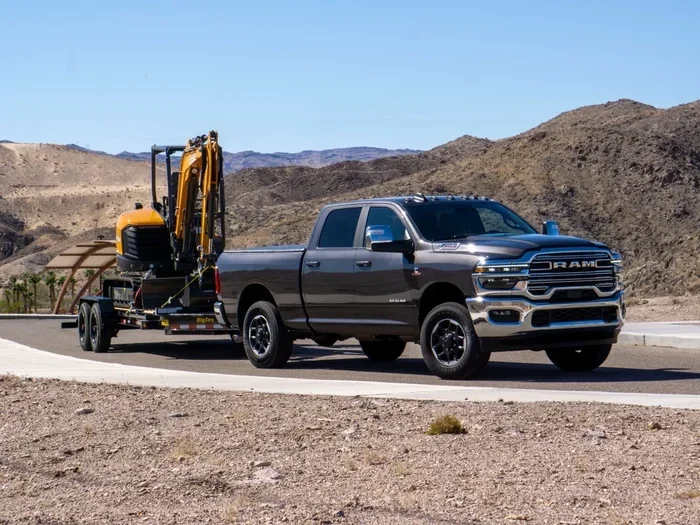
Let us look at what the Ram 2500 can actually pull in everyday situations. A 24-foot travel trailer with a dry weight of 6,000 pounds is well within the capacity. The Ram 2500 can easily handle a 10,000-pound boat on a trailer. With the diesel engine, it can pull a 14,000-pound fifth wheel camper without breaking a sweat. The key is to keep the total loaded weight under the truck’s towing capacity. Remember that the trailer’s loaded weight includes water, propane, and cargo. A travel trailer that says 7,000 pounds dry can easily exceed 9,000 pounds when fully loaded.
If you plan a long road trip with your family and pets, preparation is key. Before you cross any border, check the rules for bringing animals. For example, if you plan to bring your dog to Canada by car, you need the proper paperwork and health certificates. You can find the requirements at Can I Bring My Dog To Canada By Car. Traveling with a pet in a truck and trailer setup adds another layer of planning. Make sure your pet has a secure, well-ventilated space in the cab. Never let a dog ride in the back of an open trailer.
Expert Insight: The Power of Weight Distribution
Many experienced towers swear by weight distribution hitches. They level the truck and improve steering control. The Ram 2500 handles a weight distribution setup with ease. When you tow a heavy trailer, the rear of the truck sinks. This lifts the front axle, reducing steering grip. A weight distribution hitch transfers some of that tongue weight back to the front axle. The result is a level ride and better handling. It also reduces wear on the rear suspension. For trailers over 7,000 pounds, a weight distribution system is almost mandatory.
Another expert tip is to use a brake controller that is proportional, not time-delayed. A proportional controller senses the truck’s braking force and applies the same amount to the trailer. This creates a smooth, balanced stop. A time-delayed controller applies a fixed amount of brake pressure. It can cause the trailer to push the truck on wet roads. The Ram 2500 is compatible with several high-quality brake controllers. Install one and adjust it to your trailer’s weight. Test it in a safe area before you hit the highway.
Quick Tips for Long Hauls
- Check your trailer lights and signals every time.
- Take breaks every two hours to rest and inspect the trailer.
- Use cruise control on flat highways, but turn it off on hilly terrain.
- Keep a safe following distance. A loaded trailer takes longer to stop.
- Monitor the transmission temperature gauge. If it climbs, pull over and let it cool.
Towing a heavy load changes how the truck drives. The turning radius increases. The braking distance grows. Wind gusts have a bigger effect on a large trailer. Always drive smoothly. Avoid sudden lane changes and hard braking. The Ram 2500 is a capable truck, but it still needs a careful driver. Respect the weight limits and the truck will reward you with reliable performance for years.
Conclusion
So, how much can a Dodge Ram 2500 tow? The answer is up to 19,780 pounds with the diesel engine and the right setup. But the real answer is that your specific configuration determines the limit. Choose the right engine, axle ratio, and hitch. Understand the difference between payload and towing. Maintain your equipment and drive with care. The Ram 2500 is a powerful heavy-duty truck. It can handle everything from a small utility trailer to a large fifth wheel. Use this guide to plan your next haul with confidence. Know your numbers, respect the limits, and enjoy the freedom of serious towing.
Frequently Asked Questions
What is the maximum towing capacity of a Dodge Ram 2500?
The Ram 2500 can tow up to 19,780 pounds when equipped with the 6.7L Cummins Turbo Diesel engine, a 4.10 axle ratio, and a proper weight distribution hitch. Always verify the exact rating for your model year and trim.
Does the Ram 2500 need a special hitch to tow at its maximum capacity?
Yes, you need a weight distribution hitch or a gooseneck/fifth wheel setup to reach the top towing numbers. A standard receiver hitch limits you to lower capacities. The hitch type and rating must match your trailer’s weight.
How does payload capacity affect towing in the Ram 2500?
Payload capacity is the weight the truck can carry itself. Tongue weight from a trailer counts against this payload. If your payload is low, you may not be able to tow the maximum weight safely, even if the towing number is high.
Can the Ram 2500 tow a fifth wheel trailer?
Absolutely. The Ram 2500 offers a gooseneck and fifth wheel prep package. With the right hitch and diesel engine, it can tow fifth wheel trailers at or near its maximum capacity of 19,780 pounds.
Is the 5.7L HEMI V8 enough for towing?
The 5.7L HEMI V8 is sufficient for light to medium towing up to 17,540 pounds. It is a great choice for occasional hauling. For heavier and more frequent loads, the 6.7L Cummins diesel is the better option.
What maintenance is critical when towing a Ram 2500 regularly?
Regularly check the transmission fluid, engine oil, tire pressure, and hitch hardware. Inspect the brake controller and trailer wiring. Clean the diesel particulate filter if you have the Cummins engine. Follow the severe service maintenance schedule if you tow often.