Can a Subaru Jump Start Another Car in an Emergency
Yes, a Subaru can jump start another car in an emergency. Most Subaru models have a standard 12-volt battery capable of providing enough power to revive a dead battery. Whether you drive a Subaru Outback, Subaru Forester, or Subaru Impreza, the jump-start process follows simple steps. Knowing the correct cable order and safety precautions makes the difference between a quick fix and a costly mistake. This guide walks you through everything you need to know.
There is nothing worse than turning your key and hearing nothing but silence. Your Subaru is running fine, but the car next to you won’t start. Maybe it is a friend, a family member, or even a stranger on the side of the road. The natural question pops up: Can a Subaru jump start another car? The short answer is yes. But the full answer involves a few important steps, safety tips, and model-specific details that every Subaru owner should know.
Jump starting a car is one of the most common roadside emergencies. Whether your battery died overnight or you left the lights on, a working vehicle can bring your engine back to life. Subarus are reliable cars, and their electrical systems are designed to handle this kind of assistance. However, doing it wrong can cause damage. That is why this guide exists. We will walk you through every step, from finding the right battery terminals to keeping yourself safe.
By the end of this article, you will know exactly how to jump start another car with your Subaru. You will understand the cable order, the timing, and the precautions that matter most. Let us get into it.
Key Takeaways
- Subarus can jump start other cars: The standard 12-volt battery in most Subaru models provides enough power for emergency jump starts.
- Safety comes first: Always follow the correct cable connection order to avoid electrical damage or sparks.
- Know your battery location: Some Subaru models have the battery in the trunk or under a seat, not under the hood.
- Hybrid models need special care: Jump starting a dead hybrid car requires extra caution with the high-voltage system.
- Portable jump starters work too: A compact jump box can help when another vehicle is not available.
📑 Table of Contents
- Can a Subaru Jump Start Another Car?
- Where Is the Battery Located in a Subaru?
- How to Jump Start Another Car With Your Subaru
- Safety Precautions When Jump Starting
- Can You Jump Start a Hybrid Subaru?
- What If Your Subaru Won’t Start After Helping Someone?
- Common Mistakes People Make When Jump Starting
- When to Call for Help Instead
- Can a Subaru Battery Be Too Weak to Jump Start Another Car?
- Key Takeaways
- Frequently Asked Questions
Can a Subaru Jump Start Another Car?
The short answer is yes. A Subaru has a standard 12-volt battery that can deliver enough power to start another vehicle with a dead battery. This works whether you are using a Subaru Outback, Subaru Forester, Subaru Crosstrek, Subaru Legacy, or Subaru Impreza. The process is the same across most models because they all use a conventional lead-acid battery.
However, there are some important differences depending on your model year and engine type. Newer Subaru models may have more sensitive electrical systems. Hybrid Subaru models add another layer of complexity. We will cover those details below. For now, know that the basic process is straightforward and well within the capabilities of any Subaru.
What You Need Before You Start
Before you attempt a jump start, make sure you have these items ready:
- Jumper cables in good condition with thick enough gauge
- A second vehicle with a working battery
- Your Subaru owner’s manual for battery location details
- Safety gloves and eye protection if available
If you do not have jumper cables, consider keeping a portable jump starter in your trunk. These compact devices are a lifesaver and work without needing another car. They are small enough to fit in a Subaru trunk without taking up much space.
Where Is the Battery Located in a Subaru?
This is one of the most overlooked details. Many people assume the battery is under the hood, but that is not always true for every Subaru model. Knowing where your battery is located can save you time and frustration, especially when you are in a hurry to help someone.
Subaru Models With Hood Batteries
Most older Subaru models and some newer ones keep the battery under the hood. You will find it on the right side of the engine bay in most cases. The positive terminal is usually marked with a red cover or a plus sign, while the negative terminal has a black cover or a minus sign.
Subaru Models With Trunk or Under-Seat Batteries
Some Subaru models, particularly certain Outback and Legacy versions, place the battery in the trunk or under a rear seat. This design frees up engine bay space but can make jump starting slightly less convenient. Check your owner’s manual to confirm the location. Knowing where the terminals are before you need them is always a smart move.
How to Jump Start Another Car With Your Subaru
Now for the part you have been waiting for. Here is the step-by-step process for using your Subaru to jump start another vehicle. Follow these steps carefully, and you will have both cars running in no time.
Step 1: Park Both Cars Safely
Position the two vehicles close enough for the cables to reach but without touching. Turn off the engines in both cars. Engage the parking brakes on both vehicles. This prevents any unexpected movement during the process.
Step 2: Identify the Battery Terminals
Open the hood or trunk of both cars. Locate the positive and negative terminals on each battery. The positive terminal is red and marked with a plus sign. The negative terminal is black and marked with a minus sign. Clean any corrosion off the terminals if needed. A quick wipe with a cloth works in most cases.
Step 3: Connect the Jumper Cables in the Correct Order
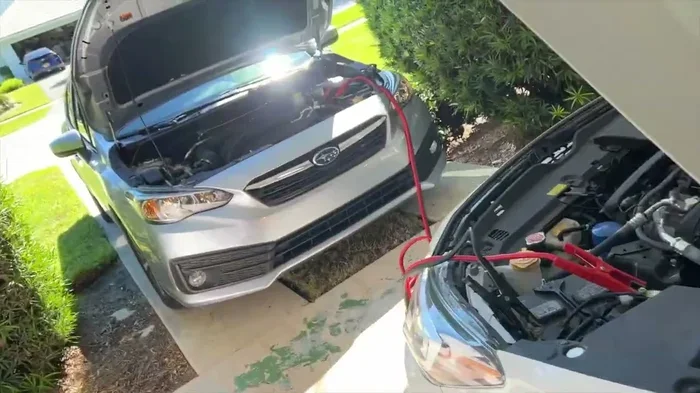
This is the most critical step. Connecting cables in the wrong order can damage the electrical systems or cause sparks. Follow this exact sequence:
- Connect the red cable to the dead battery’s positive terminal
- Connect the other red clamp to the working Subaru’s positive terminal
- Connect the black cable to the working Subaru’s negative terminal
- Connect the other black clamp to an unpainted metal surface on the dead car (not the battery terminal itself)
The final connection goes to a metal part of the engine block or frame on the dead car. This reduces the risk of sparks near the battery, where hydrogen gas could ignite.
Step 4: Start the Subaru First
Start your Subaru first and let it idle for a few minutes. This allows the alternator to send some charge to the dead battery. Do not rev the engine high. A gentle idle is all you need. After two to three minutes, try starting the dead car.
Step 5: Disconnect the Cables in Reverse Order
Once the dead car is running, disconnect the cables in the opposite order from how you connected them:
- Remove the black clamp from the dead car’s metal surface
- Remove the black clamp from the Subaru’s negative terminal
- Remove the red clamp from the Subaru’s positive terminal
- Remove the red clamp from the dead battery’s positive terminal
Keep the clamps away from each other during removal to avoid any accidental sparks.
Step 6: Let the Dead Car Run
Let the jumped car run for at least 15 to 20 minutes. This gives the alternator time to recharge the battery. If you turn it off too soon, it may not start again. Driving the car for a while is even better than just idling.
Safety Precautions When Jump Starting
Jump starting is generally safe, but it does come with risks. Following safety precautions protects you and both vehicles. Here are the most important things to keep in mind.
Never Reverse the Cable Connections
Connecting the cables backward can fry the electrical systems in both cars. It can also damage the ECU (Engine Control Unit) and other sensitive electronics. Modern Subarus have sophisticated computer systems that do not take kindly to reverse polarity.
Avoid Sparks Near the Battery
Car batteries produce hydrogen gas, which is highly flammable. Sparks near the battery can cause an explosion. This is why the final black clamp always goes on a metal surface away from the battery.
Check for Damaged Cables
Frayed or damaged jumper cables are a fire hazard. Inspect your cables before every use. If the insulation is worn or the clamps are corroded, replace them immediately.
Do Not Jump Start a Frozen Battery
If the battery is frozen, jump starting it can cause it to explode. A frozen battery usually has a cracked case or bulging sides. In this case, call roadside assistance instead.
Watch the Voltage
Most Subarus operate on a 12-volt system. Make sure both batteries are in a similar voltage range. Mixing a 12-volt battery with a different voltage system can cause serious damage.
Can You Jump Start a Hybrid Subaru?
This is a question many Subaru owners ask, especially those with newer hybrid models. The answer depends on the type of hybrid system your car uses.
Subaru does not currently offer a full hybrid lineup in most markets, but some models feature mild hybrid or electric assist systems. These vehicles have both a conventional 12-volt battery and a high-voltage hybrid battery.
You can use your Subaru to jump start another car’s conventional 12-volt battery. However, you should never attempt to jump start a hybrid vehicle’s high-voltage system directly. The high-voltage components carry thousands of volts and pose serious safety risks.
If you need to help a hybrid car with a dead 12-volt battery, the process is similar to a regular car. Connect to the 12-volt terminals only and follow the same safety steps. If you are unsure, refer to the hybrid owner’s manual or call for professional help. You can also learn more about jump starting hybrid vehicles in our detailed guide.
What If Your Subaru Won’t Start After Helping Someone?
Sometimes the tables turn. After you help jump start another car, your Subaru might not start when you try to leave. This is more common than you think and usually has a simple explanation.
The most likely cause is that your Subaru battery lost some of its charge during the process. Jump starting another car draws power from your battery. If your battery was already weak, it may not have enough left to start your own engine.
Here is what you should do:
- Let your Subaru idle for at least 10 minutes before trying to drive
- Check that your battery terminals are clean and tight
- Have the battery tested at an auto parts store
- Consider replacing the battery if it is more than three to five years old
If your Subaru turns over but won’t start after a jump start session, the issue might be more than just a dead battery. It could be a fuel delivery problem, a faulty starter motor, or an issue with the ignition system. In that case, it is best to call a mechanic.
Common Mistakes People Make When Jump Starting
Even experienced car owners make mistakes during jump starts. Avoiding these common errors can save you time, money, and headaches.
Connecting Cables to the Wrong Terminals
This is the number one mistake. Mixing up positive and negative cables can destroy electronics. Always double-check before making any connection.
Letting the Cables Dangle
Once connected, keep the cable clamps in place and away from moving engine parts. Loose cables can get caught in belts or fans, causing damage.
Starting the Dead Car Before the Working Car
Always start the working vehicle first. This ensures the alternator is charging the system before you try to crank the dead engine.
Removing the Cables Too Quickly
Let both cars run for a few minutes after the dead car starts. Removing the cables too soon can cause a voltage spike that damages the electrical system.
Ignoring the Owner’s Manual
Every Subaru model is slightly different. Your owner’s manual contains specific instructions and warnings about jump starting. Reading it takes five minutes and can prevent costly mistakes.
When to Call for Help Instead
Not every situation is suited for a DIY jump start. Here are times when you should call for professional roadside assistance instead of trying to help yourself:
- The battery is visibly damaged or leaking
- The car has been sitting for months and the battery is completely dead
- You notice a burning smell or smoke under the hood
- The electrical system shows signs of damage after a previous attempt
- You are in an unsafe location, such as a highway shoulder with no shoulder
Sometimes the smartest move is to call for help. Professional tow trucks carry portable jump packs that can handle any situation safely.
Can a Subaru Battery Be Too Weak to Jump Start Another Car?
Yes, it can. If your Subaru battery is old or weak, it may not have enough amperage to start another car. The general rule is that your battery needs to be in decent condition to help another vehicle. A healthy Subaru battery typically has 400 to 600 cold cranking amps (CCA), which is more than enough for most passenger vehicles.
If your battery is low, try running your Subaru for 10 to 15 minutes before attempting the jump start. This gives the alternator time to build up some charge. Think of it as topping off a bucket before you try to pour it into someone else’s.
You can also use a battery maintainer or trickle charger to keep your Subaru battery healthy during periods of inactivity. This is especially helpful if you drive your Subaru infrequently or leave it parked for long stretches.
Key Takeaways
- Subarus can jump start other cars: The standard 12-volt battery in most Subaru models provides enough power for emergency jump starts.
- Safety comes first: Always follow the correct cable connection order to avoid electrical damage or sparks.
- Know your battery location: Some Subaru models have the battery in the trunk or under a seat, not under the hood.
- Hybrid models need special care: Jump starting a dead hybrid car requires extra caution with the high-voltage system.
- Portable jump starters work too: A compact jump box can help when another vehicle is not available.
- Avoid common mistakes: Wrong cable order, loose cables, and removing connections too quickly can all cause problems.
- Know when to call for help: Damaged batteries, unsafe locations, and complex electrical issues are best left to professionals.
Frequently Asked Questions
Can a Subaru Outback jump start another car?
Yes, a Subaru Outback can jump start another car using its 12-volt battery. The process is the same as with any other Subaru model. Just make sure you follow the correct cable connection order and safety precautions. The Outback’s battery is usually located under the hood, but some model years place it in the trunk.
Do I need a special type of jumper cable for a Subaru?
No, standard jumper cables work fine with a Subaru. Look for cables with at least 4-gauge thickness for the best performance. Thicker cables transfer power more efficiently and handle the demand of starting another vehicle without overheating.
How long should I let the jumped car run after starting it?
Let the jumped car run for at least 15 to 20 minutes. This gives the alternator time to recharge the battery. Driving the car is even better than just idling. If the battery was completely dead, you may want to drive for 30 minutes or more before turning it off.
Can jump starting damage my Subaru’s electrical system?
When done correctly, jump starting should not damage your Subaru. The risk comes from mistakes like reversing the cable connections or connecting to the wrong terminals. Always follow the proper sequence and double-check your work before making any connections.
What should I do if my Subaru won’t start after helping someone else?
Let your Subaru idle for 10 to 15 minutes to allow the alternator to recharge the battery. If it still won’t start, check the battery terminals for corrosion and make sure they are tight. If the problem persists, have the battery tested. It may need replacement, especially if it is more than three years old.
Can I use a portable jump starter instead of another car?
Absolutely. A portable jump starter is a great alternative to using another vehicle. These devices are compact, rechargeable, and can start a car multiple times on a single charge. They are especially useful for Subaru owners who want a reliable backup solution for emergencies. Just make sure the jump starter has enough power for your vehicle’s engine size.