How Long Can COVID Live in a Car and How to Stay Safe
How Long Can COVID Live in a Car depends on the surface type, temperature, and humidity levels inside your vehicle. The coronavirus can survive on hard plastic and leather for up to 72 hours, while fabric may hold the virus for a shorter period. Regular car interior disinfection and proper ventilation are your best defenses against COVID transmission in vehicles. This guide covers everything you need to know about surface survival times, effective cleaning methods, and practical safety steps to protect yourself and your passengers.
Have you ever wondered how long COVID can live in a car? It is a question many drivers ask, especially after sharing a ride with someone or buying a used vehicle. The answer might surprise you. The coronavirus that causes COVID-19, known as SARS-CoV-2, can survive on various car surfaces for hours or even days. Understanding this helps you protect yourself, your family, and everyone who rides with you.
Cars are small, enclosed spaces. That means COVID transmission in vehicles is a real concern. When you sit in a tight cabin with recycled air, the risk of picking up germs goes up. But here is the good news. With the right cleaning habits and a little awareness, you can significantly lower that risk. This article breaks down everything you need to know about how long COVID lives on car surfaces, what affects its survival, and the best ways to keep your vehicle safe and clean.
Key Takeaways
- COVID can survive on car surfaces: The virus may live on leather, plastic, and fabric for several hours to up to three days depending on conditions.
- Temperature and humidity matter: Hot, humid environments reduce virus survival, while cool, dry cars can harbor the virus longer.
- Regular disinfection is essential: Using EPA-approved disinfectants on high-touch areas like the steering wheel and door handles significantly reduces risk.
- Ventilation helps lower risk: Opening windows and using fresh air mode in your car’s HVAC system improves air circulation and reduces COVID risk in enclosed spaces.
- Avoid common cleaning mistakes: Using harsh chemicals or skipping high-touch surfaces can leave your car vulnerable to contamination.
- Masks add extra protection: Wearing masks when driving with non-household passengers is a simple but effective way to reduce COVID transmission in vehicles.
📑 Table of Contents
How Long Can COVID Survive on Different Car Surfaces
The survival time of the virus depends heavily on the material. Not all car surfaces are created equal when it comes to coronavirus survival on surfaces. Let us break it down by the most common materials found inside your vehicle.
Survival on Leather and Vinyl Seats
Leather and vinyl are non-porous surfaces. That means the virus can sit on top of them rather than soaking in. Studies show that SARS-CoV-2 on upholstery made of leather or vinyl can remain infectious for up to 72 hours under normal indoor conditions. However, the actual survival time can shrink significantly in hot, sunny cars where temperatures climb above 85°F (29°C).
Think about your leather seats. Every time you or a passenger gets in and out, the virus can land there. The steering wheel, center console, and door panels are often made of similar materials. These are all high-touch zones that deserve regular attention during car interior disinfection.
Survival on Plastic and Hard Surfaces
Hard plastic surfaces like the dashboard, gear shift, and control buttons are also prime spots for the virus. COVID on plastic surfaces can persist for up to 72 hours in lab conditions. In real-world car environments, the survival time may be shorter due to temperature swings and airflow.
The dashboard is a tricky spot because it often gets direct sunlight. UV rays from the sun can help break down the virus faster. But the areas that stay shaded, like the lower dashboard or the area around the glove box, can harbor the virus longer. This is why a thorough disinfecting car dashboard routine matters more than you might think.
Survival on Fabric and Carpet
Fabric surfaces like cloth seats, floor mats, and headliners tend to hold the virus for a shorter time compared to hard surfaces. Porous materials like fabric absorb moisture, which can weaken the virus faster. COVID on car upholstery made of fabric may survive for about 24 to 48 hours under typical conditions.
That said, fabric can trap respiratory droplets deep within its fibers. If someone coughs or sneezes on your cloth seats, the virus particles can settle into the weave. This makes sanitizing car seats an important step, especially if you frequently carry passengers who do not live in your household.
What Affects How Long COVID Lives in Your Car
Not all cars are the same environment. Several factors determine how long the virus can survive inside your vehicle. Understanding these factors helps you take smarter precautions.
Temperature and Weather Conditions
Heat is not your friend when it comes to virus survival. Cooler temperatures help the coronavirus last longer on surfaces. A car parked in a cool garage or shaded area can keep the virus viable for a longer period. On the other hand, a car sitting in the blazing sun with interior temperatures reaching 140°F (60°C) can kill the virus much faster.
This is why COVID survival on car surfaces varies by season and climate. In winter, your car stays cold longer, and the virus can persist. In summer, the heat works in your favor. But do not rely on heat alone. Even on a hot day, shaded areas inside the car may still harbor the virus.
Humidity Levels Inside the Vehicle
Humidity plays a big role too. Low humidity, which is common in air-conditioned cars, can help the virus stay airborne and viable longer. Higher humidity tends to break down the viral envelope faster, reducing its ability to infect.
If you live in a dry climate and keep your car running with the AC on full blast, the low humidity inside can create conditions where the virus survives a bit longer. Running a humidifier or simply cracking a window can help balance this out and support car ventilation and COVID safety.
Sunlight and UV Exposure
Ultraviolet (UV) light from the sun is a natural virus killer. Cars that sit in direct sunlight get UV exposure that can reduce the lifespan of the virus on surfaces. However, UV light only reaches the surfaces it can see. Dark shaded areas under the dashboard, inside cupholders, and under seats may not get any UV exposure at all.
This is a key point for vehicle sanitization. Sunlight helps, but it does not reach everywhere inside your car. You still need to clean and disinfect properly, even if your car sits in the sun all day.
How to Properly Disinfect Your Car Interior
Knowing how long COVID lives in a car is only half the battle. The other half is taking action. Proper disinfection is your most powerful tool for reducing COVID risk in enclosed spaces like your vehicle.
Best Disinfectants for Car Surfaces
Not all cleaning products work equally well against the coronavirus. The EPA maintains a list of disinfectants that are effective against SARS-CoV-2. Look for products that contain at least 70% alcohol, hydrogen peroxide, or quaternary ammonium compounds.
Disinfectant wipes for car use are incredibly convenient. Clorox wipes, Lysol wipes, and similar products work well on hard surfaces like plastic, vinyl, and leather. Just make sure the surface stays wet for the recommended contact time listed on the product label. Usually, this is about 3 to 5 minutes.
For leather seats, avoid bleach or hydrogen peroxide-based products. These can damage leather over time. Instead, use leather-safe disinfectant sprays or wipes designed for automotive interiors. Automotive hygiene tips like these keep your car clean without ruining the materials.
Step-by-Step Car Cleaning Process
Here is a simple, effective process for disinfecting your car after potential exposure or as part of a regular cleaning routine:
- Gather your supplies. You need EPA-approved disinfectant wipes, a spray bottle with disinfectant solution, microfiber cloths, and disposable gloves.
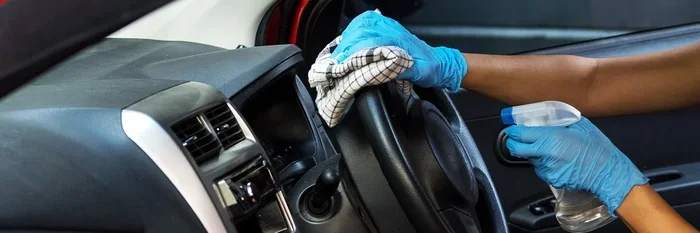
- Start with the high-touch areas. These include the steering wheel, gear shift, door handles, window controls, seat belts, and the center console.
- Wipe down all hard surfaces. Spray or wipe the dashboard, center stack, climate controls, and cupholders. Let the disinfectant sit for the recommended contact time.
- Clean fabric surfaces. Use an upholstery cleaner or a fabric-safe disinfectant spray on cloth seats and floor mats. Allow them to dry completely.
- Do not forget the air vents. Use a cotton swab or soft brush with disinfectant to clean the slats of your car’s air conditioning vents.
- Dispose of gloves and wash your hands. After cleaning, remove your gloves and wash your hands thoroughly with soap and water for at least 20 seconds.
Following this how to clean car after COVID routine takes about 15 to 20 minutes and makes a huge difference in reducing viral load inside your vehicle.
What to Avoid When Cleaning Your Car
Some common cleaning mistakes can actually make things worse or damage your car. Avoid using excessive water on electronic screens or controls. Do not use abrasive cleaners on leather or vinyl, as they can crack and peel over time. Avoid ammonia-based glass cleaners on touchscreens, as they can damage the anti-glare coating. And never mix different cleaning products, especially bleach and ammonia, which can create toxic fumes in your enclosed car space.
Reducing COVID Risk When Sharing a Car
Driving with passengers who do not live in your household adds another layer of concern. But with a few smart habits, you can keep everyone safer.
Mask Usage During Car Rides
Wearing a mask in the car is one of the simplest ways to reduce COVID transmission in vehicles. A well-fitting mask covers your nose and mouth, blocking respiratory droplets from spreading inside the cabin. If you are driving with someone outside your household, both of you should wear masks, especially if you need to talk or turn to reach something.
Even if you are the only one in the car, wearing a mask after picking up a passenger or after visiting a crowded indoor space is a smart precaution. It takes seconds and adds a meaningful layer of protecting car passengers.
Ventilation Strategies That Work
Good airflow is your best friend when it comes to car ventilation and COVID safety. Opening windows creates cross-ventilation that helps flush out any airborne particles. Even cracking two windows slightly, one on each side, can make a big difference.
If you prefer to use the air conditioning, set it to fresh air mode rather than recirculation. Fresh air mode pulls outside air into the cabin, which dilutes any potential viral particles inside the car. Some modern vehicles have cabin air filters that can trap particles, but they are not a substitute for proper ventilation.
Here are some quick ventilation tips for your car:
- Open at least two windows slightly on opposite sides for cross-breeze.
- Use the fan on a low setting with fresh air mode to avoid blowing particles around.
- After a ride with a passenger, crack the windows for a few minutes before driving again.
- Replace your cabin air filter regularly, following your vehicle manufacturer’s recommendations.
Keeping Passengers Safe
Beyond masks and ventilation, consider the seating arrangement. If possible, have passengers sit in the back seat, away from the driver. This increases the physical distance between people inside the small cabin. Avoid shared snacks or drinks during rides. And if anyone feels unwell, it is best to postpone the trip or ensure they wear a mask and sit in the back with the window cracked.
Common Mistakes People Make When Cleaning Their Car
Many people think a quick wipe-down is enough to keep their car germ-free. But common mistakes can leave your vehicle vulnerable to contamination and reduce the effectiveness of your cleaning efforts.
One of the biggest mistakes is focusing only on visible dirt. The coronavirus is invisible. A surface can look perfectly clean and still harbor the virus. This is why regular car interior disinfection based on a schedule matters more than just cleaning when something looks dirty.
Another mistake is not cleaning high-touch areas often enough. The steering wheel, door handles, and seat belt buckles get touched every single time you enter or exit the car. These spots need the most attention. Skipping them means you are missing the most likely places for surface transmission in cars.
Some people use the wrong products. Hand sanitizer can work in a pinch, but it is not a substitute for proper disinfectant wipes or sprays. Others use too much liquid, which can damage electronic components or seep into fabric and cause mold. Less is more when it comes to applying disinfectant. Use enough to cover the surface, let it sit, and then wipe dry.
Finally, people often forget about items they bring into the car. Grocery bags, phone cases, keys, and wallets all carry the potential for contamination. Wiping down these items when you get home is a simple habit that supports overall car safety during COVID.
Long-Term Habits for a COVID-Safe Vehicle
Keeping your car safe is not a one-time effort. It is about building habits that become part of your routine. Think of car hygiene the same way you think about washing your hands. It becomes second nature with practice.
Set a weekly cleaning schedule. Pick a day, like Sunday evening, and spend 15 minutes wiping down the high-touch surfaces. Keep a small kit in your trunk with disinfectant wipes, hand sanitizer, and a pack of disposable gloves. This makes it easy to clean up after every trip, especially after carpools, rideshare rides, or visits to busy places.
Teach everyone who rides in your car about basic COVID safety in vehicles. Make it a household rule to sanitize hands when getting in and out. Encourage passengers to cough or sneeze into their elbow or a tissue. These small habits add up and create a much safer environment for everyone.
If you have been sick or had a known exposure, do a deep clean of your entire car. Pay extra attention to the areas around the driver’s seat, the steering wheel, and any surfaces you touched frequently. A thorough cleaning after illness gives you peace of mind and protects the next person who rides with you.
Remember, the goal is not to live in fear. It is to be informed and prepared. By understanding how long COVID can live in a car and taking simple, consistent steps, you can drive with confidence. Your car can be a safe space when you make automotive COVID prevention a regular part of your routine.
Stay proactive. Stay clean. Stay safe. The small efforts you put into keeping your car disinfected pay off in protecting your health and the health of everyone around you.
Frequently Asked Questions
How long can the coronavirus survive on car seat belts?
Coronavirus can survive on the fabric and metal parts of seat belts for up to 72 hours under normal conditions. Since seat belts are high-touch items, wipe them down regularly with a disinfectant wipe. This simple habit significantly reduces the risk of COVID transmission in vehicles for you and your passengers.
Is it safe to ride in someone else’s car during the pandemic?
It can be safe if both you and the driver take basic precautions. Wear a mask, open the windows for ventilation, and sanitize your hands when entering and exiting. Avoid touching your face during the ride. These steps lower the risk of COVID risk in enclosed spaces and make shared rides much safer.
Can the COVID virus live on car keys and remotes?
Yes, the virus can survive on hard surfaces like car keys and key fobs for up to 72 hours. These small items get touched constantly and are often overlooked during cleaning. Wipe them down with a disinfectant wipe regularly as part of your car interior disinfection routine.
What is the best way to disinfect a car’s air conditioning system?
The best approach is to replace your cabin air filter regularly and use the fresh air setting instead of recirculation. You can also use disinfectant sprays designed for HVAC vents and clean the vent slats with a cotton swab dipped in alcohol-based disinfectant. This supports car ventilation and COVID safety throughout your drives.
How often should I clean my car to prevent COVID spread?
If you drive alone or only with household members, a weekly cleaning is usually sufficient. If you frequently carry passengers outside your household or have had recent exposure, disinfect high-touch surfaces after every ride. Consistent vehicle sanitization is the key to keeping your car a safe environment.
Does the type of car affect how long COVID survives inside?
The size of the car and its ventilation system can play a role. Smaller cars with less airflow may have higher concentrations of airborne particles. However, the survival time of the virus on surfaces is more affected by material type, temperature, and humidity than by the car model itself. Focus on cleaning practices and ventilation regardless of your vehicle type.
=== CONCLUSION ===
Understanding how long COVID can live in a car empowers you to take control of your health and safety. The virus can survive on leather, plastic, and fabric surfaces for hours to several days, but simple, consistent actions make a real difference. Regular car interior disinfection, proper ventilation, mask usage, and smart cleaning habits all work together to create a safer driving environment.
The key is not to worry but to be prepared. By following the steps outlined in this guide, you can protect yourself, your passengers, and everyone who touches your vehicle. Keep disinfectant wipes in your car, open your windows when possible, and make cleaning a habit rather than an afterthought.
COVID safety in your car is simpler than you think. Small efforts every day lead to big results over time. Take what you have learned here, apply it consistently, and drive with confidence knowing you are doing your part to stay safe and stop the spread.