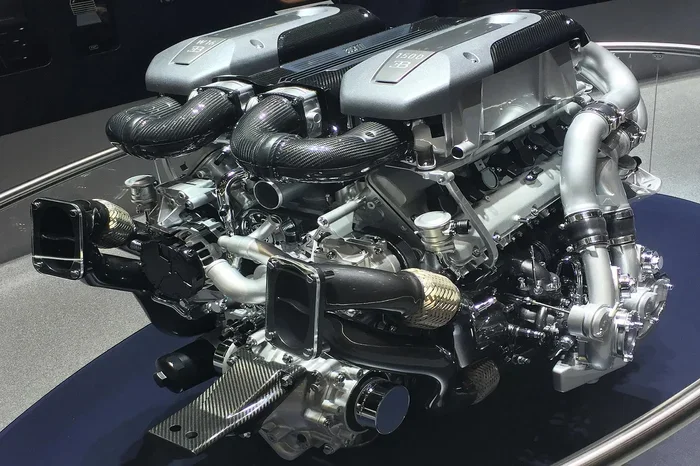
How Bugattis Quad-Turbocharged Powerplant Works – Explained
The Bugatti quad-turbocharged powerplant is an engineering masterpiece that combines a massive W16 engine with four turbochargers to produce mind-blowing horsepower and torque. This system uses forced induction, advanced cooling, and precise boost control to deliver seamless power at any speed. Understanding how it works gives car enthusiasts a deeper appreciation for Bugatti’s engineering genius.
Have you ever wondered what makes a Bugatti so incredibly fast? The answer lies deep under the hood, in a machine that defies everything you know about car engines. Bugatti’s quad-turbocharged powerplant is not just an engine. It is a masterpiece of engineering that has redefined what a car can do.
When you think about hypercars, Bugatti immediately comes to mind. The Chiron, the Veyron, and the newer models all share something special. They all use quad-turbo technology to push out numbers that most people cannot even comprehend. We are talking about over a thousand horsepower from a single engine block. That is not a typo. Over one thousand horsepower.
In this article, we are going to break down exactly how Bugatti’s quad-turbocharged powerplant works. We will look at the engine architecture, the turbo system, the cooling setup, and what makes this powerplant so special. Whether you are a car enthusiast or just curious, this guide will give you a clear picture of the engineering behind the madness.
Key Takeaways
- The W16 engine: A unique 16-cylinder layout that forms the heart of Bugatti’s quad-turbo system.
- Four turbochargers: Working in perfect sync to eliminate turbo lag and deliver smooth, relentless power.
- Advanced cooling: Intercoolers and aerodynamic design keep temperatures in check under extreme loads.
- Boost control: Wastegates and electronic systems manage pressure precisely for optimal performance.
- Routine maintenance matters: Regular oil changes and turbo inspections keep the powerplant running strong.
- Engineering excellence: Bugatti’s quad-turbo setup sets the standard for hypercar powertrains worldwide.
📑 Table of Contents
- Understanding the Bugatti Quad-Turbo Powerplant
- The Architecture of the W16 Engine
- How the Quad-Turbo System Delivers Power
- Cooling the Quad-Turbo Powerplant
- Power Delivery and Performance Numbers
- Common Maintenance Tips for Quad-Turbo Bugattis
- Expert Insights on Quad-Turbo Engineering
- Key Takeaways
- Conclusion
Understanding the Bugatti Quad-Turbo Powerplant
Before we dive into the details, let us set the stage. A quad-turbocharged powerplant means an engine with four turbochargers. Each turbo feeds compressed air into the engine’s cylinders. This is called forced induction, and it allows the engine to burn more fuel per cycle. More fuel burned means more power. Simple as that.
But why four turbos? Why not one big one or two smaller ones? The answer comes down to response, efficiency, and smoothness. Four turbos spread the work evenly across the engine’s cylinders. This reduces turbo lag, which is the delay you feel when a single turbo needs to spool up. With four turbos working together, the power arrives instantly and stays consistent.
Why Four Turbochargers Make Sense
Think of it this way. Imagine you are carrying a heavy box up a flight of stairs. Would you rather do it alone or with three friends? Four people can handle the load more easily and faster. The same logic applies to turbocharging. Four turbos share the workload of compressing air for the engine. Each turbo handles a smaller set of cylinders, so it spools up quicker.
This setup also means the engine stays responsive at low RPMs. You do not have to wait for a single turbo to build pressure. The moment you press the pedal, the quad-turbo system is already delivering boosted air. That is why Bugatti engines feel so effortless and linear.
The W16 Engine Block
At the center of it all is the W16 engine. This is a 16-cylinder engine arranged in a unique W shape. It is not a V16. The cylinders are split into two banks, each with four cylinders, and the two banks are joined at a narrow angle. This compact design fits 16 cylinders into a space that would normally hold far fewer.
The displacement of the Bugatti W16 is 8.0 liters. That is a huge amount of displacement for a car engine. Combined with the four turbochargers, this engine produces staggering amounts of power. The quad-turbo W16 is one of the most powerful production engines ever built. Nothing else comes close in terms of sheer output.
The Architecture of the W16 Engine
Now let us get into the nuts and bolts. How is the Bugatti quad-turbocharged powerplant actually built? What makes it different from a regular car engine? The answer lies in the architecture.
Cylinder Arrangement and Displacement
The W16 layout is truly unique. Most cars use inline-four or V6 or V8 engines. Bugatti went a completely different route. The W16 has two VR8 banks joined together. Each bank has four cylinders arranged in a narrow V. The two banks share a single crankshaft. This gives the engine its distinctive W shape when viewed from the front.
The 8.0-liter displacement means each cylinder has a large volume to work with. Bigger cylinders can burn more fuel and air per cycle. This directly translates to more power. The quad-turbo setup then forces even more air into those large cylinders, multiplying the effect.
How the Crankshaft Drives Everything
At the bottom of the engine sits a single forged crankshaft. This is the piece that converts the up-and-down motion of the pistons into rotational force. The crankshaft in a Bugatti W16 is incredibly strong. It has to withstand enormous forces from 16 cylinders firing at once.
The crankshaft connects to the flywheel, which then connects to the transmission. In Bugatti models, this is typically a seven-speed dual-clutch gearbox. The power flows smoothly from the quad-turbo engine through the gearbox and into the wheels. Every component is built to handle extreme loads.
How the Quad-Turbo System Delivers Power
This is the heart of the story. The four turbochargers are what make the Bugatti quad-turbocharged powerplant so special. Let us look at exactly how they work and why they are arranged the way they are.
Turbo Synchronization and Spooling
Each turbocharger is connected to a set of four cylinders. In the Bugatti W16, the four turbos are split into two pairs. One pair handles the front bank of cylinders, and the other pair handles the rear bank. This arrangement keeps the plumbing short and efficient.
When you step on the accelerator, exhaust gases rush out of the cylinders and spin the turbine wheels inside the turbos. The faster the turbines spin, the more air they compress and push into the intake manifold. This compressed air is denser than normal atmospheric air, which means more oxygen enters the combustion chamber. More oxygen allows the engine to burn more fuel, which creates more power.
The key to the quad-turbo system is synchronization. All four turbos need to work together seamlessly. If one turbo lags or spikes too early, the power delivery becomes uneven. Bugatti engineers spent years perfecting the balance between the four turbos. The result is power that feels almost telepathic in its response.
Wastegate and Boost Control
So how does the engine avoid making too much boost pressure? That is where the wastegate comes in. A wastegate is a valve that diverts excess exhaust gases away from the turbine. This limits how fast the turbo spins and controls the boost pressure.
In a Bugatti quad-turbo engine, each turbo has its own wastegate. Electronic sensors monitor boost pressure in real time. If the pressure gets too high, the wastegate opens to release some exhaust gas. If the pressure drops, the wastegate closes to keep more gas flowing through the turbine.
This system is incredibly precise. It ensures the engine always operates within safe limits while still producing maximum power. The boost control in a Bugatti is managed by a sophisticated engine management computer. It makes thousands of adjustments per second to keep everything running perfectly.
Intercooling the Compressed Air
When air is compressed by a turbocharger, it heats up. Hot air is less dense than cool air, which means it carries less oxygen. To solve this problem, Bugatti uses intercoolers. These are essentially heat exchangers that cool the compressed air before it enters the engine.
The quad-turbo intercooler system in a Bugatti is massive. It uses a combination of air-to-water intercoolers and front-mounted radiators. The cooled air is denser, which means more oxygen per intake stroke. More oxygen means more fuel can be burned, which means more power. It is a simple concept, but the engineering behind it is incredibly complex.
Cooling the Quad-Turbo Powerplant
Managing heat is one of the biggest challenges in any high-performance engine. When you are producing over a thousand horsepower, you are also generating an enormous amount of heat. Bugatti has developed some remarkable solutions to keep the quad-turbo powerplant running at the right temperature.
Intercooler Systems in Detail
The intercoolers in a Bugatti do more than just cool the intake air. They also help cool the engine oil and the transmission fluid. This triple-duty cooling system is essential for sustained high-performance driving. Without it, the engine would overheat within minutes at full power.
The air-to-water intercoolers use a separate coolant circuit to absorb heat from the compressed intake air. This coolant then flows through a radiator up front, where ambient air cools it down. The system is highly efficient and keeps the intake air temperature low even during hard driving.
Heat Management in a Hypercar
Bugatti also uses aerodynamic design to help manage heat. The front bumper has large intake channels that funnel cool air into the engine bay. The rear has exhaust vents that allow hot air to escape quickly. Every vent, duct, and channel is placed with purpose.
Thermal management is not just about preventing overheating. It is also about maintaining consistent performance. When the engine is at the right temperature, it produces its rated power reliably. When it gets too hot, power drops and components can be damaged. Bugatti’s cooling system ensures the engine stays in its sweet spot no matter what.
Aerodynamic Cooling Tricks
Here is a fun fact. The Bugatti Chiron uses its radiator as an extra aerodynamic surface. The shape of the front radiator intake is carefully designed to reduce drag while still feeding plenty of air to the engine. This is a perfect example of how Bugatti engineers think about every detail.
Some models also use active grille shutters. These are panels that open and close automatically to control airflow. At low speeds, they stay closed to reduce drag. At high speeds, they open wide to maximize cooling. This clever system helps balance aerodynamics and thermal management simultaneously.
Power Delivery and Performance Numbers
So what does all this engineering actually produce in terms of performance? The numbers from a Bugatti quad-turbo W16 are simply staggering.
Horsepower and Torque Breakdown
In the latest Bugatti Chiron, the quad-turbo W16 produces 1,578 horsepower and 1,180 pound-feet of torque. Those are the numbers for the standard version. The Super Sport version pushes even higher. We are talking about a road-legal car that can exceed 250 miles per hour.
To put that in perspective, most family sedans produce between 150 and 300 horsepower. The Bugatti produces more than five times that. And it does it with a engine that fits inside a regular car engine bay. The power-to-weight ratio is what makes these cars so absurdly fast.
How the Power Reaches the Wheels
All that power would be useless if it could not get to the ground. Bugatti uses a permanent all-wheel-drive system with a seven-speed dual-clutch transmission. The torque is sent to all four wheels through a sophisticated drivetrain.
The dual-clutch gearbox shifts gears in milliseconds. You barely even notice the shifts. This means the quad-turbo powerplant can deliver its full torque output almost instantly. The combination of massive power and instant delivery is what gives Bugatti its legendary acceleration.
Common Maintenance Tips for Quad-Turbo Bugattis
Owning a Bugatti is not just about speed. It is also about keeping that incredible quad-turbocharged powerplant in top shape. These engines need special care, and regular maintenance is essential.
Oil Changes and Turbo Health
Oil changes are the single most important maintenance task for a Bugatti. The W16 engine has 16 cylinders, and each one needs clean oil to operate properly. Dirty oil can cause increased wear on the turbocharger bearings, which are precision components that spin at extremely high speeds.
Bugatti recommends oil changes at regular intervals, typically every 10,000 to 15,000 miles depending on driving conditions. Always use the manufacturer-specified oil grade. Using the wrong oil can lead to poor lubrication and premature turbo wear. This is not a place to cut corners.
What Owners Should Watch For
There are a few warning signs that your quad-turbo system may need attention. Unusual sounds from the turbo area, such as whining or whistling, can indicate a problem. A drop in power or hesitation during acceleration may signal turbo fatigue or boost leaks.
Keep an eye on your coolant levels too. The cooling system plays a critical role in protecting the turbos and the engine. If you notice overheating warnings or a rising temperature gauge, pull over safely and let the engine cool down. Ignoring these signs can lead to expensive repairs.
Expert Insights on Quad-Turbo Engineering
Bugatti’s approach to the quad-turbocharged powerplant has influenced the entire hypercar industry. Engineers at other manufacturers study Bugatti’s designs and try to learn from them. The use of four turbochargers on a W16 engine is a concept that has proven itself time and again.
One key insight from Bugatti engineers is the importance of balance. Every component in the powerplant is designed to work in harmony. The turbos, the intercoolers, the wastegates, the fuel injectors, and the engine management system all communicate constantly. This integrated approach is what makes the Bugatti engine so reliable and powerful despite its extreme output.
Another important lesson is the value of thermal engineering. Bugatti invests heavily in cooling technology because they know that heat is the enemy of performance. By keeping temperatures controlled, they can push the engine harder for longer. This philosophy applies not just to hypercars but to any high-performance vehicle.
Key Takeaways
- The W16 engine: A unique 16-cylinder layout that forms the heart of Bugatti’s quad-turbo system and delivers unmatched power.
- Four turbochargers: Working in perfect sync to eliminate turbo lag and deliver smooth, relentless power across the entire RPM range.
- Advanced cooling: Intercoolers and aerodynamic design keep temperatures in check even under extreme loads and sustained high-speed driving.
- Boost control: Wastegates and electronic systems manage pressure precisely for optimal performance and engine protection.
- Routine maintenance matters: Regular oil changes and turbo inspections keep the powerplant running strong for years of enjoyment.
- Engineering excellence: Bugatti’s quad-turbo setup sets the standard for hypercar powertrains and continues to push boundaries.
Conclusion
The Bugatti quad-turbocharged powerplant is more than just an engine. It is a statement about what engineering can achieve when talent, money, and passion come together. From the unique W16 architecture to the synchronized quad-turbo system, every element is designed to produce extraordinary performance.
Whether you are a car enthusiast, a mechanic, or simply someone who appreciates great engineering, understanding how this powerplant works gives you a deeper respect for what Bugatti has accomplished. The combination of forced induction, advanced cooling, precise boost control, and meticulous maintenance creates a driving experience that is truly unmatched.
If you own a Bugatti or are considering one, take the time to understand your engine. Regular care and attention will keep that incredible quad-turbo powerplant running at its best for years to come. The investment in maintenance pays off in performance, reliability, and the sheer joy of driving one of the most remarkable machines ever built.
Frequently Asked Questions
What does quad-turbocharged mean in a Bugatti engine?
Quad-turbocharged means the engine uses four turbochargers to force more air into the combustion chambers. In Bugatti’s case, the W16 engine uses four turbos split into two pairs, one for each bank of cylinders. This setup provides instant boost and smooth, consistent power delivery across the entire RPM range.
How much horsepower does a Bugatti quad-turbo engine produce?
The Bugatti Chiron’s quad-turbo W16 engine produces 1,578 horsepower. Earlier models like the Veyron Super Sport produced around 1,200 horsepower. The exact number varies by model and tuning, but all Bugatti quad-turbo engines deliver well over a thousand horsepower.
Why does Bugatti use four turbochargers instead of fewer larger ones?
Four smaller turbos spool up faster than one or two large ones. This reduces turbo lag and provides more immediate power delivery. The quad setup also spreads the thermal and mechanical load across four units, improving reliability and allowing the engine to sustain high output for longer periods.
How often should I change the oil in a Bugatti with a quad-turbo engine?
Bugatti recommends oil changes every 10,000 to 15,000 miles, depending on driving conditions. Always use the manufacturer-specified oil grade. Clean oil is essential for protecting the turbocharger bearings and ensuring the W16 engine runs smoothly under extreme loads.
What is the role of the intercooler in a Bugatti quad-turbo system?
The intercooler cools the compressed air coming from the turbochargers before it enters the engine. Compressed air is hot and less dense, so cooling it makes it denser and richer in oxygen. This allows the engine to burn more fuel per cycle, producing more power while also helping to prevent detonation and engine damage.
Can a quad-turbo Bugatti engine be maintained by any mechanic?
No, Bugatti engines require specialized knowledge and tools. The quad-turbo W16 is one of the most complex automotive engines ever produced. Maintenance should be performed by certified Bugatti technicians or highly experienced specialists who understand the unique demands of the quad-turbo powerplant.