Can You Check the Health of Your Hybrid Battery at Home
You can check your hybrid battery health at home using a few simple methods like voltage testing, error code scanning, and visual inspection. Knowing the hybrid battery health early helps you avoid costly repairs and keeps your car running smoothly. This guide walks you through every step with practical, easy-to-follow advice.
Key Takeaways
- Voltage Testing: A multimeter can tell you a lot about your hybrid battery’s condition in minutes.
- Warning Signs Matter: Reduced fuel economy, strange noises, and dashboard alerts often point to battery issues.
- OBD-II Scanner Helps: Plugging in a scanner gives you real-time diagnostic data about your hybrid battery.
- Visual Inspection Is Key: Looking for swelling, leaks, or corrosion can catch problems early.
- Professional Help Has Its Place: Some tests need specialized equipment only a shop can provide.
- Prevention Beats Repair: Regular maintenance extends your hybrid battery lifespan significantly.
📑 Table of Contents
- Can You Check the Health of Your Hybrid Battery at Home?
- Why Hybrid Battery Health Matters
- Tools You Need to Test Your Hybrid Battery
- Method 1: Voltage Testing with a Multimeter
- Method 2: Using an OBD-II Scanner for Hybrid Battery Diagnostics
- Method 3: Visual and Physical Inspection
- Warning Signs Your Hybrid Battery Is Failing
- When to Seek Professional Help
- Tips to Extend Your Hybrid Battery Life
- Can You Still Drive if Your Hybrid Battery Is Weak?
- Conclusion
Can You Check the Health of Your Hybrid Battery at Home?
If you drive a hybrid, you know the battery is the heart of the whole system. It works differently from a regular car battery. So it makes sense to wonder whether you can check its health yourself. The good news is yes, you can. You do not need a mechanic for every check. A few simple tools and some basic knowledge go a long way.
Checking your hybrid battery health at home saves you time and money. It also helps you catch problems before they turn into big expenses. In this guide, we walk you through every method you can use right in your driveway. Whether you are a complete beginner or a handy car owner, you will find practical steps that work.
Let us start with the basics. Your hybrid has two batteries. One is a small 12-volt battery that starts the car. The other is the big hybrid battery pack that powers the electric motor. Both need attention. But this guide focuses mainly on the high-voltage battery pack because that is where most problems show up.
Why Hybrid Battery Health Matters
Your hybrid battery does more than just start the engine. It stores energy from regenerative braking. It powers the car at low speeds. It even helps the gas engine run more efficiently. When the battery starts to fade, everything else suffers too.
A healthy hybrid battery means better fuel economy. It means smoother driving. It means fewer surprises on the road. Ignoring early warning signs can lead to a full hybrid battery replacement, which can cost thousands of dollars. That is why regular checks matter so much.
Most hybrid batteries last between 8 and 15 years. But driving habits, climate, and maintenance all play a role. Hot weather can speed up battery degradation. Short trips that never fully recharge the pack can also cause wear over time. The more you know about your battery’s condition, the better you can protect your investment.
How Hybrid Batteries Work
Hybrid cars use a state of charge system to manage battery power. The car constantly balances charging and discharging. When you brake, the system recovers energy and sends it back to the battery. This is called regenerative braking. When you accelerate, the battery releases stored energy to assist the gas engine.
The battery pack consists of many small cells connected together. If even a few cells start to fail, the whole pack suffers. This is why checking individual cell health matters. A single weak cell can drag down the performance of the entire system.
Tools You Need to Test Your Hybrid Battery
Before you start testing, gather the right tools. You do not need anything expensive. Most of these items are easy to find online or at any auto parts store.
- Digital Multimeter: This is the most important tool. It measures voltage and helps you test each battery cell.
- OBD-II Scanner: A basic scanner plugs into your car’s diagnostic port and reads error codes.
- Safety Gloves and Glasses: Hybrid batteries carry high voltage. Protect yourself before touching anything.
- Flashlight: You will need to look inside the battery compartment, so good lighting helps.
- Notebook or Phone: Record your readings so you can track changes over time.
Make sure your multimeter can read both DC voltage and resistance. A basic digital multimeter costs around $20 to $40. It is a worthwhile investment for any hybrid owner. The OBD-II scanner can be even cheaper. Many basic models work well for reading hybrid-specific codes.
Safety First: Working With Hybrid Batteries
Hybrid batteries carry a high-voltage shock risk. Always turn off the car and remove the key before opening any battery panels. Wait at least 10 minutes after turning off the ignition. This allows the system to discharge safely.
Never touch any orange-colored cables. These are the high-voltage wires. If you see damaged insulation or exposed wires, do not touch them. Call a professional. Safety should always come first when working with hybrid vehicle maintenance.
Method 1: Voltage Testing with a Multimeter
Voltage testing is the most direct way to check your hybrid battery health. It tells you how much charge each cell holds. A healthy cell should read within a very specific range.
Here is how to do it step by step:
- Locate your hybrid battery pack. In most hybrids, it is under the rear cargo area or beneath the car.
- Open the access panel carefully. Refer to your owner’s manual for the exact location.
- Set your multimeter to DC voltage mode.
- Touch the red probe to the positive terminal and the black probe to the negative terminal of the first cell.
- Record the reading. A healthy cell typically reads between 3.0 and 4.2 volts per cell.
- Repeat this for every cell in the pack.
- Compare all readings. Any cell that reads significantly lower than the others is a problem.
If you find a cell that reads below 2.5 volts, that cell is likely damaged. A single weak cell can cause the entire battery pack to underperform. This is one of the most common reasons for reduced hybrid battery lifespan.
What Your Voltage Readings Mean
Here is a quick guide to understanding your readings:
- 3.6 to 4.2 volts per cell: Excellent health. Your battery is in great shape.
- 3.0 to 3.5 volts per cell: Good health. No immediate action needed.
- 2.5 to 3.0 volts per cell: Fair health. Monitor this cell closely.
- Below 2.5 volts per cell: Poor health. This cell likely needs replacement.
Testing every few months helps you spot trends. A cell that slowly drops over time tells you the battery is degrading. Catching this early gives you time to plan for repair or replacement.
Method 2: Using an OBD-II Scanner for Hybrid Battery Diagnostics
Modern hybrids are packed with sensors and computers. An OBD-II scanner can tap into this system and give you detailed information about your battery health. This method is easier than voltage testing and requires less hands-on work.
Here is how to use one:
- Locate the OBD-II port in your car. It is usually under the dashboard on the driver’s side.
- Plug in your scanner and turn the ignition to the “on” position (do not start the engine).
- Follow the scanner’s prompts to read hybrid battery codes.
- Look for codes related to the battery management system, such as P0A80 or P0A7F.
- Record any codes and look them up in your scanner’s database or online.
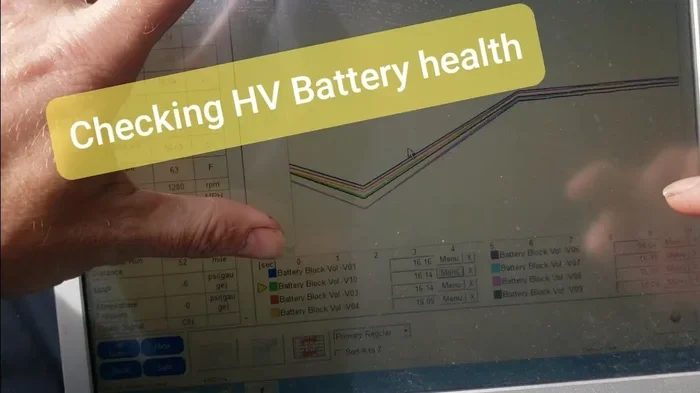
Some scanners give you a battery health percentage. This is a quick and easy way to see the overall condition. If the scanner shows your battery is below 70 percent health, it is time to pay closer attention.
You can also check for hybrid battery warning signs through the scanner. Codes related to cell imbalance, overheating, or low capacity all point to potential problems. The scanner does not replace a full voltage test, but it gives you a great starting point.
Common OBD-II Codes Related to Hybrid Batteries
- P0A80: Replace hybrid battery pack.
- P0A7F: Battery cell imbalance detected.
- P0AA6: Hybrid battery voltage low.
- P0AD8: Battery cell degradation.
- P0B3B: Battery temperature too high.
If you see any of these codes, do not panic. They are warnings, not death sentences. Sometimes a simple reset or a module replacement fixes the issue. Other times, they signal that the battery pack is nearing the end of its useful life.
Method 3: Visual and Physical Inspection
Sometimes you can tell a lot just by looking. A visual inspection of your hybrid battery area can reveal obvious problems that testing might miss.
Start by opening the battery access panel. Look for these warning signs:
- Swelling or Bulging: If the battery case looks swollen, the cells inside are likely damaged. This is a serious issue that needs immediate attention.
- Leaking Fluid: Hybrid battery coolant can leak. Look for any green, blue, or pink fluid near the battery pack.
- Corrosion on Terminals: White or greenish buildup on terminals can interrupt the connection. Clean it carefully with a wire brush.
- Burning Smell: A hot or burning smell near the battery area is a red flag. Stop and inspect further.
- Discolored Wires: Blackened or melted wires indicate overheating. This is dangerous and requires professional help.
Also check the 12-volt auxiliary battery. Many hybrid owners forget this small battery, but it plays a big role. If the 12-volt battery dies, your hybrid system cannot function properly. You might even find yourself unable to start my car with the key without the fob if the auxiliary battery is weak.
How Often Should You Inspect?
Do a visual inspection at least once every three months. It takes about five minutes. Make it part of your regular hybrid battery maintenance routine. The more familiar you become with the battery area, the easier it is to notice changes early.
Warning Signs Your Hybrid Battery Is Failing
Even without testing tools, your car gives you clues when the battery is struggling. Learning to recognize these hybrid battery warning signs can save you from unexpected breakdowns.
Reduced Fuel Economy
This is often the first sign. If your gas mileage drops noticeably, the battery may not be holding a charge properly. The gas engine has to work harder, which burns more fuel. Track your fuel economy over time. A sudden drop of 10 percent or more is worth investigating.
Unusual Noises
Hybrids make subtle sounds during normal operation. You might hear a gentle hum or whirring. But grinding, clicking, or loud buzzing sounds are not normal. These noises often come from the battery cooling fan or the inverter working overtime to compensate for weak battery cells.
Dashboard Warning Lights
Do not ignore warning lights. The check engine light, the hybrid system warning light, or a battery icon on your dashboard all point to potential issues. If you see any of these lights, scan for codes right away.
Reduced Electric-Only Driving Range
Most hybrids can drive a short distance on electric power alone at low speeds. If you notice this range shrinking, the battery is losing capacity. This is a gradual process, so track it over weeks and months.
Car Shuts Off Unexpectedly
If your car shuts off while driving or at idle, the battery may not be providing enough power to support the system. This is a serious symptom that requires immediate testing.
These warning signs do not always mean the battery is dead. Sometimes the issue is a faulty sensor, a software glitch, or a cooling system problem. That is why proper testing matters. You want to confirm the actual cause before spending money on repairs.
When to Seek Professional Help
Home testing is great for early detection. But some situations call for a professional. Knowing when to step back saves you time, money, and risk.
Seek professional help if you notice any of the following:
- Multiple cells read below 2.5 volts during voltage testing.
- The OBD-II scanner shows a P0A80 code (replace hybrid battery pack).
- You see visible swelling or leaking from the battery pack.
- Your car enters “limp mode” and limits performance.
- You are uncomfortable working near high-voltage components.
A professional can perform a full hybrid battery diagnostics test. They have specialized equipment that measures internal resistance, capacity, and cell balance with precision. Some shops also offer battery reconditioning services, which can restore some lost capacity at a fraction of the cost of a full replacement.
If your car is still under warranty, check with your dealer first. Many hybrid batteries come with an 8-year or 100,000-mile warranty. You might be covered for free or reduced-cost replacement. Always check your warranty before paying for any battery work.
Tips to Extend Your Hybrid Battery Life
Prevention is the best medicine for your hybrid battery. A few simple habits can significantly extend your hybrid battery lifespan and keep the pack healthy for years.
1. Avoid Fully Depleting the Battery
Try not to let the battery state of charge drop below 20 percent regularly. Deep discharges stress the cells and speed up degradation. Keep the charge between 20 and 80 percent for daily driving whenever possible.
2. Drive Gently
Aggressive acceleration puts extra strain on the battery. Smooth, steady driving helps the battery maintain a balanced state of charge. It also reduces heat buildup, which is one of the biggest enemies of battery health.
3. Use Regenerative Braking
Coast to a stop when you can instead of braking hard. This lets the regenerative braking system recharge the battery naturally. It also reduces wear on the brake pads and rotors.
4. Keep the Battery Cool
Heat is the number one killer of hybrid batteries. Park in the shade when possible. If your car has a battery cooling system, make sure it is functioning properly. Some owners install an additional cooling fan for the battery area in hot climates.
5. Keep the 12-Volt Battery Healthy
The small 12-volt battery supports the hybrid system’s electronics. If it dies, the whole system can malfunction. Keep it clean, check the terminals, and replace it every 3 to 5 years as a precaution.
Following these tips consistently makes a real difference. You might not prevent every battery issue, but you can definitely slow down the aging process and get more miles out of your pack.
Can You Still Drive if Your Hybrid Battery Is Weak?
The short answer is yes, but with limitations. A weak hybrid battery means the car relies more on the gas engine. You will notice lower fuel economy and less power during acceleration. In some cases, the car may limit your speed or enter a protective mode.
Some owners wonder if they can drive a hybrid on gas only when the battery fails. The answer is yes, most hybrids can run on gas alone. But the experience is not the same. The car feels sluggish, the engine works harder, and you lose the efficiency benefits that made you choose a hybrid in the first place.
In rare cases, a severely damaged battery can prevent the car from starting altogether. If you have been experiencing starting issues, it might be related to the battery. You can check whether a worn out key prevent a car from starting issue or a battery issue by testing the key fob and the 12-volt system first before assuming the hybrid battery is the problem.
If your battery is truly dead, you might need a jump start. Fortunately, you can jump start a hybrid car using the 12-volt auxiliary battery terminals. Always follow your owner’s manual for the correct jump-start procedure. Never attempt to jump the high-voltage battery directly.
Understanding these scenarios helps you make informed decisions. You do not have to panic when battery problems appear. You have options, and knowing them gives you confidence.
Conclusion
Checking the health of your hybrid battery at home is absolutely doable. With a multimeter, an OBD-II scanner, and a keen eye, you can catch problems early and avoid expensive repairs. Regular voltage testing, visual inspections, and diagnostic scans should become part of your hybrid battery maintenance routine.
Pay attention to the warning signs your car gives you. Reduced fuel economy, strange noises, and dashboard lights all tell a story. Listen to what your car is saying and act quickly. The more proactive you are, the longer your battery will last.
Remember that prevention beats cure. Simple habits like avoiding deep discharges, driving gently, and keeping the battery cool go a long way. And when in doubt, do not hesitate to consult a professional. A qualified technician can perform advanced diagnostics that go beyond what home tools can offer.
Your hybrid battery is a significant investment. Taking care of it pays off in better performance, lower fuel costs, and fewer surprises on the road. Start checking your battery health today. Your future self will thank you.
Frequently Asked Questions
How do I know if my hybrid battery is dying?
Watch for reduced fuel economy, dashboard warning lights, unusual noises, and a shrinking electric-only driving range. These are the most common hybrid battery warning signs. A voltage test or OBD-II scan can confirm the diagnosis.
Can I test my hybrid battery without any tools?
You can do a basic visual inspection and pay attention to how the car drives. But for accurate results, you need a multimeter or an OBD-II scanner. These tools give you real data about cell voltage and battery health.
How much does it cost to replace a hybrid battery?
Replacement costs typically range from $1,000 to $6,000 depending on the make and model. Labor costs vary by location. Always check your warranty before paying for replacement, as many hybrids come with extended battery coverage.
Is it safe to test the hybrid battery myself?
Yes, as long as you follow safety precautions. Wear gloves and eye protection. Never touch orange high-voltage cables. Turn off the car and wait 10 minutes before opening the battery compartment. If you feel unsure, seek professional help.
Can a weak hybrid battery cause the car not to start?
Yes, a severely weak hybrid battery can prevent the car from starting. The hybrid system needs sufficient battery charge to operate. You can also check if a worn out key prevent a car from starting issue is the real cause by testing the key fob battery first.
How long do hybrid batteries typically last?
Most hybrid batteries last between 8 and 15 years, or roughly 100,000 to 200,000 miles. Regular maintenance, gentle driving, and avoiding extreme temperatures can help extend that lifespan significantly.
=== KEY TAKEAWAYS ===
Key Takeaways
- Voltage Testing: A multimeter can tell you a lot about your hybrid battery’s condition in minutes.
- Warning Signs Matter: Reduced fuel economy, strange noises, and dashboard alerts often point to battery issues.
- OBD-II Scanner Helps: Plugging in a scanner gives you real-time diagnostic data about your hybrid battery.
- Visual Inspection Is Key: Looking for swelling, leaks, or corrosion can catch problems early.
- Professional Help Has Its Place: Some tests need specialized equipment only a shop can provide.
- Prevention Beats Repair: Regular maintenance extends your hybrid battery lifespan significantly.