Can a CNG Car Run on Petrol Everything You Need to Know
Yes, a CNG car can run on petrol when the compressed natural gas runs out or when the driver manually switches modes. Most dual fuel vehicles come with a petrol backup system that kicks in automatically. Understanding how this works helps you avoid breakdowns and get the best fuel economy from your car.
If you drive a CNG car, you might have wondered what happens when you run out of gas. Can you just switch to petrol and keep going? The short answer is yes. But the full picture is more interesting than a simple yes or no.
Compressed natural gas has become a popular choice for drivers who want to save money at the pump. It burns cleaner and costs less than traditional fuel. But what many people do not realise is that most CNG vehicles also carry a small petrol reserve. This backup system ensures you are never truly stuck.
In this guide, we will walk you through everything you need to know about how a CNG car runs on petrol. We will cover how the system works, what happens during the switch, and tips to keep both fuel systems running smoothly. Whether you already own a dual fuel car or are thinking about buying one, this article has you covered.
Key Takeaways
- CNG cars can run on petrol: Most dual fuel systems include a petrol reserve that activates when CNG is depleted.
- Switching is seamless: The car automatically shifts to petrol mode, so you do not need to stop or turn off the engine.
- Petrol backup saves you: Running on petrol gives you extra range and flexibility when CNG stations are far away.
- Fuel economy differs: CNG offers better mileage per litre equivalent, but petrol provides more immediate power.
- Regular maintenance matters: Both fuel systems need care, and ignoring one can lead to costly repairs.
- Know your car: Check your owner manual to understand how your specific model handles the CNG to petrol switch.
- Cost savings add up: Using CNG as your primary fuel and petrol only as a backup keeps your running costs low.
📑 Table of Contents
- How Does a CNG Car Work?
- Can a CNG Car Run on Petrol?
- What Happens When You Switch from CNG to Petrol?
- Benefits of Running a CNG Car on Petrol
- Common Problems When a CNG Car Runs on Petrol
- Expert Tips for CNG and Petrol Owners
- Is It Safe to Run a CNG Car on Petrol?
- How to Maintain a CNG Car That Also Runs on Petrol
- The Cost Advantage of Using CNG with Petrol Backup
- Final Thoughts
How Does a CNG Car Work?
Before we dive into the petrol side, let us understand how a CNG car operates on compressed natural gas. The basics are simpler than most people think.
The Fuel System Basics
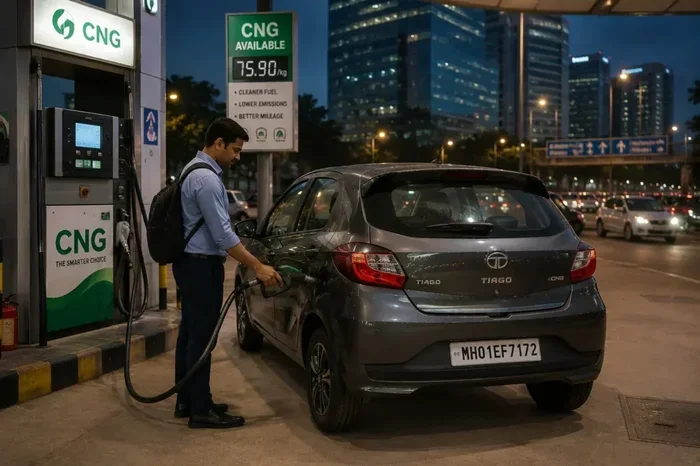
A CNG vehicle stores natural gas in high-pressure cylinders, usually mounted in the boot or under the car. When you start the engine, gas flows from these cylinders through a fuel line to the engine. A fuel injector sprays the gas into the combustion chamber, where it mixes with air and ignites.
The whole process is very similar to how a petrol engine works. The main difference is the fuel source. CNG fuel is cleaner and produces fewer harmful emissions. This is one reason many city drivers prefer it.
What Is a Dual Fuel System?
A dual fuel system means your car can use two types of fuel. The primary fuel is usually CNG, and the secondary fuel is petrol. When the CNG runs low or runs out, the system switches to petrol automatically.
Some older models require the driver to flip a switch manually. Newer cars handle the entire process without any input from you. Either way, the petrol backup ensures you can always reach the next fuel station.
Can a CNG Car Run on Petrol?
This is the big question, and the answer is a clear yes. A CNG car can run on petrol when needed. But how exactly does this work, and what should you expect?
The Automatic Switch Mechanism
Most modern dual fuel cars have a smart fuel switching system. When your CNG level drops to a certain point, the car detects this and shifts to petrol mode. You might notice a slight change in engine sound. That is normal. The engine is now burning petrol instead of gas.
You do not need to pull over or turn off the ignition. The switch happens while you are driving. This makes the whole process very convenient and safe.
Manual Switching in Older Models
Older CNG kits might not have an automatic switch. In these cases, you need to flip a dashboard switch or lever to move from CNG to petrol. Some cars also require you to stop the engine and restart it in petrol mode.
If you own an older model, get familiar with the switch location. Knowing where it is can save you from an awkward roadside situation.
How Far Can You Go on Petrol Alone?
The petrol reserve in most CNG vehicles is not huge. It typically holds between 10 and 15 litres. At normal driving speeds, this gives you roughly 100 to 150 kilometres of range. That is usually enough to reach the nearest CNG station or petrol pump.
However, the exact range depends on your car model, engine size, and driving style. If you drive aggressively, you will use more fuel. Gentle acceleration and steady speeds help stretch your petrol reserve.
What Happens When You Switch from CNG to Petrol?
Understanding what happens during the fuel switch helps you feel more confident behind the wheel.
Engine Behaviour During the Switch
When your car shifts from CNG mode to petrol mode, you might notice a few things:
- A brief change in engine noise or vibration
- A slight pause in power for a second or two
- A warning light on the dashboard
- The fuel gauge switching from CNG to petrol display
These changes are completely normal. The engine is adjusting to a different fuel type. Once the switch completes, your car should run just as smoothly as before.
Does the Switch Affect Performance?
In most cases, the answer is no. Modern dual fuel cars are designed to deliver similar performance on both fuels. You might notice a tiny difference in acceleration, but it is usually too small to matter in everyday driving.
Some drivers report that petrol mode feels slightly more responsive. This is because petrol ignites faster than CNG in the combustion chamber. But the difference is minimal and not something you would notice during normal city driving.
Fuel Economy Comparison
Here is a simple comparison of how a CNG car performs on both fuels:
| Aspect | CNG Mode | Petrol Mode |
|---|---|---|
| Cost per km | Lower | Higher |
| Mileage (km per litre equivalent) | Better | Slightly lower |
| Engine power | Slightly less | Slightly more |
| Emissions | Cleaner | Higher |
| Availability | Needs CNG station | Widely available |
| Engine wear | Less | More over time |
As you can see, CNG mode wins on cost and mileage. Petrol mode gives you a bit more power and wider availability. The best approach is to use CNG as your primary fuel and rely on petrol only when needed.
Benefits of Running a CNG Car on Petrol
Using petrol as a backup fuel comes with several real advantages that many drivers overlook.
Emergency Flexibility
Imagine you are on a long road trip and the nearest CNG station is 50 kilometres away. If your car has a petrol backup, you can simply let the car switch modes and keep driving. Without this feature, you would be stranded.
This flexibility is one of the biggest reasons dual fuel systems exist. They give you peace of mind no matter where the road takes you.
No Need to Modify Your Driving Habits
Because the switch is automatic in most cars, you do not need to change how you drive. Just keep driving as normal. The car handles everything else.
This is a huge advantage over fully electric vehicles, which require careful planning around charging stations. A CNG car with petrol backup feels just like a normal petrol car when the gas runs out.
Extends the Life of Your CNG System
Using petrol occasionally does not harm your CNG kit. In fact, it can help. Running on petrol sometimes keeps the engine components lubricated and in good condition. It also gives your CNG fuel system a break from constant use.
Think of it as giving your primary fuel system a short rest. This can actually improve the long-term health of your CNG car.
Common Problems When a CNG Car Runs on Petrol
While the system works well most of the time, there are some issues you should know about.
Petrol Mode Warning Lights
When your car switches to petrol, you might see a warning light on the dashboard. This can look alarming if you have never seen it before. It simply means the car is running on its reserve fuel.
Do not panic. Just drive to the nearest CNG station or petrol pump and refuel. The light will go away once you switch back to CNG.
Reduced Power on Petrol
Some CNG vehicles feel slightly less powerful on petrol after being used to CNG. This is because the engine tune is optimised for gas. The difference is usually very small, but sensitive drivers may notice it.
If you feel a significant power loss, it could be a sign of a problem. Get your fuel system checked by a qualified mechanic.
CNG Tank Not Refilling Properly
Sometimes, after running on petrol for a while, the CNG tank does not refill correctly. This can happen if the pressure regulator gets confused. A simple reset usually fixes the issue.
To avoid this, try not to let the petrol reserve run completely empty. Keeping at least a quarter tank of petrol helps the system reset smoothly.
Increased Fuel Costs
If you run on petrol too often, your savings from using CNG disappear quickly. Petrol costs are significantly higher than CNG in most regions. The key is to use petrol only as a backup, not as your primary fuel.
Plan your routes to include CNG stations. This keeps your fuel costs low and your fuel economy high.
Expert Tips for CNG and Petrol Owners
Here are some practical tips to help you get the most out of your dual fuel vehicle.
Keep Both Fuel Types in Your Routine
Do not ignore either fuel system. Regularly check both your CNG level and your petrol gauge. A simple habit of glancing at both before every trip can prevent surprises.
Service Both Systems Regularly
Your CNG kit needs regular servicing just like the petrol engine. Have a mechanic check the high-pressure lines, regulator, and injectors at least every 10,000 kilometres.
At the same time, do not skip your normal petrol engine oil changes and filter replacements. Both systems need care to work well together.
Know Your Car’s Specific Behaviour
Every CNG car behaves a little differently during the fuel switch. Spend some time reading your owner manual. Understand what warning lights mean and how to manually switch modes if needed.
Knowing your car inside and out gives you confidence and prevents unnecessary stress on the road.
Drive Smoothly to Save Fuel
Whether you are on CNG or petrol, smooth driving saves fuel. Avoid sudden acceleration and hard braking. Maintain a steady speed wherever possible.
This tip works for any car, but it matters even more for CNG vehicles because the gas system is sensitive to driving style. Gentle driving keeps your fuel economy at its best.
Keep a Petrol Reserve for Long Trips
Before any long journey, fill up your petrol tank even if you have plenty of CNG. This gives you a safety net. If you get stuck in traffic or take a detour past a CNG station, you will be glad you did.
Think of the petrol reserve as your insurance policy. You hope you never need it, but you will be thankful it is there.
Is It Safe to Run a CNG Car on Petrol?
Yes, it is completely safe. Car manufacturers design dual fuel systems with safety as the top priority. The petrol system is fully integrated and tested before the car ever reaches the showroom.
When your car switches to petrol, all the safety systems remain active. There is no extra risk compared to driving a standard petrol car. The fuel lines, injectors, and engine components are built to handle both fuels.
Just make sure your CNG kit is installed by a certified professional. A proper installation ensures that both fuel systems work safely and efficiently together.
How to Maintain a CNG Car That Also Runs on Petrol
Regular Checks You Should Do
Keeping a dual fuel car in top shape requires attention to both systems. Here is a quick checklist:
- Check CNG cylinder pressure every month
- Inspect high-pressure fuel lines for leaks
- Replace the petrol fuel filter as recommended
- Clean or replace the CNG fuel injector regularly
- Monitor the fuel switching valve for proper operation
- Keep the petrol tank at least quarter full at all times
When to See a Mechanic
If you notice any of these signs, get your car checked right away:
- The car struggles to switch between CNG and petrol
- You see a persistent warning light on the dashboard
- Your fuel economy drops significantly on either fuel
- You smell gas inside the cabin
- The engine runs rough after switching modes
Catching these issues early saves you from bigger repairs down the road. A quick visit to a trusted mechanic can keep your CNG car running smoothly for years.
The Cost Advantage of Using CNG with Petrol Backup
One of the biggest reasons people choose a CNG car is the cost savings. Compressed natural gas is significantly cheaper than petrol in most markets. Over time, these savings add up to a lot of money.
By using CNG as your primary fuel and petrol only as a backup, you get the best of both worlds. You save on daily driving costs while still having the flexibility of petrol when you need it.
For city drivers who cover short to medium distances every day, a dual fuel system is hard to beat. The savings on fuel can offset the cost of the CNG kit installation within one to two years.
Final Thoughts
So, can a CNG car run on petrol? Absolutely. The dual fuel system in these cars is designed to make this switch seamless and safe. Whether the switch happens automatically or manually, you can trust that your car will keep running.
The key is to understand how your specific vehicle handles the fuel switching process. Know where the switch is, understand the warning lights, and keep both fuel systems well maintained. With the right approach, your CNG car will serve you well for many years.
Use CNG as your go-to fuel and think of petrol as your reliable backup. This simple strategy keeps your running costs low, your car performing well, and your trips worry-free. A CNG car with petrol backup gives you the flexibility, savings, and peace of mind that every driver deserves.
Next time someone asks you, “Can a CNG car run on petrol?” you will have all the answers. Share this knowledge with fellow drivers and help them make the most of their alternative fuel vehicles. Safe travels and happy driving!
Frequently Asked Questions
Can I drive a CNG car on petrol every day?
You can, but it is not recommended for daily use. Petrol costs more than CNG, and using it every day will erase your fuel savings. Use petrol only when your CNG runs out or during emergencies. This keeps your running costs low and your CNG car performing at its best.
What happens if my CNG car runs out of both fuels?
If both the CNG and petrol tanks are empty, the car will stop. You will need to call for roadside assistance or push the car to the nearest fuel station. Always keep an eye on both fuel gauges to avoid this situation. Topping up petrol occasionally gives you a reliable safety net.
Does running on petrol damage a CNG engine?
No, running on petrol does not damage your engine. The dual fuel system is designed to handle both fuels safely. In fact, using petrol occasionally can help keep engine components lubricated. Just make sure your car is serviced regularly for both fuel systems.
How long does the petrol reserve last in a CNG car?
The petrol reserve typically lasts between 100 and 150 kilometres, depending on your car model and driving style. This is enough to reach the nearest CNG station in most cases. To maximise this range, drive smoothly and avoid aggressive acceleration.
Can I install a CNG kit in a petrol car myself?
No, you should never attempt a DIY CNG kit installation. The kit involves high-pressure gas lines and sensitive electronics. Improper installation can cause leaks, fires, or engine damage. Always have a certified professional install your CNG conversion kit to ensure safety and proper function.
Is CNG better than petrol for the environment?
Yes, compressed natural gas is cleaner than petrol. It produces fewer carbon emissions and less harmful exhaust. This makes CNG vehicles a better choice for reducing air pollution. If you care about your environmental footprint, switching to CNG is a simple and effective step.
=== CONCLUSION ===
Understanding how a CNG car runs on petrol is essential for every dual fuel vehicle owner. The system is designed to be simple, safe, and seamless. From the automatic fuel switching mechanism to the petrol backup reserve, every part works together to keep you on the road.
By following the tips in this guide, you can enjoy the cost savings of CNG without worrying about range anxiety. Maintain both fuel systems, drive smoothly, and always keep an eye on your fuel levels. With the right approach, your CNG car will deliver excellent performance and savings for years to come.