Can a Toyota Tacoma Pull a 30-Foot Camper for Camping
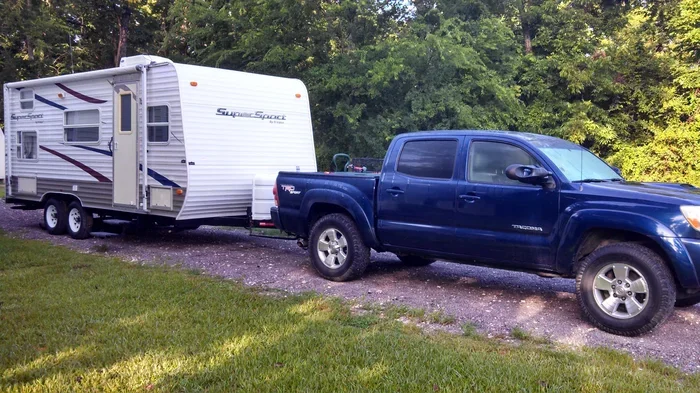
Yes, a Toyota Tacoma can pull a 30-foot camper, but it depends on your model year, trim level, and towing package. Most Tacoma models have a towing capacity between 6,400 and 6,800 pounds, which means you need a lightweight 30-foot camper to stay within safe limits. Always check your specific truck’s ratings before loading up for a camping trip.
So you want to camp in style with a 30-foot camper and a Toyota Tacoma? That sounds like an amazing adventure. The open road, beautiful campsites, and the freedom to explore — it all starts with your truck and trailer setup. But before you hitch up and head out, you need to know one big question: can your Tacoma actually handle the weight?
The short answer is yes. A Toyota Tacoma can pull a 30-foot camper, but there are important details you need to understand. Not every Tacoma model is the same. Your year, trim level, engine, and towing package all play a role. This guide breaks everything down so you can camp with confidence.
We will cover towing capacity numbers, camper weight ranges, hitch options, safety tips, and real-world advice from Tacoma owners. Whether you own a 2016 Tacoma or a brand-new 2024 model, you will find the information you need right here.
Key Takeaways
- Towing capacity varies by model: The Tacoma’s towing range goes from 6,400 to 6,800 pounds depending on the year and trim.
- A 30-foot camper can work: Lightweight travel trailers and pop-up campers fit within the Tacoma’s limits.
- The right hitch matters: A weight-distribution hitch improves stability and safety when towing a large camper.
- Prepare your truck: Upgrading to a towing package, adding trailer brakes, and checking tire pressure are essential steps.
- Fuel economy drops while towing: Expect lower MPG when hauling a 30-foot camper, so plan your fuel stops.
- Safety first: Always do a test tow before a long trip and inspect your setup regularly.
📑 Table of Contents
- Understanding the Toyota Tacoma Towing Capacity
- What Does a 30-Foot Camper Weigh?
- Can a Toyota Tacoma Safely Pull a 30-Foot Camper?
- Setting Up Your Tacoma for Camping Trips
- Towing Safety Tips for Your Tacoma
- Real-World Experiences: Tacoma Owners and 30-Foot Campers
- Common Mistakes People Make When Towing a 30-Foot Camper
- Expert Insights on Tacoma Towing
- Key Takeaways
- Conclusion
Understanding the Toyota Tacoma Towing Capacity
Every truck has a maximum towing capacity. This number tells you the heaviest trailer your vehicle can safely pull. For the Toyota Tacoma, this number changes depending on several factors. Let us break it down by model year and configuration.
Towing Numbers by Model Year
The Tacoma has been a popular truck for decades. Over the years, Toyota has improved its towing power. Here is a general look at towing capacities:
- 2005–2015 Tacoma: Towing capacity ranges from 6,400 to 6,500 pounds. These older models can still handle a 30-foot camper if it is lightweight.
- 2016–2023 Tacoma: Towing capacity increased to 6,800 pounds for most configurations. This gives you a bit more breathing room.
- 2024 Tacoma: The newest model maintains a towing capacity around 6,800 pounds, with some trims reaching slightly higher with the right setup.
What Affects Towing Capacity?
Several factors change how much your Tacoma can tow. Understanding these helps you make smart choices.
- Engine type: The 2.7-liter four-cylinder engine tows less than the 3.5-liter V6. If you want more pulling power, the V6 is the way to go.
- Transmission: An automatic transmission generally handles towing better than a manual.
- Drivetrain: Rear-wheel drive models tow slightly more than four-wheel drive models.
- Cab size: Double cab and extended cab models carry more weight than access cab models.
- Bed length: A longer bed does not always mean more towing capacity, but it does help with load distribution.
Always check your owner’s manual for the exact towing capacity of your specific Tacoma. The numbers on the door jamb sticker also provide important weight information.
What Does a 30-Foot Camper Weigh?
Not all 30-foot campers are the same weight. This is a crucial point many people miss. The camper’s weight determines whether your Tacoma can handle it safely.
Types of 30-Foot Campers
There are several types of 30-foot campers on the market. Each one has a different weight profile.
- Travel trailers: These range from 5,000 to 7,500 pounds dry weight. A lightweight travel trailer is the best match for a Tacoma.
- Pop-up campers: These are much lighter, often between 2,500 and 4,500 pounds. A 30-foot pop-up is very manageable for a Tacoma.
- Fifth wheel trailers: These tend to be heavier, starting around 7,000 pounds. Fifth wheels are generally not a good fit for the Tacoma.
- Truck campers: These slide into the truck bed and weigh between 1,500 and 3,500 pounds. They are a natural match for the Tacoma.
Dry Weight vs. Gross Vehicle Weight Rating
When shopping for a camper, you will see two important numbers. The dry weight is the camper’s weight without water, propane, or gear. The GVWR is the maximum safe weight including everything. Always plan around the GVWR because that is the real-world number you will deal with on the road.
A good rule of thumb is to keep your total trailer weight under 80% of your Tacoma’s towing capacity. This gives you a safety buffer and makes for a much more stable tow.
Can a Toyota Tacoma Safely Pull a 30-Foot Camper?
Now we get to the heart of the question. Can your specific Tacoma pull a 30-foot camper? The answer depends on matching your truck’s capacity to the camper’s weight.
The Math of Towing
Here is a simple way to think about it. If your Tacoma has a towing capacity of 6,800 pounds, and your 30-foot camper weighs 6,500 pounds fully loaded, you are right at the limit. That is not ideal. You want some cushion.
On the other hand, if your camper weighs 5,200 pounds fully loaded and your Tacoma can tow 6,800 pounds, you have a comfortable margin. This is the sweet spot for safe and enjoyable towing.
When a 30-Foot Camper Works with a Tacoma
A 30-foot camper works well with a Tacoma when:
- The camper is a lightweight travel trailer or pop-up model.
- Your Tacoma has the V6 engine and a towing package.
- You keep the total loaded weight under 6,500 pounds.
- You use a proper weight-distribution hitch.
When It Does Not Work
A 30-foot camper is too heavy for a Tacoma when:
- The camper’s GVWR exceeds 6,800 pounds.
- You have a four-cylinder engine without a towing package.
- You are already carrying heavy gear in the truck bed and cab.
Trying to tow beyond your Tacoma’s limits is dangerous. It strains the engine, transmission, and brakes. It also makes the truck harder to control, especially in wind or on hills.
Setting Up Your Tacoma for Camping Trips
Once you know your Tacoma can handle the camper, it is time to set everything up properly. The right setup makes a huge difference in safety and comfort.
Choosing the Right Hitch
The hitch is the connection between your Tacoma and the camper. Not all hitches are the same.
- Receiver hitch: A Class IV receiver hitch is the standard for Tacoma towing. It handles up to 6,800 pounds.
- Weight-distribution hitch: This type of hitch spreads the trailer weight across all four wheels. It is highly recommended for 30-foot campers.
- Sway control: A sway control system helps prevent trailer sway caused by wind or passing trucks.
Investing in a quality hitch setup pays off in stability and peace of mind. You can also look into fitting large gear into different vehicle types if you need to compare cargo space options across trucks and SUVs.
Towing Package Essentials
Toyota offers a towing package for the Tacoma. This package typically includes:
- A heavy-duty cooling system for the engine.
- A wiring harness for trailer lights and brakes.
- A reinforced rear suspension.
- A hitch receiver mounted to the frame.
If your Tacoma does not come with a towing package, you can have one installed. Visit a Toyota dealer or a trusted aftermarket shop to get the right package for your model year.
Trailer Brakes and Wiring
Most 30-foot campers require trailer brakes. These brakes activate when you slow down, giving the camper its own stopping power. Without trailer brakes, your Tacoma does all the work, which is dangerous and wears out your brakes faster.
Make sure you have the proper wiring harness installed. This connects your Tacoma’s lights to the camper’s lights and brake signals. It is a legal requirement in most states.
Towing Safety Tips for Your Tacoma
Towing a 30-foot camper changes how you drive. You need to adjust your habits and stay alert on the road.
Before You Hit the Road
Do these checks every single time before you tow:
- Check your tire pressure on both the Tacoma and the camper.
- Make sure all lights work, including turn signals and brake lights.
- Verify the hitch is securely connected and the pins are locked.
- Test the trailer brakes by applying them gently while moving slowly.
- Check that your mirrors give you full visibility of the camper.
Driving Tips While Towing
Driving with a 30-foot camper takes practice. Keep these tips in mind:
- Leave more following distance: Your stopping distance increases significantly with a trailer.
- Take turns wider: The rear of the camper swings inward, so give yourself extra room.
- Use lower gears on hills: Downshift when going uphill and use engine braking on downhill grades.
- Watch for wind gusts: A large camper catches a lot of wind, which can push your truck off course.
- Avoid sudden braking: Brake gently and early to prevent the camper from pushing into the back of your truck.
Many Tacoma owners also recommend upgrading to trucks with better cargo capacity when planning long camping trips with heavy gear. The Tacoma handles this well, but knowing your limits is key.
Fuel Economy While Towing
Towing a camper affects your fuel economy. A Tacoma without a trailer gets around 20 to 24 MPG on the highway. With a 30-foot camper, expect that number to drop to 12 to 16 MPG. Plan your fuel stops accordingly, especially if you are traveling through remote areas.
Real-World Experiences: Tacoma Owners and 30-Foot Campers
What do actual Tacoma owners say about towing a 30-foot camper? The experiences are mixed but generally positive when people stay within the truck’s limits.
Many owners report that a lightweight 30-foot travel trailer works great for weekend camping trips. They praise the Tacoma’s stability and the fact that it handles the load with ease. The V6 engine provides enough power for highway merging and hill climbing.
However, owners who push the limits often run into problems. Overloaded campers cause transmission overheating, brake fade, and poor handling. The lesson is clear: stay within your Tacoma’s rated capacity.
If you are younger and wondering about vehicle rental options for your first camping trip, check out rental requirements for drivers under 25 to plan ahead before borrowing a truck for your adventure.
The bottom line is that thousands of Tacoma owners successfully tow 30-foot campers every year. The key is preparation, knowing your numbers, and staying within safe limits.
Common Mistakes People Make When Towing a 30-Foot Camper
Avoid these common mistakes to keep your Tacoma and camper safe on the road.
- Ignoring the tongue weight: The tongue weight should be about 10 to 15% of the total trailer weight. Too little tongue weight causes sway. Too much overloads the rear axle.
- Skipping the weight-distribution hitch: This is one of the most important towing accessories. Do not skip it.
- Overloading the camper: Packing too much gear pushes the camper past its GVWR. Be honest about what you actually need.
- Not checking the hitch ball size: A 20-inch hitch ball is standard for most 30-foot campers. Using the wrong size is dangerous.
- Forgetting about sway control: Even a light breeze can cause a large camper to sway. Sway control is a must.
Expert Insights on Tacoma Towing
Automotive experts agree that the Tacoma is one of the best midsize trucks for towing a camper. Its reputation for reliability and durability makes it a top choice for camping enthusiasts.
According to towing specialists, the most important factor is matching the truck to the trailer. A Tacoma with a V6 engine and towing package can comfortably handle a 30-foot camper that weighs between 4,500 and 6,000 pounds. Anything above that range starts to push the limits.
Experts also emphasize the importance of regular maintenance when towing. Check your transmission fluid, brake pads, and tire condition more frequently when you tow regularly. The extra weight puts more stress on every component of your truck.
If you are considering a camper for your Tacoma, also look into starting your vehicle without a remote key as a useful backup tip for those moments when you are loading up gear and need quick access to your truck.
Key Takeaways
- Know your Tacoma’s towing capacity: Check your owner’s manual for the exact number based on your model year and trim.
- Choose a lightweight 30-foot camper: Pop-up campers and lightweight travel trailers are the best match for the Tacoma.
- Invest in a weight-distribution hitch: This single upgrade improves safety and stability the most.
- Do pre-trip inspections every time: Tires, lights, hitch connections, and brake checks take only minutes but prevent major problems.
- Drive with caution: Longer stopping distances, wider turns, and lower fuel economy are all part of towing a large camper.
- Stay within limits: Never exceed your Tacoma’s rated towing capacity, no matter how tempting it may be.
Conclusion
So, can a Toyota Tacoma pull a 30-foot camper? The answer is a confident yes, with the right setup and the right camper. The Tacoma is a capable and reliable towing machine that handles 30-foot campers well as long as you stay within its weight limits.
Choose a lightweight camper, invest in the proper hitch and braking system, and always do your pre-trip checks. The Toyota Tacoma has earned its reputation as one of the best trucks for camping and towing. With the right preparation, you and your Tacoma will have many memorable adventures on the road.
Now that you know what it takes to tow a 30-foot camper with a Tacoma, it is time to start planning your next camping trip. Pack your gear, hit the road, and enjoy the freedom that comes with a well-matched truck and camper setup.
Frequently Asked Questions
Can a Toyota Tacoma pull a 30-foot camper with a 2.7-liter engine?
Yes, but with limitations. The 2.7-liter four-cylinder engine has a lower towing capacity than the V6. You will need a very lightweight 30-foot camper, likely under 5,000 pounds fully loaded. Always double-check your specific model’s towing number before committing.
Do I need a special license to tow a 30-foot camper with a Tacoma?
In most states, a standard driver’s license is sufficient for towing a 30-foot camper with a Tacoma. However, some states require a special endorsement if the combined weight of the truck and trailer exceeds a certain threshold. Check your state’s Department of Motor Vehicles regulations to be sure.
What is the best hitch for a Tacoma towing a 30-foot camper?
A Class IV receiver hitch with a weight-distribution system is the best choice. This setup distributes the trailer weight evenly across all four wheels, improving stability and handling. Add a sway control device for extra safety, especially on windy highways.
How much does it cost to install a towing package on a Tacoma?
Aftermarket towing packages typically cost between $500 and $1,500, depending on the features included. A dealer-installed OEM towing package may cost more but comes with a warranty. The investment is well worth it for the safety and capability it adds.
Can I tow a 30-foot camper with a first-generation Tacoma?
First-generation Tacomas from 2005 to 2015 can tow a 30-foot camper if the camper is lightweight enough. These older models have a towing capacity around 6,400 to 6,500 pounds. Stick with a pop-up or ultralight travel trailer to stay within safe limits.
What should I do if my camper starts to sway while towing?
If your camper begins to sway, do not slam the brakes. Ease off the accelerator gently and let the truck slow down naturally. If you have a sway control system, it will help stabilize the trailer. Pull over safely when you can and check your load distribution and tire pressure.