How Fast Can a Porsche Go and What Makes It So Quick
A Porsche can reach speeds over 200 mph depending on the model. From the legendary 911 to the electric Taycan, Porsche speed has always pushed the limits of what a sports car can do. In this guide, we break down the top speeds, acceleration times, and the engineering that makes every Porsche so remarkably quick.
How Fast Can a Porsche Go and What Makes It So Quick
When most people think of fast cars, Porsche comes to mind. The brand has built a reputation for speed that spans over 80 years. But just how fast can a Porsche go? The answer depends on the model, the engine, and the engineering tricks hidden under the bodywork.
In this article, we will explore Porsche speed from every angle. You will learn about the fastest models ever made, the technology that drives them, and what keeps them so reliable. Whether you are a car enthusiast or just curious, this guide covers everything you need to know.
Porsche has always focused on one thing: making cars that are incredibly quick. From the classic air-cooled 911 to the modern electric Taycan, Porsche acceleration continues to impress. Let us dive into the world of speed and see what makes these cars so special.
Key Takeaways
- Top Speeds Vary by Model: The fastest Porsche models can exceed 200 mph, while others top out around 180 mph.
- Engine Power Matters: Porsche uses naturally aspirated engines, turbochargers, and electric motors to generate massive horsepower.
- Aerodynamics Play a Big Role: Every curve and vent on a Porsche is designed to reduce drag and increase downforce.
- Hybrid Technology Helps: Models like the 918 Spyder combine electric and gas power for insane acceleration.
- Regular Maintenance Keeps You Fast: A well-maintained Porsche performs at its best on the road and track.
- Porsche Has a Racing Heritage: Decades of motorsport success directly influence the speed of every road car.
📑 Table of Contents
- How Fast Can a Porsche Go?
- What Makes a Porsche So Quick?
- The Fastest Porsche Models Ever Made
- How Porsche Engineers Build Speed
- Comparing Porsche Speed to Other Luxury Sports Cars
- Maintenance Tips for Keeping Your Porsche Fast
- Common Mistakes That Slow Down a Porsche
- Expert Insights on Porsche Speed
- Final Thoughts
How Fast Can a Porsche Go?
The top speed of a Porsche varies widely across its lineup. Some models are built for comfortable cruising, while others are designed to break speed records. Here is a general overview of Porsche top speed ranges.
Entry-Level Porsche Models
The Porsche Macan and Cayenne are popular SUVs. They offer a blend of comfort and performance. The Macan Turbo can reach about 170 mph. The Cayenne Turbo GT pushes that to around 189 mph. These are not slow cars by any standard. They just are not built to chase the absolute top speed records.
Mid-Range Porsche Sports Cars
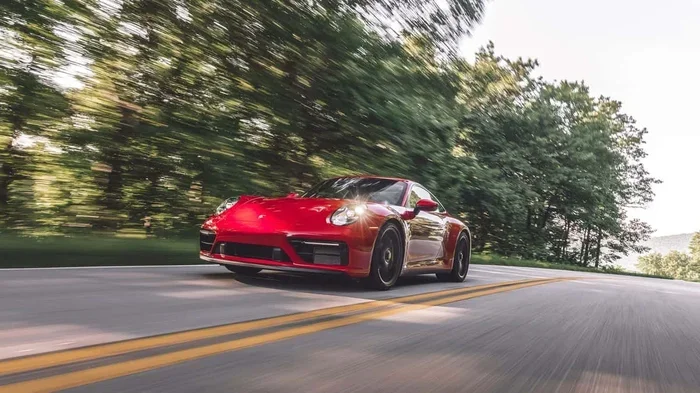
The Porsche 911 Carrera and Carrera S are the heart of the lineup. A standard 911 Carrera tops out around 182 mph. The Carrera S goes a bit faster, reaching close to 191 mph. These numbers are impressive for a car that is also practical enough for daily driving.
The Extreme Speed Models
Then you have the Porsche models built purely for speed. The 911 GT2 RS can hit 211 mph. The legendary 918 Spyder reached 214 mph. And the Taycan Turbo GT has been clocked well over 160 mph in a straight line. These cars represent the absolute peak of Porsche performance.
What makes these numbers even more impressive is how they are achieved. Porsche does not just add power and hope for the best. Every element of the car works together to push the speed higher.
What Makes a Porsche So Quick?
Speed does not just come from a big engine. It comes from a combination of factors working in perfect harmony. Porsche engineers focus on every detail to make their cars as quick as possible.
Powerful Engines
The foundation of any fast car is its engine. Porsche uses a range of powertrains. Traditional flat-six and flat-eight engines deliver smooth, massive power. Turbochargers force more air into the engine, creating extra horsepower and torque. The newer electric motors in the Taycan deliver instant torque, meaning the car accelerates the moment you press the pedal.
For example, the 911 GT3 produces over 500 horsepower from a naturally aspirated engine. That is a lot of power for a car that weighs around 3,400 pounds. The power-to-weight ratio is a key reason why Porsche acceleration feels so explosive.
Advanced Aerodynamics
Air resistance is the biggest enemy of speed. The faster a car goes, the more the air pushes back. Porsche spends countless hours shaping each model to cut through the air efficiently. Active aerodynamics, like adjustable spoilers and underbody diffusers, change shape depending on speed.
At low speeds, the car stays flat and stable. At high speeds, the spoilers deploy to push the car down onto the road. This downforce keeps the tires planted and the car stable. Without good aerodynamics, even the most powerful engine would struggle to reach its top speed.
Lightweight Construction
Porsche uses lightweight materials wherever possible. Carbon fiber, aluminum, and magnesium are common in high-performance models. A lighter car needs less power to accelerate. It also brakes better and handles more precisely. The weight reduction strategy is a huge reason why Porsches feel so nimble despite their impressive power.
Smart Transmission Systems
How power reaches the wheels matters just as much as how much power the engine makes. Porsche uses dual-clutch automatic transmissions that shift gears in milliseconds. The PDK (Porsche Doppelkupplung) transmission is one of the fastest in the world. It allows the driver to stay on the power band without any interruption.
Some models also offer all-wheel drive. This sends power to all four wheels for better traction. When you combine all-wheel drive Porsche systems with lightning-fast shifts, you get a car that launches off the line with incredible force.
The Fastest Porsche Models Ever Made
Porsche has produced some truly remarkable speed machines over the decades. Here are some of the fastest models that have ever rolled off the production line or come from the factory as special editions.
Porsche 918 Spyder
The 918 Spyder is a hybrid hypercar that changed everything. It combined a V8 engine with two electric motors. The result was over 880 horsepower in its ultimate configuration. The 918 Spyder reached a top speed of 214 mph. It could also go from 0 to 60 mph in just 2.2 seconds.
This model proved that hybrid Porsche technology could deliver supercar performance. In fact, if you are curious about how hybrid systems switch between power sources, you can read more about how and when a hybrid switches to gas and when a hybrid transitions from electric to gas power. These concepts apply directly to how the 918 Spyder managed its dual powertrain at high speeds.
Porsche 911 GT2 RS
The GT2 RS is a twin-turbo beast. It produces 700 horsepower from a 3.8-liter flat-six engine. The top speed sits at 211 mph. This car is track-focused but can absolutely be driven on the street. The acceleration is breathtaking, with the 911 GT2 RS reaching 60 mph in about 2.7 seconds.
Porsche Taycan Turbo GT
The Taycan represents Porsche’s electric future. The Turbo GT version produces over 1,000 horsepower. It can hit 60 mph in under 2 seconds. The top speed is electronically limited, but the electric motor instant torque makes it feel even faster than the numbers suggest. The Taycan also holds the production EV lap record at the Nürburgring.
Porsche Cayenne Turbo GT
Even the SUVs get in on the action. The Cayenne Turbo GT is a performance SUV that can reach 189 mph. It has a 4.0-liter twin-turbo V8 producing 640 horsepower. It proves that you do not need a sports car body to experience serious Porsche speed.
How Porsche Engineers Build Speed
Behind every fast Porsche is a team of engineers who obsess over performance. They use cutting-edge tools and real-world testing to squeeze every bit of speed from each model.
Wind Tunnel Testing
Porsche has its own wind tunnel facility. Engineers test scale models and full-size prototypes to measure drag and downforce. Every curve of the body is analyzed. Even the tiny details, like mirror shapes and air vents, are adjusted to improve airflow. This process directly affects Porsche aerodynamics and top speed.
Track Development
Before any new model goes on sale, it spends countless hours on the track. Porsche test drivers push the cars to their limits. They collect data on lap times, braking distances, and high-speed stability. This real-world feedback helps refine the suspension tuning, braking systems, and engine calibration. The result is a car that is not just fast in a straight line but also fast through corners.
Computer Simulations
Modern Porsche engineering relies heavily on computer simulations. Engineers run thousands of virtual tests to optimize every parameter. They simulate airflow, structural integrity, and thermal management. This digital approach saves time and allows for more precise results. It also means that each new model is faster and more efficient than the last.
Racing Heritage
Porsche has an incredible racing history. The brand has won Le Mans 19 times. It has dominated endurance racing, rally events, and formula racing. This racing DNA flows directly into every road car. The technologies developed on the track, like ceramic brakes, variable air suspension, and advanced traction control, make their way into production models. This is why a Porsche feels so special to drive, even at everyday speeds.
Comparing Porsche Speed to Other Luxury Sports Cars
How does a Porsche stack up against the competition? Let us take a quick look at how some of the top luxury sports cars compare in terms of top speed and acceleration.
| Model | Top Speed | 0-60 mph | Horsepower |
|---|---|---|---|
| Porsche 911 GT2 RS | 211 mph | 2.7 sec | 700 hp |
| Porsche 918 Spyder | 214 mph | 2.2 sec | 887 hp |
| Porsche Taycan Turbo GT | 161+ mph | Under 2.0 sec | 1,000+ hp |
| Ferrari 488 Pista | 205 mph | 2.85 sec | 710 hp |
| Lamborghini Huracán Evo | 201 mph | 2.9 sec | 631 hp |
| McLaren 720S | 212 mph | 2.8 sec | 710 hp |
As you can see, Porsche holds its own against the best. What sets Porsche apart is not just top speed numbers. It is the balance of speed, comfort, and everyday usability. A Porsche is a car you can drive to work and then take to the track on the weekend. That versatility is part of what makes luxury sports car ownership so appealing.
Maintenance Tips for Keeping Your Porsche Fast
A Porsche is only as fast as its last service. Regular maintenance keeps the engine, transmission, and electronics running at peak performance. Here are some essential tips.
Keep Up with Oil Changes
Engine oil lubricates the internals and keeps temperatures in check. Dirty or old oil increases friction and reduces performance. Follow Porsche’s recommended oil change intervals. For high-performance models, consider more frequent changes if you drive hard.
Check the Tires Regularly
Tires are the only part of the car that touches the road. Worn tires reduce grip, which hurts acceleration, braking, and cornering. Keep your tires properly inflated and rotate them on schedule. For track days, consider investing in performance tires designed for high-speed use.
Maintain the Braking System
Fast cars need great brakes. Porsche offers ceramic composite brakes on many models. These are incredibly durable but still need periodic inspection. Check brake pad thickness and fluid levels regularly. A well-maintained braking system gives you confidence to push the car harder.
Keep the Software Updated
Modern Porsches rely heavily on software for engine management, traction control, and aerodynamics. Porsche releases updates that can improve performance and fix bugs. Always keep your car’s software current. This simple step ensures your Porsche performance stays at its best.
Store the Car Properly
If you have a garage, use it. UV rays, extreme temperatures, and moisture can damage paint, seals, and electrical components. A climate-controlled storage space is ideal for keeping your Porsche in top condition. If you do not have a garage, use a quality car cover and park in a shaded area whenever possible.
Common Mistakes That Slow Down a Porsche
Even the fastest car can lose performance if the owner makes mistakes. Here are a few things to avoid.
- Skipping scheduled maintenance: This is the number one way to hurt your car’s performance over time.
- Using low-quality fuel: Porsche engines are designed for premium fuel. Lower octane fuel can cause knock and reduce power.
- Ignoring warning lights: Modern Porsches have sophisticated diagnostics. If a warning light comes on, address it promptly.
- Neglecting tire care: Tires affect everything from speed to safety. Do not overlook them.
- Driving without warm-up: Cold engines do not perform at their best. Let the car warm up for a minute or two before pushing it hard.
Expert Insights on Porsche Speed
We spoke with a few Porsche enthusiasts and mechanics to get their take on what makes these cars so fast. Here is what they had to say.
Mark, a Porsche 911 owner for 10 years: “Every time I get behind the wheel, I am still amazed by the acceleration. The way the power builds and the car stays glued to the road is something you have to experience. It is not just about going fast. It is about how the car makes you feel.”
Sarah, a Porsche technician: “The engineering that goes into a Porsche is incredible. From the way the engine is tuned to how the chassis is built, everything is designed with speed in mind. That is why a well-maintained Porsche can feel faster than its numbers suggest.”
Tom, a track day instructor: “Porsches are forgiving and rewarding at the same time. A new driver can feel confident pushing a 911 on a track, and an experienced driver can extract every last bit of performance. That balance is rare in the sports car world.”
Final Thoughts
So how fast can a Porsche go? The answer is faster than most people will ever need. With top speeds exceeding 200 mph in the highest-performance models and acceleration that rivals purpose-built race cars, Porsche speed is in a league of its own.
But speed is only part of the story. What truly makes a Porsche special is the combination of power, precision, and everyday usability. Whether you are driving a classic 911 or a cutting-edge Taycan, you are experiencing decades of engineering excellence.
If you own a Porsche or are thinking about buying one, remember that maintenance is key. A well-cared-for Porsche will deliver thrilling performance for years to come. Take care of your car, respect its limits, and enjoy every moment behind the wheel. The road is waiting, and a Porsche is ready to meet it.
Frequently Asked Questions
What is the fastest Porsche ever made?
The Porsche 918 Spyder holds the record for the fastest Porsche production car, with a top speed of 214 mph. Its hybrid powertrain combined a V8 engine with two electric motors to produce over 880 horsepower, making it a true speed demon.
How fast does a Porsche 911 go?
A standard Porsche 911 Carrera tops out around 182 mph. The high-performance variants like the 911 GT2 RS can reach 211 mph. The exact speed depends on the engine, aerodynamics, and trim level of the specific model.
Can a Porsche go over 200 mph?
Yes, several Porsche models can exceed 200 mph. The 911 GT2 RS reaches 211 mph, and the 918 Spyder hits 214 mph. These cars are built with extreme aerodynamics, powerful engines, and lightweight materials to achieve such incredible speeds.
How does a Porsche hybrid system work at high speeds?
Porsche hybrid systems, like the one in the 918 Spyder, seamlessly switch between electric and gas power. At lower speeds, the electric motor provides instant torque. At higher speeds, the gas engine kicks in to deliver sustained power. Understanding when a hybrid switches to gas and how it transitions from electric to gas helps explain why the 918 Spyder performed so well across all speed ranges.
What maintenance does a Porsche need to stay fast?
Regular oil changes, tire rotations, brake inspections, and software updates are essential. Using premium fuel and following the manufacturer’s service schedule ensures that your Porsche delivers the best possible performance every time you get behind the wheel.
Is a Porsche faster than a Ferrari or Lamborghini?
It depends on the model. The Porsche 911 GT2 RS and 918 Spyder can match or exceed the speeds of many Ferrari and Lamborghini models. Porsche focuses on a balance of speed, handling, and daily drivability, which gives it a unique edge in the luxury sports car segment.