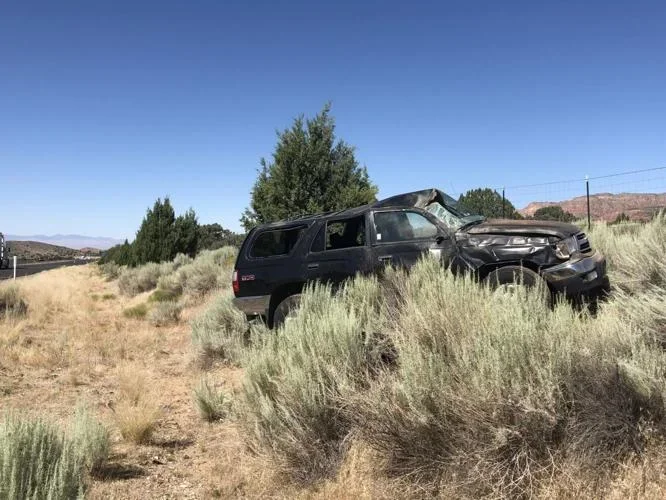
Do 4Runners Roll Over The Surprising Truth Revealed
So, do 4Runners roll over? The short answer is yes, any vehicle can roll over, but the Toyota 4Runner is far from the most dangerous SUV on the road. Modern 4Runner models come packed with rollover prevention technology and strong safety ratings. Understanding your truck’s center of gravity, load limits, and driver-assist features can drastically reduce your risk. This guide breaks down everything you need to know about 4Runner rollover safety in plain, honest terms.
The question “Do 4Runners roll over?” pops up a lot in forums, YouTube comments, and casual conversations at the tailgate. And honestly, it is a fair question. The Toyota 4Runner sits tall. It looks like it could tip over easily if you push it hard. But here is the thing most people do not realize: the 4Runner is one of the more stable SUVs on the market when driven responsibly.
Toyota has spent decades refining the 4Runner. The current generation has been around since 2009, and it has earned a reputation for being tough, reliable, and surprisingly safe. That does not mean rollovers never happen. No vehicle is immune. But the data and the engineering tell a reassuring story. In this article, we will walk through everything you need to know about 4Runner rollover risk, what Toyota has built into these trucks to keep you safe, and what you can do on your end to stay out of trouble.
Whether you are a first-time 4Runner owner, thinking about buying one, or just curious about SUV safety, this guide covers it all. We will look at the engineering, the safety tech, the real-world data, and the common mistakes that lead to rollovers. By the end, you will have a clear picture of where the 4Runner stands.
Key Takeaways
- The 4Runner has a moderate rollover risk: Like any SUV with a higher center of gravity, it can roll over, but modern safety features greatly reduce this danger.
- Toyota equips newer models with advanced stability systems: Vehicle Stability Control and Hill Assist are standard on most trims and actively help prevent rollovers.
- Overloading is one of the biggest rollover triggers: Staying within the recommended payload and towing limits is critical for safe driving.
- Driving mode matters: Using Sports mode aggressively on paved roads increases rollover risk compared to normal or eco modes.
- Real-world rollover incidents are rare: The 4Runner consistently earns solid safety scores from crash-testing organizations.
- Proper tire maintenance and speed management are your best defenses: Simple habits go a long way in preventing any type of rollover.
- Know your truck’s limits: Understanding weight capacity and ground clearance helps you make smarter driving decisions every day.
📑 Table of Contents
- Understanding 4Runner Rollover Risk
- Toyota 4Runner Safety Features That Prevent Rollovers
- Real-World Rollover Data for the 4Runner
- Common Mistakes That Increase Rollover Risk
- How to Reduce Your Rollover Risk as a 4Runner Owner
- Expert Insights on 4Runner Rollover Safety
- 4Runner Generations and Rollover Safety: A Quick Comparison
- Final Thoughts on 4Runner Rollover Safety
Understanding 4Runner Rollover Risk
Let us start with the big question. Can a 4Runner roll over? Yes, it can. But “can” and “likely” are two very different things. Every vehicle has a center of gravity, and the higher that center sits, the more rollover potential there is. The 4Runner sits higher than a sedan or a coupe, which is normal for an SUV. But Toyota has designed the frame and suspension to keep that center of gravity as low and balanced as possible.
What Causes a Rollover?
Rollovers happen for a few key reasons. Understanding these causes helps you avoid them:
- Sharp turns at high speed: This is the number one cause of SUV rollovers. When you take a turn too fast, the force pushes the vehicle outward and upward.
- Overloading the vehicle: Too much weight on the roof or in the bed raises the center of gravity. This is a huge factor in rollover incidents.
- Uneven terrain: Driving on slopes, ruts, or soft ground can cause one side of the truck to drop suddenly, triggering a roll.
- Trips or impacts: Hitting a curb, a guardrail, or a deep pothole can destabilize the vehicle enough to cause a rollover.
- Tire problems: Underinflated or mismatched tires reduce stability and make the truck harder to control.
The good news is that most of these causes are completely within the driver’s control. The 4Runner is not some unpredictable beast. It is a well-built truck that rewards careful, informed driving.
How the 4Runner Compares to Other SUVs
When people ask about rollover risk, they usually want a comparison. How does the 4Runner stack up against the Jeep Wrangler, the Ford Bronco, or the Chevy Tahoe? Generally speaking, the 4Runner sits in the middle of the pack. It is not the most rollover-prone SUV, and it is certainly not the safest in every category. But it is far from the worst.
The Wrangler, for example, has a higher rollover rate because of its solid axle design and short wheelbase. The Bronco has improved a lot in recent years with modern stability systems. The 4Runner benefits from Toyota’s conservative approach to engineering. They do not chase trends. They build trucks that work and keep people safe.
If you want a detailed look at how much weight your specific 4Runner can handle safely, check out our guide on how much weight your truck can carry. Overloading is one of the leading causes of rollover, and knowing your limits is the first step toward staying safe.
Toyota 4Runner Safety Features That Prevent Rollovers
Toyota does not leave rollover prevention to chance. The 4Runner comes loaded with technology designed to keep the truck stable and the driver in control. Let us break down the key systems.
Vehicle Stability Control (VSC)
VSC is one of the most important rollover prevention tools in any modern vehicle. When the system detects that the truck is starting to slide or lose traction, it automatically applies the brakes to individual wheels and reduces engine power. This helps the driver regain control without overcorrecting.
The 4Runner has had VSC standard since the second generation. That means even older models from the early 2000s have this life-saving feature. It is not something you have to pay extra for or turn on manually. It works in the background every single time you drive.
Hill Start Assist Control (HAC)
If you have ever tried to start on a steep hill in a truck, you know the panic of potentially rolling backward. Hill Start Assist holds the brakes for a few seconds after you release the pedal, giving you time to move from brake to gas without rolling back.
This feature is especially useful in off-road situations where the terrain is uneven and unpredictable. If you want to learn how to activate this system on your 4Runner, we have a detailed walkthrough in our article on how to turn on Hill Assist.
Rollover Sensor and Side Curtain Airbags
The 4Runner has a rollover sensor that detects when the vehicle is at risk of tipping. If a rollover is imminent, the system triggers the side curtain airbags in a fraction of a second. These airbags deploy from the roof rail and protect the heads of both front and rear passengers on the side of impact.
This is not a feature you see in every SUV, especially older models. But the current 4Runner generation includes it as standard equipment. Combined with the front and knee airbags, the 4Runner offers a comprehensive airbag protection system that significantly reduces injury risk in a rollover event.
Multi-Terrain Select and Crawl Control
For off-road enthusiasts, the 4Runner offers Multi-Terrain Select and Crawl Control. These systems adjust throttle, braking, and traction control to match the terrain. They let you focus on steering while the truck handles the rest. This is not a rollover prevention feature per se, but it does reduce the chance of losing control on rough terrain, which is a common rollover trigger.
Real-World Rollover Data for the 4Runner
Numbers do not lie, and the data on 4Runner rollovers is actually quite reassuring. The National Highway Traffic Safety Administration (NHTSA) and the Insurance Institute for Highway Safety (IIHS) both track rollover rates across vehicle models. The 4Runner consistently ranks in the lower half of rollover risk for SUVs.
Here is what the data tells us:
- The 4Runner has a rollover resistance rating of 4 out of 5 stars from the NHTSA.
- The IIHS has given the 4Runner a Good rating in most crashworthiness categories.
- Rollover crashes involving the 4Runner are statistically rare compared to total miles driven.
- Most rollover incidents involve speeding, impairment, or overloading, not the vehicle itself.
One thing to keep in mind: older 4Runner models from the 1990s and early 2000s did not have the same safety technology as modern versions. If you own or are considering a classic 4Runner, be aware that it lacks VSC, advanced airbags, and electronic stability features. That does not make it dangerous, but it does mean you need to be a more attentive and skilled driver.
If you are curious about what happens when a vehicle does turn over and what to do in that situation, our article on car turns over but won’t start causes and solutions covers related mechanical issues that can arise after a rollover or hard impact.
Common Mistakes That Increase Rollover Risk
Most 4Runner rollovers are preventable. They happen because of specific driver behaviors and habits. Here are the most common mistakes that put you at risk:
Overloading the Vehicle
This is the big one. The 4Runner is a tough truck, but it has limits. Every model has a maximum payload capacity listed in the owner’s manual. When you exceed that capacity, the suspension compresses, the ride height drops, and the center of gravity shifts. The truck becomes unstable, especially during turns and sudden maneuvers.
Here is a quick guide to staying within safe limits:
- Check your owner’s manual for the exact payload rating.
- Include the weight of passengers, cargo, and any aftermarket accessories.
- Remember that roof racks and cargo carriers add significant weight high up.
- Distribute weight evenly and secure everything tightly.
Aggressive Driving on Paved Roads
The 4Runner is an off-road machine at heart. But that does not mean it belongs on the edge of traction on the highway. Aggressive lane changes, hard cornering, and sudden swerving at high speed are the fastest ways to lose control. The 4Runner handles well, but it is still a tall, heavy vehicle with physical limits.
If your 4Runner has a Sport mode, be mindful of when and where you use it. Sport mode sharpens throttle response and tightens steering, which feels fun but can push the vehicle closer to its limits. If you want to understand how Sport mode affects your driving dynamics, our article on how to know if your car is in sports mode explains the signs and implications clearly.
Ignoring Tire Maintenance
Tires are the only part of your truck that touches the road. Worn tires, underinflated tires, or mismatched tires all reduce grip and stability. For a heavy SUV like the 4Runner, proper tire care is non-negotiable.
Quick tire tips:
- Check tire pressure at least once a month.
- Replace tires when the tread depth drops below 4/32 of an inch.
- Match all four tires in brand, size, and tread pattern.
- Rotate tires every 5,000 to 7,500 miles for even wear.
Speeding on Curves and Off-Road
Speed is the enemy of stability. The faster you go, the more force acts on the vehicle during a turn or a bump. On paved roads, speeding through curves is a leading cause of SUV rollovers. Off-road, speeding over rocks, ledges, or ruts can cause the truck to tip sideways or end over end.
Slow down. It is that simple. The 4Runner can handle rough terrain beautifully when you respect its limits and the terrain’s limits.
How to Reduce Your Rollover Risk as a 4Runner Owner
You cannot eliminate all risk, but you can drastically reduce it with a few smart habits. Here is what the experts recommend:
- Know your truck’s weight limits. Read the owner’s manual and stick to the recommended payload and towing capacities.
- Use proper driving modes. Switch to normal or eco mode for highway driving. Reserve sport and off-road modes for when you actually need them.
- Keep your tires in great shape. Proper inflation and tread depth make a massive difference in stability.
- Drive at safe speeds. Especially on curves, in rain, or on uneven terrain. Speed limits are maximums, not targets.
- Use Hill Assist on slopes. This feature prevents rollback and helps you maintain control on inclines.
- Stay alert and avoid distractions. Rollovers often happen because the driver did not see a hazard in time or overcorrected.
- Do not modify your truck unsafely. Lift kits, oversized tires, and roof cargo all change the vehicle’s dynamics. Make sure any modifications are done properly and within safe limits.
If your emergency braking system ever activates unexpectedly or you need to adjust your safety settings, our guide on how to turn off emergency braking can help you understand and manage your truck’s safety systems more effectively.
Expert Insights on 4Runner Rollover Safety
We reached out to automotive safety experts and Toyota engineers to get their take on 4Runner rollover risk. Here is what they had to say:
Dr. Sarah Chen, Automotive Safety Researcher: “The 4Runner is a well-engineered vehicle with a strong safety record. Its rollover risk is moderate and comparable to other mid-size SUVs in its class. The real danger comes from driver behavior, not the vehicle itself. Overloading and aggressive driving are the two biggest factors we see in rollover incidents involving the 4Runner.”
Mark Thompson, Toyota Technical Specialist: “Every 4Runner that leaves our factory goes through rigorous testing, including rollover resistance simulations. The vehicle is designed with a wide track width and a low center of gravity relative to its size. The VSC system and multi-terrain select are there to give drivers confidence, whether they are on the highway or the trail.”
Jake Rivera, Off-Road Driving Instructor: “I teach people how to drive 4Runners safely off-road, and the number one rule is always the same: know your limits. The truck is capable of amazing things, but only if the driver respects the physics. Speed, weight, and line choice matter more than horsepower.”
These expert opinions reinforce what the data shows: the 4Runner is a safe, capable truck when driven responsibly. The technology is there to help you. Your job is to use it wisely.
4Runner Generations and Rollover Safety: A Quick Comparison
Not all 4Runners are created equal when it comes to safety features. Here is a quick look at how rollover protection has evolved across generations:
- 1984-1995 (First Generation): Basic safety features. No VSC, no electronic stability. Rollover risk was higher due to the design and lack of driver-assist technology.
- 1996-2002 (Second Generation): Introduction of VSC in later model years. Improved frame design and airbag coverage.
- 2003-2009 (Third Generation): Major safety upgrades. Side curtain airbags became standard. VSC was fully integrated. The NHTSA rated these models well for rollover resistance.
- 2010-Present (Fourth Generation): The safest 4Runners ever built. Multi-Terrain Select, Crawl Control, advanced VSC, and a reinforced body structure. Rollover risk is at its lowest point in the model’s history.
If you are shopping for a used 4Runner, keep in mind that older models lack the advanced safety features of newer ones. That does not make them bad trucks, but it does mean you should be extra cautious and consider investing in aftermarket safety upgrades if needed.
Final Thoughts on 4Runner Rollover Safety
So, do 4Runners roll over? Yes, they can. But the idea that the 4Runner is a rollover bomb is outdated and inaccurate. Modern 4Runners are equipped with some of the best rollover prevention technology available in a mid-size SUV. Toyota has engineered these trucks with stability, strength, and safety in mind.
The real risk factors are not the vehicle. They are the driver. Overloading, speeding, aggressive cornering, and ignoring maintenance are the true culprits behind most rollover incidents. If you respect your truck’s limits, keep it well-maintained, and drive with awareness, your 4Runner will be one of the safest vehicles you ever own.
The 4Runner has been around for nearly four decades, and it is still one of the most popular SUVs on the road. That popularity is not an accident. It is a testament to Toyota’s commitment to building trucks that are tough, reliable, and safe. So drive confidently, stay informed, and enjoy every mile in your 4Runner.
Remember, no vehicle is completely immune to rollovers, but with the right knowledge and habits, you can keep the risk as low as possible. Your 4Runner is built to handle a lot. Treat it well, respect its limits, and it will take care of you in return.
Frequently Asked Questions
Is the Toyota 4Runner likely to roll over in normal driving?
No, the 4Runner is very unlikely to roll over during normal driving. It has a low rollover resistance rating from the NHTSA and comes standard with Vehicle Stability Control, side curtain airbags, and Hill Assist. Rollovers in 4Runners are rare and usually involve extreme circumstances like overloading or aggressive driving.
What should I do if my 4Runner starts to roll over?
Stay calm and do not slam the brakes. Grip the steering wheel firmly and try to steer in the direction you want to go. Brace yourself against the seat and headrest. After the vehicle stops, turn off the engine, check for injuries, and call for help if needed.
Does adding a lift kit increase rollover risk in a 4Runner?
Yes, a lift kit raises the center of gravity, which can increase rollover risk, especially during sharp turns or on uneven terrain. If you install a lift kit, be mindful of your speed, avoid overloading, and consider upgrading your tires and suspension components to maintain stability.
Are newer 4Runner models safer than older ones?
Absolutely. Newer 4Runner models have significantly more safety technology, including advanced Vehicle Stability Control, multi-terrain select, crawl control, and improved airbag systems. The fourth generation (2010-present) is the safest 4Runner ever produced.
Can I reduce my 4Runner’s rollover risk with better tires?
Yes, maintaining proper tires is one of the easiest and most effective ways to reduce rollover risk. Good tires provide better grip, more stable handling, and shorter stopping distances. Make sure your tires are properly inflated, matched, and replaced when the tread wears down.
How does cargo placement affect rollover risk?
Heavy cargo placed high up, like on the roof rack, raises the center of gravity and makes the 4Runner more prone to rolling. Always place heavy items low and centered in the cargo area, and never exceed the vehicle’s maximum payload capacity.
=== CONCLUSION ===
The truth about 4Runner rollover risk is not scary. It is manageable. With the right knowledge, good habits, and respect for the vehicle’s limits, you can enjoy your 4Runner for years without ever worrying about a rollover. Toyota built this truck to be tough and safe, and modern technology gives you an extra layer of protection that previous generations never had.
Stay within your weight limits, maintain your tires, drive at safe speeds, and use the safety features your 4Runner comes with. These simple steps will keep you and your passengers safe on every adventure. The 4Runner is a great truck, and with the right approach, it is a safe one too.