Do Car Insurance Companies Check Your Credit Score
Yes, most car insurance companies check your credit score when calculating your premium. Your credit-based insurance score can raise or lower your rates significantly. Understanding this connection helps you shop smarter and potentially save hundreds of dollars each year.
Have you ever wondered why your friend pays half of what you do for the same car insurance? You both have clean driving records. You both drive similar vehicles. So what gives?
The answer might surprise you. Do car insurance companies check your credit score? The short answer is yes. And it plays a bigger role than most people realize. In this guide, we break down exactly how credit affects your auto insurance, what companies look at, and what you can do about it.
Whether you are shopping for a new policy or just curious about your current rates, understanding the credit-based insurance score can save you real money. Let us dive in.
Key Takeaways
- Credit affects premiums: Most insurers use a credit-based insurance score to help set your rates.
- It is legal in most states: However, California, Hawaii, and Massachusetts ban the practice.
- Insurance score differs from credit score: It focuses on payment history and credit usage, not income or savings.
- You can improve your score: Paying bills on time and reducing debt can lower your insurance costs.
- Shopping around matters: Different companies weigh credit factors differently, so comparison shopping pays off.
- Other factors still matter: Your driving record, age, and vehicle type also impact your premium.
📑 Table of Contents
- Do Car Insurance Companies Check Your Credit Score?
- Why Do Insurers Use Credit Scores?
- Which States Ban Credit-Based Insurance Pricing?
- How Much Does Credit Affect Your Insurance Rate?
- Can You Improve Your Insurance Score?
- What Else Affects Your Car Insurance Rate?
- Common Mistakes People Make With Insurance and Credit
- Final Thoughts
Do Car Insurance Companies Check Your Credit Score?
The short answer is yes. The vast majority of car insurance companies in the United States pull your credit information before issuing a policy. They do not look at your exact FICO score the same way a bank does. Instead, they use something called a credit-based insurance score.
This score is a special number that predicts how likely you are to file a claim. Insurance companies believe that people with higher insurance scores tend to file fewer claims. So they reward those drivers with lower premiums. It sounds unfair, but insurers have used this method for decades to assess risk.
Here is what they typically look at:
- Your payment history
- How much credit you currently owe
- The length of your credit history
- New credit accounts you have opened
- The types of credit you use
None of these factors include your income or savings. The insurer is only interested in how responsibly you manage debt. This is called credit-based pricing, and it is legal in most states.
What Is a Credit-Based Insurance Score?
A credit-based insurance score is not the same as your regular credit score. Your FICO score tells a lender whether you are likely to repay a loan. An insurance score tells the carrier whether you are likely to file a claim. Both use similar data, but the focus is different.
Insurance companies use this score as one piece of the puzzle. They combine it with your driving record, age, location, and vehicle type to set your final rate. If your credit is strong, you may get a better deal. If your credit is weak, you could pay significantly more.
Why Do Insurers Use Credit Scores?
This question comes up a lot. Why would a car insurance company care about your credit? The answer comes down to risk prediction. Studies show that people with lower credit-based insurance scores tend to file more claims. Insurers use this data to set rates that reflect their potential financial exposure.
Think of it this way. If you have a history of late payments and high debt, the insurer sees you as a higher-risk policyholder. They charge more to protect themselves. If you have a long, clean credit history, they see you as low-risk. They reward you with lower premiums.
It is not perfect. Many people argue that this system punishes those who are already struggling financially. But for now, credit-based pricing remains a standard practice across the industry.
The Connection Between Credit and Claims
Researchers have studied this link for years. The Insurance Information Institute reports that credit-based insurance scores are powerful predictors of claim frequency. This is why so many companies rely on them during the insurance underwriting process.
When you apply for coverage, the insurer runs your information through a scoring model. Based on that number, they place you in a risk tier. Your tier determines your base premium. From there, other factors like your driving record and claims history make adjustments.
Which States Ban Credit-Based Insurance Pricing?
Not everyone agrees that using credit for insurance is fair. As a result, some states have passed laws banning the practice. If you live in one of these states, your credit score cannot legally affect your car insurance rate.
The states that prohibit credit-based insurance scoring are:
- California
- Hawaii
- Massachusetts
In these states, insurers must rely entirely on your driving record, location, and other non-credit factors. If you do not live in one of these states, your credit will likely play a role in your premium.
Some states also require insurers to notify you if your credit information was used in the underwriting decision. This transparency helps consumers understand why their rates are what they are.
How Much Does Credit Affect Your Insurance Rate?
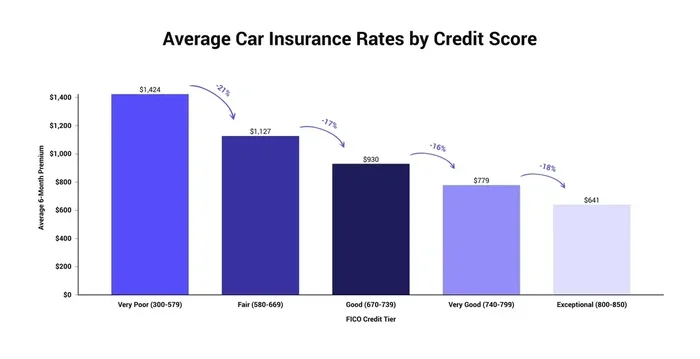
The impact of credit on your premium can be significant. Studies have shown that drivers with poor credit pay up to twice as much as those with excellent credit. The exact difference depends on your state, insurer, and overall profile.
Here is a simple breakdown of how credit tiers typically affect rates:
- Excellent credit: You qualify for the lowest premiums available.
- Good credit: You get competitive rates with modest discounts.
- Fair credit: Your rates are average but could be higher than drivers with better credit.
- Poor credit: You pay the highest premiums, sometimes 50% to 100% more.
These numbers vary widely by company and location. Some insurers weigh credit more heavily than others. This is why insurance shopping is so important. If you have been with the same company for years, you may be overpaying.
Quick Tips to Minimize the Credit Impact
- Always compare quotes from multiple insurers before buying a policy.
- Ask your agent about discounts you may qualify for beyond credit.
- Improve your credit score over time to unlock lower rates.
- Check your credit report regularly for errors that could hurt your score.
Can You Improve Your Insurance Score?
Absolutely. The good news is that your credit-based insurance score is not fixed. It changes as your credit habits change. If you have been struggling with poor credit, there is a clear path to better insurance rates.
Start by paying all your bills on time. Late payments hurt your score the most. Set up automatic payments or reminders so you never miss a due date. Next, try to reduce your overall debt. Lowering your credit utilization ratio sends a positive signal to both lenders and insurers.
Also, avoid opening too many new credit accounts at once. Each hard inquiry can temporarily lower your score. Instead, focus on building a long, steady credit history. Over time, these efforts will pay off in lower auto insurance rates.
What If You Have No Credit History?
Some drivers have no credit history at all. This can happen if you are young, new to the country, or simply do not use credit. In these cases, insurers may treat you as a higher risk. However, some companies offer programs for credit invisible consumers.
Building even a small amount of credit can help. A secured credit card or a small loan reported to the bureaus can get you started. Over time, a thin credit file grows into a strong insurance score.
What Else Affects Your Car Insurance Rate?
Credit is just one piece of the puzzle. Insurers look at many factors when setting your premium. Understanding these can help you take control of your rates.
Your driving record matters a lot. Traffic violations, accidents, and DUI convictions all raise your premium. The more severe the offense, the bigger the rate increase. A clean driving record is one of the best ways to keep costs low.
Your age and gender also play a role. Younger drivers, especially teens, pay the highest rates. As you gain experience, your premiums typically drop. Some states have banned gender-based pricing, but it still applies in many areas.
Where you live makes a difference too. Urban areas with high traffic and crime rates cost more to insure than rural areas. Your vehicle type matters as well. Expensive cars and sports models carry higher premiums than sedans and family vehicles.
Even your coverage choices affect the final price. A higher deductible lowers your monthly premium but increases your out-of-pocket cost in a claim. Finding the right balance is key to affordable car insurance coverage.
How to Get the Best Rate
The best way to ensure you are not overpaying is to shop around. Get at least three quotes from different companies. Use online comparison tools to save time. Do not be afraid to switch insurers if you find a better deal.
Also, ask about every discount you qualify for. Bundling home and auto insurance, maintaining a clean driving record, and completing a defensive driving course can all lower your premium. Some insurers offer discounts for safe vehicles with advanced safety features.
If you are currently paying a high rate due to credit issues, focus on improving your financial health. As your score rises, your insurance costs should follow. It may take six to twelve months to see meaningful changes, but the effort is worth it.
Common Mistakes People Make With Insurance and Credit
Many consumers make avoidable mistakes when it comes to credit and insurance. Here are a few to watch out for.
Assuming all insurers use credit the same way. Different companies use different models and weight credit factors differently. One insurer might offer you a great rate while another charges you a fortune. That is why comparison shopping is essential.
Ignoring your credit report. Errors on your credit report can drag your score down for years. Check your report at least once a year and dispute any mistakes you find. A simple correction could lower your premiums.
Letting your policy lapse. If you cancel your coverage because you cannot afford it, you may face even higher rates when you reapply. Gaps in coverage hurt your profile with insurers. If you are struggling, talk to your agent about options before canceling.
Not asking about credit-based discounts. Some insurers offer programs that help you improve your score over time. These programs may lead to rate reductions as your credit improves. Always ask your provider what options are available.
Final Thoughts
So, do car insurance companies check your credit score? Yes, they do. And for most of us, our credit will influence what we pay for coverage every month. But knowledge is power. Once you understand how the system works, you can take steps to improve your situation.
Focus on building strong credit habits. Shop around for the best rates. And never assume that your current insurer is giving you the best deal. The auto insurance market is competitive, and there is always room to save.
Your credit score is not permanent. It changes with every on-time payment and every debt you pay off. As your financial health improves, so will your insurance rates. Start today, and you will see the difference over time.
Whether you are a first-time buyer or a long-time driver, understanding the credit-insurance connection puts you ahead. Use this knowledge to make smarter decisions, protect your wallet, and drive with confidence knowing you are getting the best possible rate.
Frequently Asked Questions
Does every car insurance company check your credit?
Most major insurers check credit, but not all. Some smaller or non-traditional companies may not use credit-based scoring. However, the vast majority of providers in the U.S. do pull your credit information during the application process.
Will my insurance rate drop if I improve my credit score?
Yes, it can. As your credit improves, your insurance score should follow. Many companies re-evaluate your risk profile at renewal time, so better credit can lead to lower premiums on your next policy.
Is a credit check the same as a hard inquiry on my credit report?
No. Insurers typically perform a soft inquiry, which does not affect your credit score. A hard inquiry happens when you apply for a loan or new credit card. Soft inquiries are invisible to other creditors.
Can I be denied car insurance because of bad credit?
It is rare to be denied coverage entirely. However, bad credit can result in much higher premiums or limited coverage options. Some insurers specialize in high-risk drivers, so you will still have options available.
How often do insurers check my credit?
Most companies check your credit at the time of application and may recheck it at renewal. Some insurers only check once, while others monitor credit periodically. Check your policy documents or ask your agent for specifics.
What is the difference between a credit score and a credit-based insurance score?
A regular credit score predicts your ability to repay debt. An insurance score predicts the likelihood you will file a claim. They use similar data but are calculated differently. Insurance scores do not consider your income or employment history.