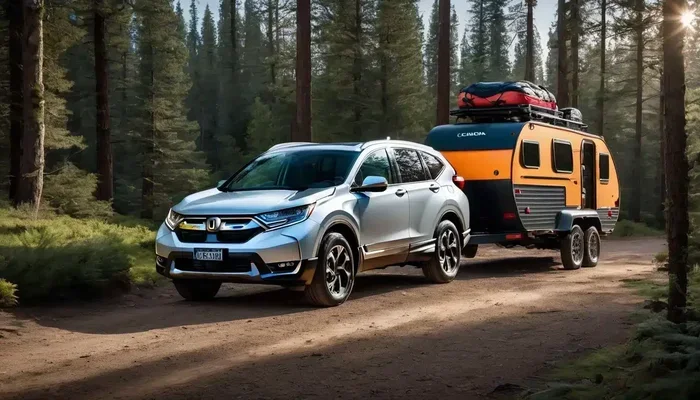
Can a Honda CRV Tow Everything You Need to Know Now
The Honda CRV can tow, but its capacity depends on the model year, engine type, and trim level. Most Honda CRV models have a towing capacity ranging from 1,000 to 1,500 pounds when properly equipped. Understanding your specific CRV’s limits and using the right towing setup is essential for safe and legal towing.
So you just bought a Honda CRV and now you want to haul something behind it. Maybe it’s a small camper trailer. Perhaps it’s a boat for a weekend getaway. Or maybe you just need to move some heavy furniture across town. Whatever the reason, the question is the same: can a Honda CRV tow?
The short answer is yes. But the full answer is a bit more nuanced. Your Honda CRV’s towing ability depends on several factors. These include the model year, engine type, trim level, and whether your vehicle has the proper towing package installed. Many CRV owners don’t realize their vehicle can tow until they actually look up the specs. And some owners overestimate what their CRV can handle, which leads to problems on the road.
This guide covers everything you need to know about Honda CRV towing. We’ll break down the towing capacities across different years and trims. We’ll talk about the equipment you need. We’ll cover safety tips that could save your life. By the end, you’ll know exactly what your CRV can and cannot tow.
Key Takeaways
- Honda CRV towing capacity varies by year and trim: Most models tow between 1,000 and 1,500 pounds.
- Proper equipment matters: A quality tow hitch, wiring harness, and towing mirrors make a big difference.
- Weight distribution affects safety: Tongue weight should stay between 10% and 15% of your trailer load.
- Not all CRVs are created equal: Hybrid and older models may have different towing capabilities than newer trims.
- Know the limits: Exceeding towing capacity can damage your vehicle and create dangerous driving conditions.
- Legal requirements apply: Many states require additional braking systems for trailers over certain weight limits.
- Preparation is key: A pre-trip checklist helps prevent accidents and breakdowns while towing.
📑 Table of Contents
- Understanding Honda CRV Towing Capacity
- Essential Towing Equipment for Your Honda CRV
- Safety Tips for Towing with a Honda CRV
- Common Mistakes Honda CRV Owners Make When Towing
- Honda CRV Towing: What Can You Actually Tow?
- Legal Requirements for Towing with a Honda CRV
- Maximizing Your Honda CRV’s Towing Potential
- Conclusion
Understanding Honda CRV Towing Capacity
Every vehicle has a maximum towing capacity. This number represents the heaviest trailer your car can safely pull. For the Honda CRV, this number has changed over the years. Different engines and trim levels also affect the rating. Let’s break this down by model year and configuration.
Towing Capacity by Model Year
The Honda CRV has been around since the 1990s. But towing capabilities have improved significantly over time. Here’s a general breakdown of what you can expect:
- 2015 and earlier: Most older CRV models can tow around 1,000 to 1,500 pounds. These vehicles typically came with smaller engines and fewer towing features.
- 2017 to 2022: The fifth-generation CRV improved towing capacity. Many models in this range can tow up to 1,500 pounds when properly equipped with a towing package.
- 2023 and newer: The latest CRV models offer towing capacities of around 1,500 pounds. Some trims with the 1.5-liter turbocharged engine can reach this limit.
These numbers are approximate. Always check your owner’s manual for the exact towing capacity of your specific vehicle. The VIN number on your dashboard can also help you look up detailed specs. You can track a vehicle by VIN number to confirm your exact model details.
Engine Type Matters
The engine under your hood plays a huge role in towing ability. The Honda CRV has offered different engines over the years. The 2.4-liter inline-four engine found in older models provides steady but modest towing power. The 1.5-liter turbocharged engine in newer models delivers better torque, which helps with towing.
The Honda CRV Hybrid models add another layer to this discussion. Hybrid engines provide instant torque, which can feel helpful when pulling a load. However, hybrid CRV towing limits may differ from gas-only models. Always check the specific rating for your hybrid trim. You might also wonder whether a hybrid can run without gas, which is worth understanding if you plan to tow frequently.
Trim Level and Towing Package
Not every Honda CRV comes with a towing package from the factory. In many cases, you need a specific trim or add-on package to tow legally and safely. The towing package typically includes a class II trailer hitch, wiring harness, and sometimes upgraded cooling systems.
Here’s what to look for when checking if your CRV has a towing package:
- Class II trailer hitch receiver: This is the metal receiver mounted under the rear bumper. It accepts the hitch ball for your trailer.
- Wiring harness connector: This connects your CRV’s electrical system to the trailer lights. It ensures your brake lights and turn signals work on the trailer.
- Upgraded radiator or cooling fan: Towing puts extra strain on your engine. Some packages include cooling upgrades to handle the load.
- Transmission oil cooler: This helps prevent overheating when towing heavy loads for extended periods.
If your CRV doesn’t have a factory towing package, you can often have one installed aftermarket. Just make sure the installation is done correctly and matches your vehicle’s specifications.
Essential Towing Equipment for Your Honda CRV
Having the right equipment makes towing safer and easier. You can’t just hook up a trailer and go. There are several key pieces of gear you need before you start towing.
Tow Hitches and Balls
The tow hitch is the most important piece of towing equipment. For the Honda CRV, a class II hitch is the standard. This type of hitch can handle loads up to 3,500 pounds gross trailer weight. But remember, your CRV’s towing capacity may be lower than the hitch’s maximum rating.
Choose a hitch ball size that matches your trailer’s coupler. Most small trailers for the CRV use a 1-7/8 inch ball. Larger trailers might need a 2 inch ball. Always make sure the ball is rated for the weight of your trailer.
Towing Mirrors
Standard side mirrors on the CRV may not give you enough visibility when towing a trailer. Your trailer blocks your view of the lanes beside and behind you. Extended towing mirrors solve this problem. They clip onto your existing mirrors and extend outward to give you a clear view.
Some states actually require towing mirrors by law. Check your local regulations before hitting the road. If you’re concerned about visibility while towing, consider adding blind spot monitoring to your car. This safety feature helps you stay aware of vehicles in your blind spots, which is especially important when towing.
Wiring and Electrical Connections
Your trailer needs working brake lights and turn signals. A wiring harness connects your Honda CRV’s electrical system to the trailer. These harnesses plug into a harness module under your dashboard and route to the hitch area.
Make sure to test all trailer lights before every trip. A burned-out bulb on your trailer can lead to a traffic ticket or, worse, an accident. It only takes a few minutes to check and could save your life.
Weight Distribution Systems
If you’re towing close to your CRV’s maximum capacity, a weight distribution system can help. This system uses springs and bars to distribute the trailer’s weight more evenly across all four wheels. It improves handling and prevents your rear end from sagging too low.
You don’t need a weight distribution system for every tow. But if you’re hauling near your maximum limit, it’s a smart investment.
Safety Tips for Towing with a Honda CRV
Towing changes how your vehicle drives. Your CRV handles differently with a trailer attached. Understanding these changes helps you stay safe on the road.
Know Your Tongue Weight
Tongue weight is the downward force the trailer puts on your hitch. Too much tongue weight pushes the back of your CRV down and reduces front tire traction. Too little tongue weight causes the trailer to sway.
The general rule is that tongue weight should be between 10% and 15% of your total trailer weight. For example, if your trailer weighs 1,000 pounds, your tongue weight should be between 100 and 150 pounds. You can use a tongue weight scale at most truck stops to measure this.
Braking Considerations
Your Honda CRV’s brakes are designed for the weight of the vehicle itself. When you add a trailer, you increase the total stopping distance significantly. This means you need to leave more space between you and the vehicle ahead.
Many states require trailer brakes if the trailer exceeds a certain weight. Typically, that weight is around 1,000 to 1,500 pounds depending on your state. Even if your state doesn’t require it, adding brakes to your trailer is a smart safety move.
Watch for Overheating
Towing puts extra stress on your engine. This is especially true in hot weather or during long climbs. Your Honda CRV’s cooling system works harder when towing. If you notice the temperature gauge climbing, pull over safely and let the engine cool down.
It’s worth understanding what can cause a car to overheat in general. Cars can overheat on hot days, and adding a towing load makes this risk even higher. Monitor your temperature gauge closely during your first few towing trips.
Driving Techniques for Towing
How you drive changes when you’re towing a trailer. Here are some tips to keep in mind:
- Accelerate slowly: Jerky acceleration can cause the trailer to sway. Smooth, gradual acceleration keeps everything stable.
- Brake early and gently: Slamming on the brakes can cause the trailer to push into the back of your CRV. This is called “jackknifing” and it’s dangerous.
- Take wider turns: Your trailer has a shorter turning radius than your CRV. Swing out wider on turns to avoid clipping curbs or other vehicles.
- Avoid sudden lane changes: The added weight of a trailer makes your vehicle slower to respond to steering inputs.
- Use lower gears on hills: Downshift when going uphill or downhill. This reduces strain on your brakes and gives you better control.
Some drivers wonder if they can still drive their CRV normally when the steering assist is affected. The short answer is that towing can change how steering feels, and driving without steering assist is possible but requires extra caution and slower speeds.
Common Mistakes Honda CRV Owners Make When Towing
Even experienced drivers make towing mistakes. Here are the most common ones to avoid.
Exceeding Towing Capacity
This is the number one mistake. It’s tempting to push your limits, especially when the trailer looks small. But the total weight includes the trailer, cargo, and anything else you’re hauling. Exceeding your CRV’s towing capacity can cause transmission damage, brake failure, and loss of vehicle control.
Ignoring Tongue Weight
Many people focus only on total trailer weight and ignore tongue weight. An improperly balanced trailer can sway at highway speeds. This is called trailer sway and it’s one of the most dangerous towing situations. A weight distribution hitch helps prevent this problem.
Skipping the Pre-Trip Inspection
Before every towing trip, walk around your vehicle and trailer. Check the hitch connection, tire pressure on both the CRV and the trailer, and make sure all lights work. This quick check can prevent problems on the road.
Not Practicing Before a Long Trip
If you’re new to towing, practice in an empty parking lot before hitting the highway. Get a feel for how your CRV handles with the trailer attached. Practice turning, braking, and backing up. This preparation builds confidence and reduces the risk of mistakes on the road.
Honda CRV Towing: What Can You Actually Tow?
Now that you understand the capacity and equipment, let’s talk about what you can realistically tow with a Honda CRV. The answer depends on your specific model and setup, but here are some general guidelines.
Small Travel Trailers
Pop-up campers and small travel trailers are the most common trailers towed by CRV owners. These lightweight trailers typically weigh between 500 and 1,200 pounds. Most Honda CRV models can handle these trailers without any issues.
Kayak and Bike Trailers
Kayak trailers and bike trailers are very light, usually under 200 pounds. Any Honda CRV can tow these without strain. They’re perfect for weekend adventures and outdoor getaways.
Small Utility Trailers
Need to move some lumber, mulch, or furniture? A small utility trailer works well with the CRV. Just make sure the combined weight stays within your towing capacity. A 4×8 sheet of plywood, for instance, weighs around 60 pounds, and a basic utility trailer adds another 300 to 500 pounds. This is well within the CRV’s limits.
What NOT to Tow
Here’s what you should avoid towing with a Honda CRV:
- Large fifth-wheel trailers: These weigh 5,000 to 10,000 pounds and far exceed the CRV’s capacity.
- Large boats: Most boats with trailers exceed 1,500 pounds and are not suitable for the CRV.
- Horse trailers: Living animals add significant weight. A horse trailer easily exceeds CRV towing limits.
- Heavy equipment trailers: Construction materials and heavy machinery are far too heavy for the CRV.
Legal Requirements for Towing with a Honda CRV
Towing isn’t just about your vehicle’s capability. There are legal requirements you must follow. These vary by state and country, so always check your local laws.
Most states require that trailers over a certain weight have their own braking system. The weight threshold varies, but it’s commonly around 1,000 to 1,500 pounds. Your Honda CRV’s towing capacity falls right in this range, which means you may need trailer brakes depending on what you’re hauling.
You also need to make sure your trailer is properly registered and insured in many jurisdictions. Some states require a special towing license or endorsement on your driver’s license. Check with your local Department of Motor Vehicles to make sure you’re compliant.
Speed limits also apply differently when towing. Many states have lower speed limits for vehicles towing trailers, typically 55 mph instead of 65 or 70 mph. Observe these limits for safety and to avoid tickets.
Maximizing Your Honda CRV’s Towing Potential
Want to get the most out of your CRV’s towing ability? Here are some tips to help you maximize performance and safety.
Keep Your CRV Well Maintained
Regular maintenance is even more important when you tow. Change your oil more frequently if you tow often. Check your transmission fluid, coolant levels, and brake pads regularly. Towing puts extra wear on every system in your vehicle.
Pay attention to your serpentine belt as well. A worn belt can cause problems when your engine is under heavy load. A new serpentine belt helps your car run better, and this is especially true when towing.
Plan Your Routes Carefully
When towing, plan your route to avoid steep mountain grades and long stretches of stop-and-go traffic. Flat highways are much easier on your vehicle and trailer. Use GPS apps that let you avoid steep inclines when possible.
Invest in Quality Accessories
Don’t cheap out on towing accessories. A quality hitch, proper wiring harness, and good towing mirrors are worth the investment. They make towing safer and more enjoyable. Cheap accessories can fail under load, leading to dangerous situations on the road.
Know When to Upgrade
If you find yourself regularly exceeding your CRV’s towing capacity, it might be time to consider a larger vehicle. The Honda CRV is an excellent compact SUV, but it has its limits. There’s no shame in recognizing that a different vehicle better suits your towing needs.
Conclusion
So, can a Honda CRV tow? Yes, absolutely. The Honda CRV is a capable compact SUV that can handle light to moderate towing jobs. Most models can tow between 1,000 and 1,500 pounds when properly equipped. This makes it a great choice for small trailers, kayak carriers, bike trailers, and utility loads.
The key to safe towing is knowing your limits. Understand your CRV’s specific towing capacity based on your model year and trim. Invest in the right equipment. Follow safety guidelines. And never exceed the maximum towing weight. With the right setup and approach, your Honda CRV will serve you well as a towing vehicle for many adventures to come.
Take the time to prepare before each towing trip. Check your equipment, balance your load, and drive with extra care. Towing with a Honda CRV can be a rewarding experience when done right. Safe travels and happy towing.
Frequently Asked Questions
What is the maximum towing capacity of a Honda CRV?
Most Honda CRV models can tow between 1,000 and 1,500 pounds depending on the model year, engine type, and trim level. Always check your owner’s manual for the exact towing capacity of your specific vehicle. The towing package and hitch type also play a role in determining your maximum towing weight.
Do I need a towing package to tow with a Honda CRV?
Not all Honda CRV models come with a factory towing package. However, you can have a class II trailer hitch installed aftermarket to enable towing. The towing package typically includes a hitch receiver, wiring harness, and sometimes upgraded cooling components. Check with a certified mechanic to ensure proper installation for your specific CRV model.
Can I tow a travel trailer with a Honda CRV?
Yes, you can tow small travel trailers with a Honda CRV as long as the total trailer weight stays within your vehicle’s towing capacity. Pop-up campers and lightweight travel trailers are the most common trailers towed by CRV owners. Always verify the trailer weight before purchasing or renting to ensure it’s within your CRV’s limits.
Do I need special insurance to tow a trailer with my Honda CRV?
Trailer insurance requirements vary by state and insurance provider. Some policies cover trailers automatically, while others require a separate policy or endorsement. Contact your insurance provider to confirm your coverage before towing. It’s better to know your coverage level before an accident occurs.
What happens if I exceed my Honda CRV’s towing capacity?
Exceeding your towing capacity can cause serious damage to your vehicle. It puts excessive strain on your engine, transmission, brakes, and suspension. It also creates dangerous driving conditions because your vehicle becomes harder to control. Always stay within the manufacturer’s recommended towing limits to protect yourself and others on the road.
Is it safe to tow a trailer in hot weather with a Honda CRV?
Towing in hot weather increases the risk of engine overheating. Your CRV’s cooling system works harder under a towing load, especially during summer months. Monitor your temperature gauge closely, take regular breaks, and avoid towing during the hottest parts of the day if possible. Staying aware of overheating signs keeps you safe on the road.