How Do You Fix a BMW Battery Discharge Problem Fast
A BMW battery discharge problem can leave you stranded, but the good news is that most causes are easy to fix at home. This guide walks you through the most common reasons your BMW battery keeps dying and gives you clear, step-by-step solutions to get back on the road fast. Whether it is a simple parasitic draw, corroded terminals, or a failing alternator, you will find practical fixes that work. By the end, you will know exactly what to check, what to replace, and how to prevent it from happening again.
There is nothing more frustrating than walking out to your BMW and finding it will not start. The dashboard lights are dim, the engine turns over slowly, or worse, it makes no sound at all. A BMW battery discharge problem is one of the most common issues BMW owners face, and it can happen to anyone at any time.
The good news is that you do not need to be a mechanic to fix it. Most causes of battery discharge are simple to diagnose and even simpler to repair. Whether you are dealing with a dead battery after a weekend away or a recurring drain that keeps killing your charge, this guide has you covered. You will learn what causes the problem, how to test your battery, and the exact steps to fix it yourself.
Let us dive in and get your BMW running again. By the time you finish reading, you will have a clear action plan and the confidence to tackle the repair on your own.
Key Takeaways
- Parasitic draw is the #1 cause: Small electrical drains from accessories and modules can kill your BMW battery overnight.
- Corroded terminals are easy to spot: White or blue buildup on your battery posts is a clear sign of connection problems.
- Your alternator keeps the battery charged: A failing alternator means your battery never gets the power it needs.
- Cold weather makes battery problems worse: Low temperatures reduce your battery’s ability to hold a charge.
- Prevention is simple and cheap: A few regular habits can extend your BMW battery life by years.
- Know when to replace: A battery older than five years or one that fails a load test needs to be swapped out.
📑 Table of Contents
Understanding BMW Battery Discharge
Before you start fixing anything, it helps to understand what is actually happening. A battery discharge means your BMW battery is losing power faster than it should. In a healthy car, the alternator keeps the battery charged while you drive. When something interrupts that process, or when power drains from the battery when the car is off, you end up with a dead or weak battery.
BMW vehicles are packed with advanced electronics. From the iDrive system to the comfort modules, your car uses power even when it is parked. This is normal to a degree. But when the drain becomes too much, your battery cannot keep up. Understanding this balance between power usage and power replenishment is the first step toward a real fix.
Several factors affect how quickly your battery loses charge. The age of the battery matters a lot. So does the temperature outside, the condition of your alternator, and the electrical accessories you leave connected. Let us look at each of these in detail so you can pinpoint what is causing your specific problem.
How Your BMW Battery Works
Your BMW battery has one simple job: provide the electrical power needed to start the engine. Once the engine is running, the alternator takes over and powers all the electrical systems while also recharging the battery. Think of it like a cycle. The battery starts the engine, and the alternator keeps everything going.
When this cycle breaks down, you get a discharge problem. The battery might not hold a charge, the alternator might not generate enough power, or something is pulling power from the battery when the car is off. Each of these scenarios has its own fix, and we will cover all of them in detail.
Why BMW Batteries Are Different
BMW uses advanced battery technology, often AGM or Absorbent Glass Mat batteries. These batteries are more durable and handle deeper discharges better than standard lead-acid batteries. However, they are also more sensitive to improper charging and maintenance. If you use the wrong charger or let a BMW AGM battery sit too long without a charge, you can permanently damage it.
Additionally, BMWs have a complex electrical system that constantly monitors battery health. The car’s computer adjusts power usage based on battery condition. This is great for efficiency, but it also means that a small problem can trigger a cascade of electrical issues if left unchecked. Paying attention to early warning signs saves you from bigger headaches later.
Common Causes of BMW Battery Discharge
Now that you understand the basics, let us look at the most common reasons your BMW battery keeps discharging. These are the culprits behind most battery problems, and identifying the right one saves you time and money.
Parasitic Electrical Draw
A parasitic draw is when electrical components continue to pull power from the battery after you turn off the engine. This is the number one cause of BMW battery discharge. Modern BMWs have many modules that stay awake for a short time after you park the car. This is normal and expected. But when a module fails to go to sleep, it drains the battery overnight and you wake up to a dead car.
Common sources of parasitic draw include:
- Interior lights left on after parking
- Aftermarket accessories like dash cams or GPS trackers
- Faulty door switches that keep the interior light on
- A malfunctioning iDrive system that stays active in the background
- Phone chargers left plugged in at all times
One of the simplest mistakes people make is leaving their lights on. If you are unsure whether you should drive with high beams on or when they are appropriate, it is worth understanding that leaving any lights on for extended periods will drain your battery quickly. For a helpful reference on proper headlight usage, check out this guide on whether you are supposed to drive with high beams on.
Old or Failing Battery
Every battery has a lifespan. Most BMW AGM batteries last between four and five years. After that, their ability to hold a charge declines steadily. If your battery is older than this, it might simply be time for a replacement. You can test your battery with a multimeter to check its voltage. A fully charged battery should read around 12.6 volts. If it reads below 12.0 volts when the engine is off, your battery is likely failing and needs attention.
Another sign of an aging battery is slow cranking. When you turn the key and the engine takes longer than usual to start, the battery is struggling. Do not ignore this sign. It is your battery telling you it is on its last legs.
Faulty Alternator
The alternator is responsible for charging your battery while you drive. When it starts to fail, your battery never gets fully recharged. Over time, this leads to a chronic discharge problem. Signs of a failing alternator include dim headlights, a warning light on your dashboard, and a battery that keeps dying even after a jump start.
BMW alternators are built to last, but they do not last forever. If you notice any of these symptoms, get your alternator tested as soon as possible. Replacing a failing alternator early can save you from a dead battery on the side of the road and protect all the other electrical components in your car.
Extreme Temperatures
Both hot and cold weather affect your BMW battery. Cold temperatures slow down the chemical reactions inside the battery, reducing its ability to deliver power. This is why battery problems spike in winter. On the other hand, extreme heat causes the battery fluid to evaporate faster, which damages the internal plates over time.
If you live in a climate with harsh winters, consider using a battery maintainer during the cold months. This keeps your battery at optimal charge level and extends its life significantly. A simple investment that pays for itself many times over.
BMW Electrical System Quirks
BMW vehicles have a feature called sleep mode. After you park and lock the car, the electrical modules gradually power down. This process can take up to 30 minutes. During this time, the battery is still under light draw. If you turn the car off and immediately restart it, the battery does not get a chance to recover. This is a small thing, but it adds up over weeks and months.
Additionally, if you drive a BMW hybrid model, you might wonder at what speed does a hybrid switch to gas, as this affects how your battery behaves during different driving conditions. Understanding when your hybrid BMW switches from electric to gas power helps you manage battery usage better and avoid unnecessary strain on the electrical system.
Similarly, knowing at what speed does a hybrid switch from electric to gas can help you optimize your driving habits to reduce unnecessary battery drain, especially if you own a plug-in hybrid BMW variant. The more you understand about your specific model’s electrical behavior, the better equipped you are to prevent battery problems.
How to Diagnose a Discharging BMW Battery
Before you replace anything, you need to know what is actually wrong. Diagnosing the problem correctly saves you money and prevents unnecessary part replacements. Here is a simple step-by-step process you can follow at home with basic tools.
Step 1: Visual Inspection
Start by opening the hood and looking at your battery. Check for any visible damage, swelling, or leaks. Look at the terminals for white or blue-green buildup. This corrosion creates resistance and prevents your battery from charging properly. If you see corrosion, that is your first clue that something needs attention.
Next, check the battery cables. Make sure they are tight and free of fraying. Loose cables can cause intermittent power loss that mimics a dead battery. A simple tightening might be all you need to restore proper connection. Do not underestimate the power of a good visual check.
Step 2: Test Battery Voltage
Use a digital multimeter to test your battery voltage. Follow these steps carefully:
- Turn off the engine and all electrical accessories.
- Set your multimeter to DC voltage.
- Touch the red probe to the positive terminal and the black probe to the negative terminal.
- Read the voltage. It should be between 12.4 and 12.6 volts for a fully charged battery.
If your reading is below 12.0 volts, your battery is discharged and needs charging. A reading between 12.0 and 12.4 means it is partially discharged and needs attention. Anything above 12.6 is good and means your battery is in healthy condition.
Step 3: Test for Parasitic Draw
This test requires a multimeter set to measure current in amps. Here is how to do it safely:
- Turn off the engine and remove the key from the ignition.
- Disconnect the negative battery terminal carefully.
- Set your multimeter to measure DC current in the amps range.
- Connect the multimeter in series between the negative terminal and the negative cable.
- Wait for all modules to go to sleep, which takes about 30 minutes.
- Read the current draw. A normal parasitic draw is between 20 and 50 milliamps.
If your reading is above 75 milliamps, you have a parasitic draw problem. You will need to pull fuses one at a time to identify which circuit is causing the drain. This takes patience, but it is the most reliable way to find the culprit.
Step 4: Test the Alternator
With the engine running, test the battery voltage again. It should read between 13.8 and 14.4 volts. If it reads below 13.5 volts, your alternator is not charging the battery properly. If it reads above 15.0 volts, the alternator is overcharging, which can also damage your battery over time. Either scenario means your alternator needs professional attention.
Step-by-Step Fixes for BMW Battery Discharge
Now that you know what is causing the problem, here are the fixes. I have organized them from the simplest solutions to the more involved repairs. Each one is designed to be approachable for a DIY enthusiast.
Fix 1: Clean the Battery Terminals
If you found corrosion on your terminals, cleaning them is quick and easy. You will need a wire brush, baking soda, and water. Mix the baking soda with water to create a paste. Apply it to the corroded terminals and scrub gently with the wire brush. The paste will neutralize the acid and break down the corrosion safely.
After scrubbing, rinse with a little clean water and dry thoroughly. Reconnect the terminals, starting with the positive cable first. This simple fix can restore proper electrical connection and solve many battery problems that seem serious at first glance. Many BMW owners are surprised how much a terminal cleaning can improve battery performance.
Fix 2: Address Parasitic Draw
If your parasitic draw test revealed an excessive drain, you need to find the culprit. Pull the fuses one at a time while monitoring the current draw on your multimeter. When the draw drops, you have found the problematic circuit. This is the detective work part, but it is very satisfying when you find the answer.
Common fixes for parasitic draw include:
- Replacing a faulty door switch that keeps interior lights on
- Unplugging aftermarket devices when the car is parked
- Resetting the iDrive system by disconnecting the battery for 15 minutes
- Replacing a malfunctioning module that stays awake when it should sleep
If you are not comfortable working with electrical circuits, take your BMW to a qualified technician. They have diagnostic tools that can pinpoint the exact module causing the draw in minutes. It is worth the small cost of professional diagnosis to avoid replacing the wrong part.
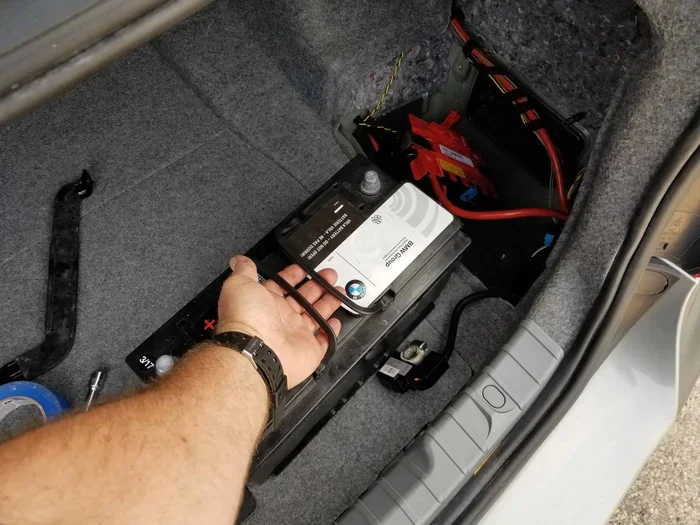
Fix 3: Replace the Battery
If your battery is more than five years old and fails the voltage test, replacement is the best option. When buying a new battery for your BMW, make sure it matches the specifications in your owner’s manual. BMW AGM batteries have specific ratings for cold cranking amps and reserve capacity that you must match for proper operation.
Here is how to replace your BMW battery safely:
- Turn off the engine and all electrical systems.
- Disconnect the negative terminal first, then the positive.
- Remove the battery hold-down bracket.
- Lift the old battery out carefully, as they can be heavy.
- Place the new battery in the tray and secure the bracket.
- Connect the positive terminal first, then the negative.
- Reset any electronic systems as needed after installation.
After installing a new battery, some BMW models require a battery registration process. This tells the car’s computer that a new battery is installed so it can adjust the charging profile accordingly. Many auto parts stores offer this service for free when you purchase a battery from them. It is a small step that makes a big difference.
Fix 4: Replace the Alternator
A failing alternator needs to be replaced. While this is a more expensive repair, it is essential for keeping your battery healthy. A new alternator will properly charge your battery while you drive and prevent future discharge problems from occurring again.
The cost of a BMW alternator replacement typically ranges from 400 to 800 dollars depending on your model and the labor rates in your area. It is a worthwhile investment that protects your battery and all the electrical systems in your car. Think of it as protecting your entire electrical system, not just the battery.
Fix 5: Use a Battery Maintainer
If your BMW sits parked for long periods, a battery maintainer is a must-have accessory. This device connects to your battery and provides a gentle, continuous charge to keep the battery at full capacity. It is especially useful during winter months or if you only drive your BMW occasionally on short trips.
Look for a maintainer that is compatible with AGM batteries and has an automatic shut-off feature. This prevents overcharging and makes the device safe to leave connected indefinitely. A battery maintainer is one of the cheapest insurance policies you can buy for your BMW electrical system.
Preventing Future BMW Battery Discharge
Once you have fixed the current problem, you want to make sure it does not happen again. Prevention is always easier and cheaper than repair. Here are the habits and practices that will keep your BMW battery healthy for years to come.
Drive Your BMW Regularly
Your alternator needs the engine to be running to charge the battery. If you only take short trips or let your car sit for days at a time, the battery never gets fully recharged. Try to drive your BMW for at least 20 to 30 minutes at a time, several times a week. This gives the alternator enough time to replenish the battery charge fully.
If you only use your BMW for short grocery runs, consider taking a longer drive on weekends. This allows the battery to recover and the alternator to do its job properly. Your battery will thank you for the extra time on the road.
Turn Off All Accessories Before Shutting Down
Make it a habit to turn off everything before you park. Lights, radio, heated seats, rear window defroster, and phone chargers should all be off before you turn off the engine. This reduces the initial load on the battery when you start the car next time and prevents unnecessary drain.
It might feel like a lot to remember at first, but soon it becomes second nature. Think of it as a quick checklist you run through every time you park. After a few weeks, it is automatic.
Keep the Battery Clean and Secure
Regularly inspect your battery terminals for corrosion. Clean them as soon as you notice any buildup. Also make sure the battery is securely mounted. Vibrations from driving can loosen terminals and internal battery plates, which accelerates wear and tear over time.
A clean, tight battery connection is one of the simplest ways to maintain good battery health. It takes just a few minutes every few months and can extend your battery life significantly.
Get Regular Battery Testing
Most auto parts stores will test your BMW battery for free. Get it tested every six months, especially as it approaches the four-year mark. Catching a weak battery early gives you time to replace it before it leaves you stranded on a bad day.
Set a reminder on your phone or calendar. It is an easy habit that saves you from the stress and inconvenience of a dead battery at the worst possible moment.
Protect Your Battery from Extreme Temperatures
If you live in a very cold climate, consider using a battery blanket or insulation wrap. This keeps the battery warm and helps it maintain its charge in freezing temperatures. In hot climates, make sure your battery is properly ventilated and not exposed to direct sunlight for extended periods.
Temperature management is one of the most overlooked aspects of battery maintenance. A little effort to protect your battery from extreme conditions goes a long way toward preventing unexpected discharge problems.
When to Replace Your BMW Battery Instead of Repairing It
Sometimes the battery is simply too far gone to save. Here are the clear signs that replacement is your only option. Do not waste money trying to recharge a battery that has reached the end of its useful life.
- The battery is more than five years old and shows signs of weakness
- The voltage drops below 12.0 volts even after a full charge
- The battery case is swollen or cracked
- The battery fails a load test at an auto parts store
- You have replaced the alternator and cleaned the terminals, but the battery still dies
If any of these apply to your situation, do not waste time trying to repair the battery. Invest in a new one. A quality BMW AGM battery typically costs between 200 and 400 dollars, and with proper maintenance, it should last you another four to five years. That is a solid return on your investment.
Choosing the Right Replacement Battery
When shopping for a replacement, look for these specifications on the label carefully:
- Group size that matches your BMW model
- Cold cranking amps rating specified by BMW
- Reserve capacity rating
- AGM construction for BMW models that require it
Using the wrong battery can cause compatibility issues and may even damage your electrical system. When in doubt, consult your BMW owner’s manual or ask a dealer for the correct part number. Taking the time to get the right battery the first time saves you from headaches down the road.
Key Takeaways
- Parasitic draw is the #1 cause: Small electrical drains from accessories and modules can kill your BMW battery overnight.
- Corroded terminals are easy to spot: White or blue buildup on your battery posts is a clear sign of connection problems.
- Your alternator keeps the battery charged: A failing alternator means your battery never gets the power it needs.
- Cold weather makes battery problems worse: Low temperatures reduce your battery’s ability to hold a charge.
- Prevention is simple and cheap: A few regular habits can extend your BMW battery life by years.
- Know when to replace: A battery older than five years or one that fails a load test needs to be swapped out.
Frequently Asked Questions
How long does a BMW battery last before it discharges?
Most BMW AGM batteries last between four and five years with proper care. However, if you frequently take short trips or let your car sit for extended periods, the battery may degrade faster. Regular testing every six months helps you catch weakness early and avoid unexpected failure when you need your car most.
Can a dead BMW battery be recharged?
Yes, a discharged BMW battery can often be recharged if it has not been completely drained for an extended period. Use a smart charger designed for AGM batteries and charge it slowly over several hours. If the battery will not hold a charge after recharging, it is likely time for a replacement rather than another recharge attempt.
How do I know if my alternator is causing the battery discharge?
The easiest way to test is to measure your battery voltage with the engine running. It should read between 13.8 and 14.4 volts. If the reading is below 13.5 volts, your alternator is not charging the battery properly. Other signs include dimming headlights, a battery warning light on the dashboard, and frequent dead batteries that keep coming back.
Is it safe to drive with a discharging BMW battery?
Driving with a weak battery is risky. Your battery may die completely while you are driving, which can cause you to lose power steering and power brakes. If you notice signs of a discharging battery, such as slow cranking or dim lights, get your car inspected before driving long distances or on highways.
What is the cost to fix a BMW battery discharge problem?
The cost depends entirely on the cause. Cleaning terminals costs almost nothing. Replacing a battery runs between 200 and 400 dollars. An alternator replacement typically costs between 400 and 800 dollars. Fixing a parasitic draw varies widely depending on which module or component is at fault. Getting a proper diagnosis first saves you from unnecessary expenses and wasted parts.
Can cold weather cause BMW battery discharge?
Absolutely. Cold temperatures slow the chemical reactions inside your battery, reducing its ability to deliver power. A battery that works fine in summer may struggle to start your BMW in winter. Using a battery maintainer during cold months and parking in a garage when possible helps protect your battery from the harsh effects of freezing temperatures.
=== CONCLUSION ===
A BMW battery discharge problem is frustrating, but it is almost always fixable. The key is to diagnose the root cause correctly and apply the right fix. Whether it is a simple terminal cleaning, a parasitic draw you need to track down, or a battery that has reached the end of its life, the solutions are within your reach as a BMW owner.
Start with the basics. Check your terminals, test your voltage, and look for obvious signs of trouble. From there, work through the diagnostic steps systematically. Most BMW owners can handle the simpler fixes themselves, and the more complex repairs are well worth the investment in peace of mind.
Remember, prevention is your best tool. Regular maintenance, smart driving habits, and a good battery maintainer can keep your BMW battery healthy for years to come. Do not wait until you are standing in a parking lot with a dead car. Take action now, and your BMW will start reliably every single time you turn the key.